
Shooting to win


Play
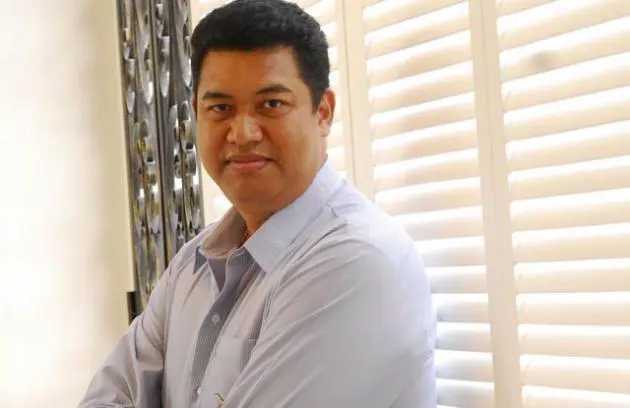
Kiattipong Radchatagriengkai explains why he's determined to bring his women's volleyball team to the Olympics
There’s a saying in the West that behind every successful man is a woman. In the case of Thailand women’s volleyball team, the reverse is true. Kiattipong Radchatagriengkai is not just a great man, he is also a visionary and one of the most accomplished coaches of our time.
After steering his team to win the maiden Asian crown in 2009 and the Asian Women’s Club title three times in succession from 2009 to 2011, the ace spiker-cum-head coach and his high-profile team have extended their remarkable run in the world volleyball stakes.
This year, the Thai team has made a tremendous impact, coming from nowhere to stun much stronger opponents, among them European winners Serbia and former three-time Olympic champions Cuba to finish fourth place in the top-flight FIVB World Grand Prix.
A passionate player in his youth, Kiattipong’s coaching career started in 1986 with the Kasetsart University team.
“I learned all about coaching during my time at Kasetsart. At that time, I was a national spiker and also studying there. No coach was available in my university so I decided to help coach my varsity team,” recalls the 46-year-old.
“After I graduated, I continued to coach the team. My life revolved around volleyball. Aside from Kasetsart University, I also coached the Royal Thai Air Force, Benjamarachanusorn School, Thai Namtip and Bangkok Bank teams.
Five years later and having played in the South East Asian (SEA) Games on five occasions, Kiattipong decided to call it a day. He changed his mind when he was asked to play again, this time competing in the 1995 SEA Games on home soil.
“Finally in 1997, I said goodbye to the national team. I was ready to start my permanent career with the Aeronautical Radio of Thailand.
“Then the Thailand Volleyball Association had offered me a four-year contract to coach the national youth girls team under the National Team for 2001 Scheme. Coaching a national team is very challenging and I accepted without hesitation.
“My girls are young and small-built, while our rivals are always tall and much stronger. Sports science is required to improve our physical fitness and our strength. Psychology is also important, while volleyball data software plus new tactics and techniques are also necessary. To match those rivals competitively, we need speed and a variety of tactics.
“I think coaching is an art as well as a science and a great coach needs to learn all aspects. Much of the improvement that comes with a coach is the level of confidence. I taught them my girls to play confidently. They did well and finished in fifth place at the 1997 World Girls’ Youth Championship in Chiang Mai.”
Kiattingpong, who at 196cm tall towers above his charges, had another daunting challenge ahead: coaching the national women’s team for the first time in 2001. A year later, his team contested two major tournaments – the FIVB World Championship in Germany and the World Grand Prix.
“To prepare for any world-class tournament, we have to improve four factors. Firstly, physical fitness. We can’t make our players tall as the Europeans, so we have to be faster to cope with the rivals’ fierce attack. Secondly, high-class techniques. We need to reach similar standard as other world-class teams.
“Thirdly, psychological training skills. My players must be confident so I taught them to boost their teammates’ morale boost.
“Fourthly, hard training. The harder you train, the better the chances you will succeed. More importantly, have fun with the training, but don’t make fun out of it. They have to give it their all when it comes to any competition,” Kiattipong says.
Asked why he allows his team to train with the male players, Kiattipong says, “We have been doing this since 2009. They are women and if they think they are ordinary women, they will play at levels 5 to 7, the levels at which a women’s team always plays. But if you have to play much stronger rivals such as China, you have to come out in full force at levels of 8 to 10. To be that aggressive, you have to train with the male players.”
“Our top priority is a once-in-lifetime experience in the Olympics. I want that to happen while I am still at the helm of the national women’s team.”
Behind every great volleyball team is a good coach and Kiattipong is always out there with his dominant women’s side. Roll on Rio!
