
A closer look at Bangkok's blueprint


Play
The latest city plan targets transport and green space as the means to improve residents' quality of life, explains deputy planning chief Panyapas Nopphun
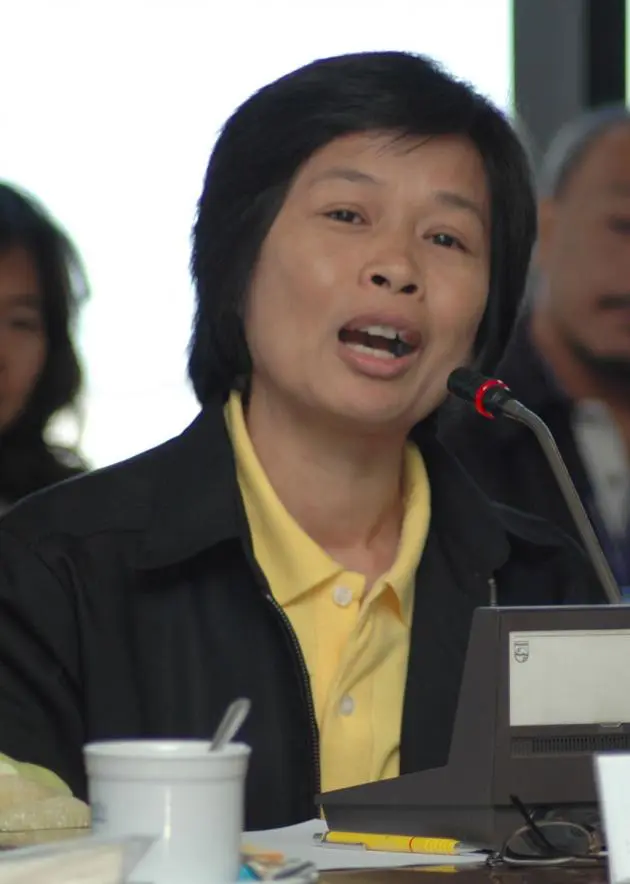
Panyapas Nopphun, deputy chief of Bangkok’s city planning office, says the capital’s residents will benefit from the new five-year city plan that came into effect on May 16.
“The city plan covers a total area of around 1,568 square kilometres of Bangkok. The city’s official number of residents is nearly 6 million, based on household registrations, but in reality there are as many as 11-12 million people working and living in Bangkok.
“The new city plan has 12 objectives, including improvements to public transport and mass transit systems, quality of life, and land use.
“In comparison with the previous city plan, which was used for seven years, the new plan has been formulated to help solve problems arising from global warming, with areas designated for disaster- and flood-management.
“The new city plan is also designed to accommodate the mass transit projects [Skytrain and subway] currently under construction in Bangkok and its peripheries.
“We believe that public rail transport will become the key mode of commuting in big cities like Bangkok whose population has topped 10 million. While there are densely-populated areas in the inner-city, we want to ensure that these are not overcrowded.
“In terms of land use, we have tried to accommodate residents’ changing lifestyles, as some prefer to live in high-rises in inner-city areas, while others prefer the low-rise and more spacious middle-city, outlying and suburban areas.
“We use the FAR [floor area ratio] and OSR [open space ratio] to measure land use, while there are 10 different colour-coded zones in Bangkok to designate commercial, business district, residential, agricultural, warehousing, and other zones.
“The red ‘commercial use’ zones, for example, have five sub-categories, with the central business districts, or CBD, having the highest FAR of 10.
“Separately, there is another piece of legislation, the Building Code, which governs the height of buildings in connection with the width of local roads. The Building Code helps public safety by limiting the height of buildings according to their accessibility – for example, large fire engines may not be able to access small local roads.
“In terms of green areas, some countries have huge public areas or parks that add up to as much as 20 square metres per person. But in Bangkok, that ratio is still low at around 2 square metres per person, so we need more public green space.”
Among the critics of the new plan is Dr Sophon Pornchoke-chai, chairman of the real estate data and appraisal centre.
“There are many weaknesses in the new city plan,” says Sophon.
“For example, land use should be improved in densely-populated areas such as inner-city sections of Sukhumvit Road.
“The FAR should be as high as 20 so that land use is more efficient in terms of building high-rises to promote inner-city accommodation.
“In fact, only small areas of Bangkok’s CBD – on Silom Road, for example – currently have an FAR of 10, with most at around 6-7. Meanwhile, the OSR will further restrict land use.
“Another major weakness of Bangkok’s city plan is that it has nothing to do with the city plans of neighbouring provinces, namely Samut Prakan, Pathum Thani and Nonthaburi.
“I think the population of Bangkok has been declining over the past decade as residents migrate to nearby provinces where building codes are more favourable and thus make it possible to build cheaper houses.
“It would be useful if Bangkok’s city plan was formulated in tandem with the city plans of neighbouring provinces so that the overall area of so-called greater Bangkok can be properly planned.
“In terms of land use, the cost of residential, commercial and other development schemes is likely to increase due to additional restrictions in the new city plan. Cheaper housing and rented accommodation will move farther from the inner-city areas.”
