
Demise of the NRC brings us to crossroads of shaky road map


Play
The National Reform Council (NRC) will wrap up its mission today after nine months of fanfare as well as much scepticism over its task.
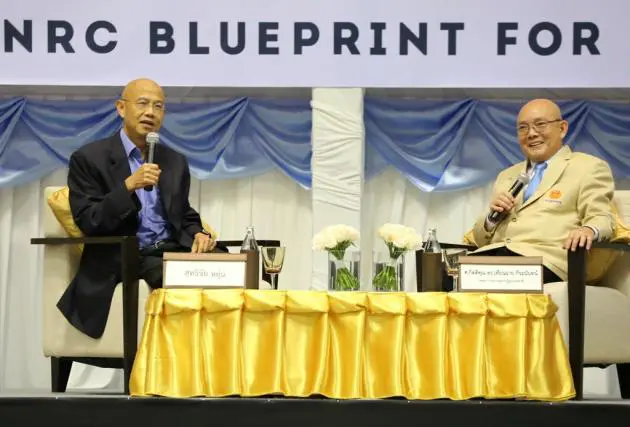
The 250 members of the NRC are due to submit their “reform agenda” on 11 areas to the Cabinet today – and will devote the whole day to a special conference dubbed “NRC Meet the People”, where they will present their proposals to the public.
With that, the NRC will draw down the curtain. The body is due to be dissolved no later than September 7 – the final deadline for its vote on the constitution draft.
Whether or not the 250 “reformists” accept the charter draft or not, the body’s demise is inevitable. In its place, a 200-member “Steering Council for National Reform” will be set up by the order of General Prayut Chan-o-cha in his capacity as chairman of the National Council for Peace and Order (NCPO).
The Constitution Drafting Committee is scheduled to submit the final draft to the NRC no later than August 22, after which the latter has 15 days to vote to accept or reject it. That leaves September 7 as the last day that the vote can be cast – to be followed by subsequent actions in line with the NCPO’s “road map”.
Will the majority of NRC members vote for or against? As of today, all bets are off. Lobbying for rejection of the draft, to give more time for the government to implement reform, has drawn public attention – and the debate over certain controversial provisions has been brushed aside in favour of more time to “get the country ready for elections”.
But those who insist that the draft must be passed, so that the whole country can vote in the referendum, are also fighting back with a vengeance.
The next step in the NCPO’s road map will mark a crucial turning point – and will decide when the new elections can be held.
If the NRC members reject the charter draft for whatever reason, a new committee will be set up to draw up a new draft within six months. If the draft is accepted, the next step in the process will be a national referendum.
The NRC considers itself the “architect” of the new reform agenda. “Whether reform can really take place under the proposed agenda will depend ultimately on the actions to be taken by the current government and its successors,” said Alongkorn Polabutr, secretary to the NRC’s Coordination Committee, and better known as an NRC “whip”.
That doesn’t offer much room for hope of seeing real changes – despite the fact that the NRC is calling its work a “blueprint for change”.
But the NRC has also been given another unprecedented task. As well as drawing up the reform blueprint, the body has been assigned the interesting duty of proposing “additional questions” to be placed in the public referendum on the charter draft.
It will be a unique kind of national opinion poll since this will be the first time that citizens are asked to vote on whether to accept the charter draft while at the same time answering Yes or No to another crucial question: Should the current government remain in office for two years to complete the reform process before holding elections?
Voters are bound to be confused. All sorts of questions will arise in their minds:
Isn’t the constitution supposed to be enforced if it gets the majority of votes? If so, how can the government’s term be extended for two more years. What if you think the charter should be passed AND the government should stay on two more years? What if the reform process can’t be completed within two years?
Nobody knows exactly where Prayut stands on this or whether he is trying to influence the outcome one way or the other. But if you read his lips, there might be some clues. Recently, when asked what he would do if circumstances meant he might not be able to leave office, he was quoted as saying: “If need be, I would have to stay on.”
