
Rising tide of Hindu-nationalism threatens India’s most famous monument
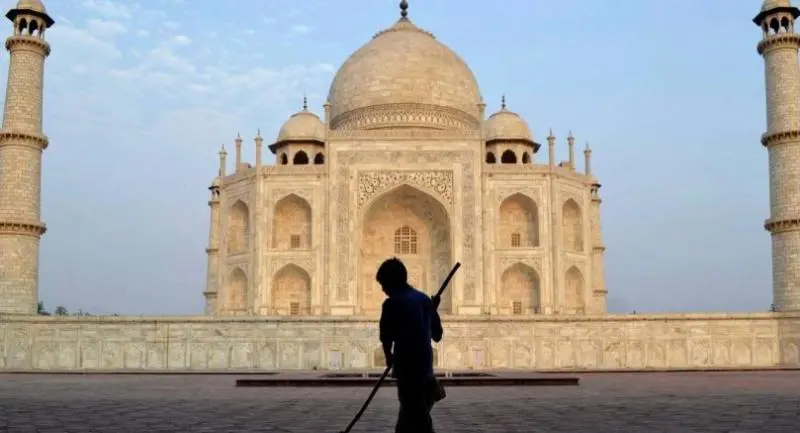


Claiming that the Taj Mahal is built atop an ancient Hindu temple, right-wing Hindu nationalists are ramping up their protests at the globally renowned monument.
The Hindu-nationalist Bharatiya Janata Party (BJP) government of Uttar Pradesh state, where the Taj Mahal is located, has been accused of ignoring the 17th-century monument in the tourism booklet of the state, and controversial statements by some of its leaders have only added to the controversy.
The efforts of Uttar Pradesh Chief Minister Yogi Adityanath to quell the protest over the Taj Mahal proved futile on Thursday, when right-wing Hindu nationalist groups chanted “Jai Shri Ram” (“Long Live Lord Rama”) even as he wielded a broom at the marble wonder as part of a symbolic damage-control exercise.
Protesting members of Vishwa Hindu Mahasangh group claimed that the Taj Mahal was built on top of a Shiva Temple that was razed by Muslim Mughal rulers centuries ago.
The authorities had reportedly issued official passes to the fringe religious-extremist group to participate in the event, which was seen as an effort to pacify frayed tempers following a series of controversial statements by several BJP leaders on the Taj Mahal.
BJP member of parliament Sangeet Som stirred controversy last week when he called the Taj Mahal a blot on Indian culture, while other right-wing politicians have said the Unesco World Heritage Site visited annually by millions is not representative of the Indian socio-cultural ethos.
Jumping on the bandwagon, senior Haryana Minister Anil Vij termed the marble monument a “beautiful cemetery” while BJP MP Vinay Katiyar extended support to another group of right-wing activists protesting at the Taj Mahal.
Controversial Chief Minister Adityanath, who was appointed by Prime Minister Narendra Modi, had earlier said that the monument was constructed “by the blood and sweat of Indian labourers”.
Modi has enjoyed strong popularity ratings since sweeping to power with a Hindu-nationalist and pro-business agenda in May 2014.
However, opposition to his BJP government was boosted this week with news that Rahul Gandhi, the scion of India’s most fabled political dynasty, will within weeks be crowned leader of the Congress party. His task will be to mount a credible challenge to the political dominance of Modi.
The great-grandson of modern India’s first prime minister, Jawaharlal Nehru, Gandhi has struggled to convince both voters and party members of his leadership abilities, especially after his party’s drubbing in the 2014 general election. The 47-year-old has been dubbed an undeserving “prince” by Modi, which has helped to sideline Gandhi at a time when the Congress Party is desperately seeking a charismatic figurehead. But with the economy now faltering, Congress politicians hope the upcoming round of state elections, beginning in Modi’s home state of Gujarat, could rejuvenate the party ahead of the next national poll in 2019.
Gandhi will take over as Congress president from his 70-year-old mother, Sonia Gandhi.
