
Wellness industry seen as key to boosting Thai economy and quality of life
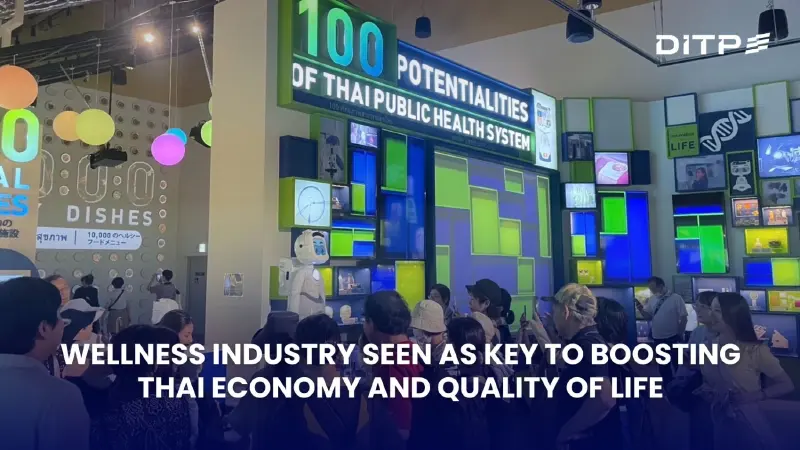


Today’s fast-paced working life has driven changes in people’s lifestyles, putting them at greater risk of non-communicable diseases (NCDs) and increasing demand for the health wellness sector to play a pivotal role.
The World Health Organisation predicts that by 2030, 23 million people worldwide will die from stroke and heart disease, with 85% of these deaths occurring in developing countries.
In Thailand, NCDs account for as much as 77% of deaths, driven largely by unhealthy behaviours such as poor diet, lack of exercise, stress, insufficient sleep, smoking, and alcohol consumption.
What is wellness?
Wellness is a holistic approach to health that encompasses both body and mind, focusing on disease prevention and lifestyle adjustments alongside the use of modern medical technology. The goal is to achieve overall good health and a better quality of life.
Wellness goes beyond simply being free of illness – it spans multiple dimensions, including physical, mental, emotional, spiritual, social, and environmental wellbeing. It also helps reduce the risk of developing NCDs.
Importantly, wellness is an ongoing commitment rather than occasional treatment for existing illnesses. It integrates healthy habits into daily life, enabling people to maintain long-term wellbeing.
The growth of wellness economy
The Global Wellness Institute (GWI) revealed in its 2022 report that the global wellness economy was valued at US$5.6 trillion, representing an 8.1% increase from 2021 and more than 14% growth compared with 2019. By comparison, global GDP expanded by 13.5% in 2021 and 4.1% in 2022.
According to GWI, the wellness economy and related health sectors are preparing for continued recovery, fueled by the rapid rise in health-conscious consumer behaviour following the Covid-19 pandemic.
Wellness tourism is a major driver of the sector’s growth and recovery, particularly in higher-income countries including Israel, the United Arab Emirates, Croatia, Romania, and the Czech Republic.
However, in other markets such as Hong Kong and Thailand, weaker tourism recovery has slowed the rebound of the wellness economy.

Thailand’s wellness economy
In 2022, Thailand’s wellness economy was valued at $34.6 billion, ranking 24th out of 218 countries worldwide and 9th out of 45 countries in the Asia-Pacific region.
Thailand holds particularly strong potential in wellness tourism, which reached a value of $7.78 billion, up sharply from $2 billion in 2021. This placed Thailand 15th globally and 4th in Asia-Pacific.
Spending by wellness tourists in Thailand is also on the rise. In 2022, international wellness travelers spent an average of $2,501 per trip, up significantly from $1,978 in 2020.
Thailand continues to thrive as a leading wellness destination, blending rich cultural heritage and natural beauty with diverse health-focused experiences – ranging from Buddhist meditation practices to the strength and vitality of Muay Thai, from nutrient-rich Thai cuisine to a wide variety of fitness options.
The country is renowned for its holistic and medical wellness services, offering comprehensive and affordable care. Visitors can access everything from traditional Thai massage to advanced health screenings and specialised treatments targeting cardiovascular health and even genetics.
Thailand’s potential in cosmetics and herbs
From January to June 2025, Thailand’s cosmetics and skincare exports stood at $1.79 billion. Exports are forecast to reach $3.65 billion in 2025, marking a 3% increase on the previous year.
The sector continues to expand, driven by growing global demand for health and beauty products, increasing consumer focus on self-care, and Thailand’s use of natural ingredients such as aloe vera and turmeric.
Innovation in eco-friendly production processes also strengthens the industry’s appeal, particularly in European markets. Export momentum has accelerated further with the post-pandemic recovery, supported by rising domestic consumption and the return of international tourists.
Meanwhile, Thailand’s herbal exports grew by 18.75% in 2024, reaching a total value of $29 million. This comprised $18 million from raw herbs and $11 million from herbal extracts. The top five export markets were China, Myanmar, Japan, Australia, and Malaysia.
Thai herbal products have become increasingly popular overseas, not only for personal use but also as gifts, including inhalers, balms, cosmetics, medicines, and food products.
This trend highlights the potential of Thai herbs as a form of soft power, creating export value and strengthening the country’s international presence.
Thailand’s strengths in this sector lie in its rich biodiversity and abundance of arable land, which allow for the production of a wide range of herbal products tailored to consumer demand.
In addition, its regional connections with neighbouring countries provide opportunities for knowledge sharing and collaboration, further enhancing competitiveness.

Thailand’s bid for health and wellness hub
Thailand’s health and wellness tourism has strong growth potential, supported by global demographic shifts towards ageing populations, rising demand for stress relief such as spa treatments, affordable yet high-quality medical services, and the country’s unique offerings like Thai massage, herbal therapies, and diverse cultural and natural attractions.
These advantages make Thailand an appealing destination, with foreign wellness tourists, especially from Europe, spending more than general travelers.
In this regard, the government has designated the health industry as a key growth sector, with the aim of establishing Thailand as an international health and wellness hub.
The Department of International Trade Promotion (DITP) under the Ministry of Commerce is driving this through innovation, product development, value creation, and brand building. Efforts include participation in international trade fairs, overseas marketing activities, and technology-driven product development.
Sunanta Kangvalkulkij, Director-General of the DITP, said the department has designated health and wellness products and services as a strategic priority, focusing on adding value and expanding sustainable export opportunities.
Planned promotional activities for 2025–2026 include trade missions for health and beauty products to China and Japan, participation in global events such as the Osaka Expo, and entry into high-potential markets in 2026, including Taiwan, Japan, Russia, and Saudi Arabia.
Key projects also include “The Thai Herbs LEVEL UP” initiative and participation in Cosmoprof Asia 2025 in Hong Kong.
“The DITP will continue to promote Thai health products and services globally in line with the policy of Commerce Minister Jatuporn Buruspat, ‘Thai make, Thai use, Thai help Thai’, to explore new markets, enhance Thailand’s soft power, and strengthen the economy,” Sunanta said.
