
Thai furniture: merging craftsmanship with contemporary design
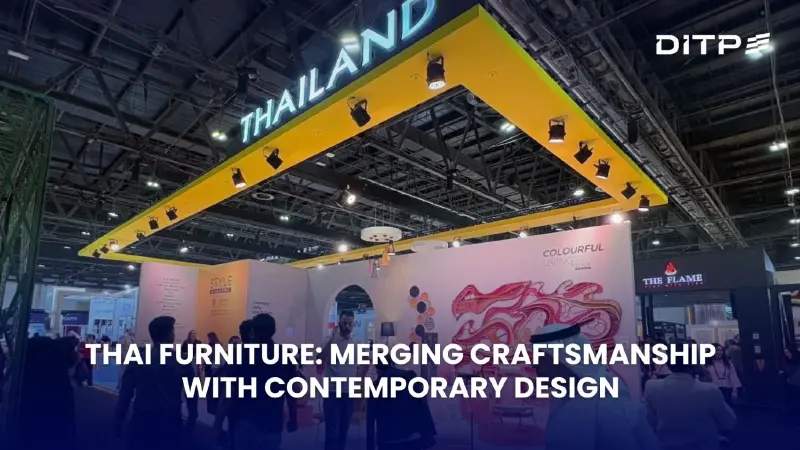


Modern Thai furniture not only reflects the nation's cultural heritage but also seamlessly blends innovation and contemporary design, creating unique living experiences.
Several Thai brands have gained international acclaim, showcasing traditional craftsmanship such as woodwork, wicker, and brass, while merging these with global design elements. Each piece exemplifies the meticulous nature of Thai craftsmanship, which is not just beautiful but also imbued with sustainability and value.
One such brand, Yothaka, founded in 1989, stands out for incorporating Thai craftsmanship—such as the weaving of water hyacinth—with universal design principles. The brand creates distinctive, functional furniture suitable for daily life. Yothaka primarily targets international markets, particularly Europe and Japan, with high-end clients such as hotels, resorts, and boutique shops for prestigious fashion brands like Hermès, Louis Vuitton, and Fendi. Its designs have earned global recognition, with some pieces displayed in museums in South Korea and Japan.
Meanwhile, Deesawat, a Thai wooden furniture brand with over 50 years of experience, was founded in 1973. It has achieved global success by combining traditional Thai craftsmanship with modern design and sustainable practices. Deesawat places emphasis on creating furniture that addresses the needs of elderly, disabled, and ill individuals, ensuring convenience and meaning beyond just aesthetics. Initially a comprehensive wooden furniture manufacturer for export, Deesawat evolved into a brand offering its own collections, collaborating with both Thai and international designers. Deesawat has garnered international recognition with numerous design and innovation awards, such as the Prime Minister's Export Award, Design Excellence Award (DEmark), Golden Pin Design Award, and Japan’s Good Design Award, among others.

Thailand's growing presence in international design events
The Department of International Trade Promotion has been aiming to boost Thailand's position on the global design stage, notably by enabling entrepreneurs and designers to participate in major exhibitions such as INDEX 2025, Salone del Mobile 2025, and Maison & Objet (M&O).
These events allow Thai designers and businesses to showcase their products, leveraging Thailand's unique cultural heritage and modern design innovations.
Maison & Objet: Thai sustainable design takes center stage
Thailand participated in the renowned Maison & Objet exhibition at the Paris Nord Villepinte Exhibition Centre, France, from January 16–20 this year.
The event attracted 96,396 visitors, including architects, interior designers, product designers, hotel industry groups, and real estate developers from around the world.The Thai delegation, comprising ten companies, showcased their products in the dedicated “STYLE Bangkok Pop-Up Showcase”, featuring home décor and furniture.
The pavilion demonstrated the capability of Thai entrepreneurs to produce high-quality, well-designed products, with exhibitors engaging in business discussions with clients from France, Italy, the United Kingdom, China, and Mexico. Brands that drew particular attention included Takehomedesign, Touchable, Deesawat, Mazori, and Labrador. These companies impressed visitors with products made from recycled, natural, and factory-waste materials, combining environmental awareness with distinctive, high-quality design.
Salone del Mobile 2025: Thailand’s hospitality design showcase
Thailand’s participation in Salone del Mobile 2025, held from April 8–13 at the Fiera Milano Exhibition Centre in Milan, Italy, further highlighted the country’s growing role in the European hospitality market.
The Thai pavilion presented hospitality products from 15 Thai entrepreneurs involved in the Host & Home project. Participants received guidance from Italian designer Matteo Ragni prior to the exhibition.
The showcased products, ranging from indoor and outdoor furniture to home décor, followed the concept “The Golden Age of Thai Soft Power”, emphasising Thailand’s strengths in quality, craftsmanship, cultural identity, and customer-focused design.
Over the six-day exhibition, the Thai pavilion attracted approximately 6,000 visitors from countries including the Netherlands, Israel, Poland, Ukraine, the United Kingdom, France, Spain, and Germany.
Feedback from attendees highlighted the diversity and uniqueness of the Thai products. Most items were indoor furniture with a contemporary Thai aesthetic, well-suited to European markets.
Visitors also appreciated the distinctive design features and the emphasis on sustainability, including the reuse of materials in line with the Bio-Circular-Green Economy (BCG) model, environmentally conscious material selection, and the use of locally sourced natural materials.
Similar to the Maison & Objet exhibition in Paris, buyers expressed keen interest in products that combined functionality, modern Thai design, and environmental sustainability.
INDEX 2025: A gateway for Thai design
At the INDEX 2025 event, held at the Dubai World Trade Centre in the United Arab Emirates (UAE) from May 27–29, Thailand showcased its vibrant design sector through a dedicated Thailand Pavilion, featuring a total of 20 participants—19 companies and one agency, the Sustainable and Crafts Institute of Thailand (SACIT).
This prestigious event, renowned in the UAE and the wider Middle East region, attracted numerous potential buyers and importers from design and interior decoration industries, architects, real estate developers, department stores, and retailers.
The Thailand Pavilion displayed a variety of products, including furniture, tableware, kitchenware, hotel furnishings, and wellness products, with an emphasis on the use of natural, eco-friendly materials.
The pavilion was divided into four thematic sections: Natural Sustainability, Colourful Living, Hospitality Touch, and Cultural Craft & Wellness. These themes reflect Thailand’s commitment to sustainable development and align with the government’s soft power policy.
The exhibition was a resounding success, attracting a diverse group of visitors from across the globe. Most attendees came from the United Arab Emirates, Saudi Arabia, and Europe, showing strong interest in the unique, high-quality Thai products on display.
Many buyers were particularly keen on incorporating Thai designs into real estate projects and restaurants. There was also notable interest from potential distributors seeking to represent Thai brands in the UAE.
This successful participation not only highlighted the international appeal of Thai design but also paved the way for expanding Thailand’s presence in the Middle Eastern and global markets.

Expanding Thailand's Global Design Footprint
The future of Thai furniture design looks promising as more designers, manufacturers, and SMEs gain global recognition. With the support of government-backed initiatives and collaborations with international design experts, Thailand’s presence in global design markets is set to grow significantly.
In addition to its participation in high-profile international events, the Department of International Trade Promotion (DITP), under the Ministry of Commerce, plays a pivotal role in promoting Thai furniture on the global stage.
Through a series of targeted initiatives, the DITP facilitates the export of Thai products, helping local businesses forge international partnerships and expand their reach in design markets worldwide.
The DEmark Award showcases the design potential of Thai entrepreneurs and designers, offering the DEmark symbol as a mark of excellence for well-designed products.
This initiative helps elevate Thai products to global standards, creating added value and encouraging local businesses to advance their design capabilities.
Since its inception in 2008, the DEmark has earned international recognition, with over 1,225 awarded designs and 545 products receiving the prestigious G-mark.
Furthermore, the DITP supports Thai furniture manufacturers in adopting zero-waste design principles by using leftover materials such as wood scraps and industrial waste, in line with the BCG economic model, which promotes sustainable production practices.
