
Bosch Leads Revolution in 'Automotive Software' Ready to Enter Era of 'Intelligent Vehicles'
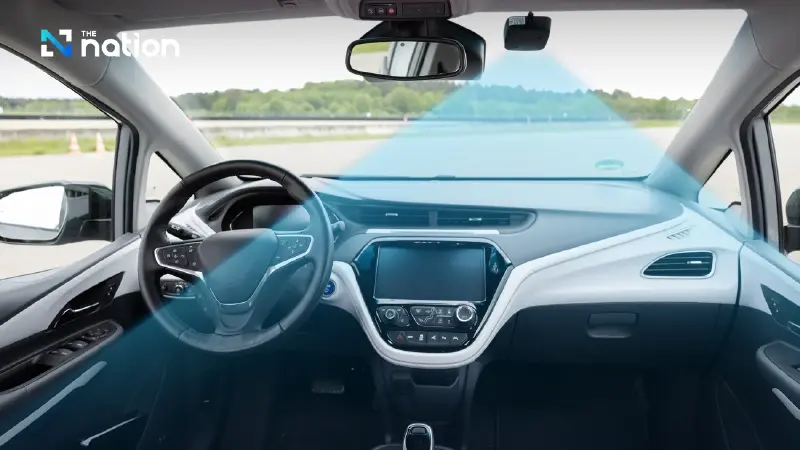


In the past, various systems within vehicles were designed and developed to operate separately from one another, and integrating these systems into a unified whole has proven challenging.
- Bosch is leading the automotive industry's shift from traditional, hardware-focused vehicle architecture to integrated "software-defined vehicles" (SDVs).
- This new era of intelligent vehicles will feature a comprehensive platform that supports trends like autonomous driving, connectivity, and continuous software updates, reducing development time from years to months.
- Bosch is developing specific software solutions to enable this transformation, including Vehicle Motion Management (VMM), AI-driven Advanced Driver Assistance Systems (ADAS), and cloud services for safety and battery management.
- The automotive software market is projected to triple to over 200 billion euros by 2030, and Bosch is already achieving double-digit growth in this sector.
In the past, various systems within vehicles were designed and developed to operate separately from one another, and integrating these systems into a unified whole has proven challenging.
This requires careful consideration of the relationships between different systems, particularly internal vehicle communications, where various systems must work closely together to function smoothly.
Traditional automotive architecture is now reaching its limits, and the solution to this challenge lies in "software-defined vehicles". This evolution not only affects development and operations but also creates new business models and forms of collaboration.
Entering the Era of Software-Driven Vehicles
Innovation in the automotive industry is increasingly moving towards bits and bytes more than ever before. Bosch is responding to this trend by restructuring its offerings to become adaptable and fit for the future.

Software is not only changing how future vehicles are used and experienced but is also transforming automotive engineering design methods.
Therefore, continually developing software-driven mobility solutions for the global market requires comprehensive reform and transformation of traditional software development and feature implementation.
With the growing trend of software-defined vehicles, the automotive software market is projected to grow to more than 200 billion euros by 2030, three times larger than in 2020.
Currently, Bosch can achieve double-digit growth in this market, whilst the automotive industry as a whole is placing increasing emphasis on software development.

Software-defined vehicles represent technology supported by the five most important current driving trends: software and services, personalisation, autonomous driving, connectivity, and electrification.
Software-defined vehicles will feature a comprehensive platform capable of supporting all these trending demands, as they are designed with integrated, cross-domain electrical and electronic (E/E) architecture.
Bosch Ready to Deliver Advanced Experiences to Users
Software-defined vehicles will continuously provide improved customer experiences through a paradigm shift from hardware-driven to software-driven development.
Software-defined vehicles will be fully customisable and programmable, with enhanced capabilities for software updates and new features in the future.
This approach can reduce development and installation time from years to just months or weeks.
Current vehicles are not designed to support programming and frequent software updates. Therefore, Bosch aims to transform technology in this area.
Bosch's Intelligent Software Technology
Vehicle Motion Management (VMM)
This technology is a comprehensive solution system that manages vehicle motion independently across six levels, using open system architecture and sensor data from all vehicles. The system coordinates control of vehicle motion actuators such as brakes, steering, engine power, and suspension, providing drivers with safer, more comfortable, and more sustainable driving experiences.
Advanced Driver Assistance Systems (ADAS)
Amidst software transformation, artificial intelligence (AI) is the key to delivering the best user experience. Consumers are seeking increasingly intelligent, safe, and smooth driving experiences, and AI is the tool that enables automotive manufacturers to meet and exceed these expectations.
AI-driven Advanced Driver Assistance Systems (ADAS) can transform from reactive safety systems into proactive intelligent driving assistants, delivering superior safe and efficient driving experiences by learning from real-world data, helping vehicles respond more naturally to real-world complexity.
Simultaneously, AI-driven development increases system speed and enhances operational efficiency, allowing customers to benefit from rapid new feature updates and improved user experiences.

Bosch Cloud Services
Modern electrical and electronic (E/E) architecture and connectivity services enable vehicles to both send and receive data. Bosch cloud services allow vehicles to exchange data with cloud systems, other vehicles, infrastructure, service centres, and driving service providers.
Examples of Advanced Software for Enhanced Driving Experiences
Battery in the Cloud
Battery in the Cloud is an intelligent connectivity solution for monitoring the overall battery status of individual vehicles and managing batteries more effectively to increase battery efficiency and lifespan.
This solution provides accurate and up-to-date range prediction, helping drivers know how far they can travel based on battery status. Through continuous environmental assessment, vehicles can calculate range accurately, helping reduce driver anxiety.

Cloud-Based Wrong-Way Driver Warning System
This intelligent solution detects vehicles driving the wrong way and rapidly alerts drivers. Road users with connectivity systems in the vicinity of wrong-way drivers (whether through smartphone applications or solutions integrated into vehicle cabin displays) can receive information faster and more conveniently than traditional technology.
RideCare: Connectivity Solution for Vehicle Fleet Management
RideCare utilises intelligent sensor boxes to detect smoke in vehicles, impact damage, and risky or aggressive driving behaviour. This service helps and fleet operators to assess damage, gain clear overview of their vehicles, enhance driver experiences, and reduce overall costs (such as repairs and maintenance) of vehicle ownership.
Bosch supports partners with intelligent services and consistently secure solutions that can flexibly adapt to individual IT infrastructure. In this process, Bosch combines IT expertise with comprehensive automotive knowledge, deep understanding of vehicle data, and years of accumulated experience in propulsion technology services.
