
Eurasia cannot decide its own world order
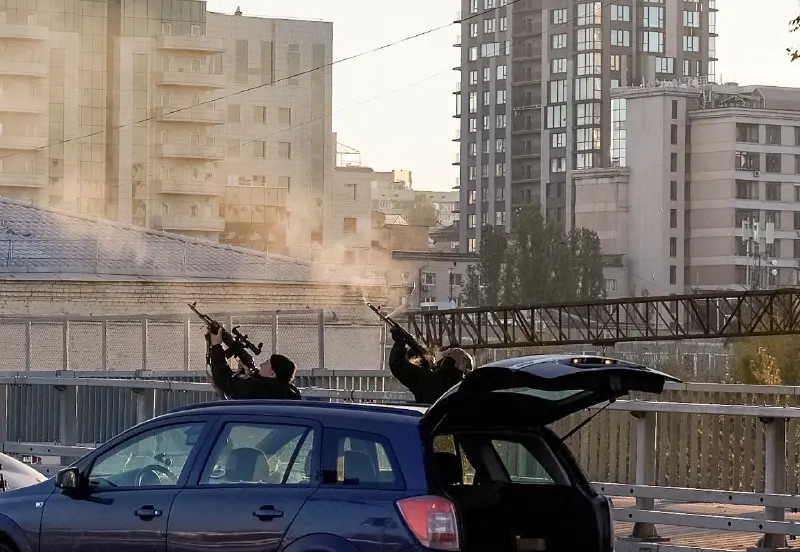


The Ukrainian war reminds me of the American geopolitical classic, “America’s Strategy in World Politics: The United States and the Balance of Power” (1942) by Yale Professor Nicholas Spykman (1893–1943). In that, he wrote, “whoever rules the Rimland commands Eurasia, and whoever rules Eurasia controls the destinies of the world”.
The Rimland is the coastal land covering Western Europe, Arabian-Middle East and Asian monsoon land that surrounds the Eurasian land mass. Anyone who wants to understand American foreign policy with respect to Europe has to read former US National Security adviser Zbigniew Brzezinski’s 1997 Foreign Affairs article on “A Geostrategy for Eurasia”.
Brzezinski understood that “Eurasia accounts for 75 per cent of the world's population, 60 per cent of its GNP, and 75 per cent of its energy resources. Collectively, Eurasia's potential power overshadows even America’s.”
Even though America is protected on the East by the Atlantic Ocean and on the West by the Pacific Ocean, the mainstream realist American view followed the Spykman line that control of the Rimland would command Eurasia.
This explains why the American leadership of the North Atlantic Treaty Organisation (Nato) is so focused on Ukraine. The Russian decision to invade Ukraine was the US cold warrior’s dream outcome. Prior to that, Western Europe was drifting away from American influence as it depended more and more on cheap Russian energy.
The Ukraine war and severance of the Nord Stream gas pipelines meant that Europe once again depended solely on the American defence umbrella and therefore subject to US strategic direction.
Spending time in Europe last week made me realise how emotions are clouding logic in the current debate over the Ukraine War.

First, there is no European exit strategy on how to achieve peace negotiations over the Ukraine war, which is being flattened by battles, assaults and retreats that destroy lives and infrastructure every day it lasts. After Switzerland gave up its neutral stance, there is no neutral European agent to bring the warring parties to the negotiating table. The odd middle-man is Turkey, a member of Nato, but it has its own differences with Europe.
Second, the economic sanctions against Russia have backfired, with European households paying higher energy prices and therefore facing higher inflation, while Russia has increased exports with much less economic damage than expected. The IMF’s latest forecasts think that the Russian economy will only shrink 3.4 per cent this year, compared with a 35 per cent drop for Ukraine.
Third, the more Nato gives Ukraine in terms of advanced military equipment to hit Russia, the greater the brutal reactions and the higher risks of nuclear outcomes. Both sides think that it would be suicidal to use nuclear weapons, admit that accidents are possible, but claim that the other side would not dare to use them. This irresponsible drift to escalation is like the physicist Richard Feynman’s report on the space shuttle Challenger fiasco, where he found that the engineers’ estimates of the chance of failure were about one in 100, whereas Nasa officials claimed the chance of failure was about one in 100,000.

Fourth, as costs begin to mount in terms of a looming recession and higher inflation, more thoughtful European leaders are waking up to the uncomfortable dilemma of a protracted war in Europe with no end in sight, and a helpless situation in which final decision-making on their own security is already passed to Washington DC. In effect, in defending the sovereignty of a non-Nato member (Ukraine), their own sovereignty to decide on whether to end the war lies outside of European members.
Fifth, the biggest economic loser is Germany as the largest manufacturing and surplus economy in Europe, since the war has cut off her cheap sources of energy as well as loss of markets to Russia and potentially to China from sanctions. Germany’s decision to re-arm at the same time wakens fear in other Europeans who remember how the whole project of the European Union was to bind Germany into peaceful co-existence.
The Ukraine war, therefore, is a war fought inside Eurasia that will decide whether Eurasia itself can ever decide its own security. The whole purpose of the European Union project was to bind Europe through economic interests to avoid the catastrophes of two world wars. Eurasia as a continental mass has enough food and energy for all, except that the resources are not divided equally. Geographical space becomes complicated by emotional space, as neighbours fight over religion, race or tribal reasons that often defy logic. Continental Europeans remember how Britain as an offshore island kept playing divide and rule so that no European power could challenge the British empire. History seems to be rhyming when America is playing the same game.

All these raise the question of whether any nation-state can be totally sovereign in an interrelated world. All members of the International Monetary Fund (IMF) know that when they get into trouble financially, they have to cede sovereign decisions to the IMF in order to get financial aid. Small countries that have powerful neighbours know that they cannot act against the neighbour’s interests without costs. Realistically, no country is totally independent in sovereignty in an overcrowded and interdependent world.
Ukraine’s fate today is to fight to the last man. When that happens, there will be no principle to defend. If we take that logic to nuclear war, what is the moral principle to defend one’s sovereignty when everything disappears in all-out nuclear annihilation?
As long as emotions run high, the war will continue. Cold logic for peace can only come when everyone pays the ultimate price for the foolishness of senseless slaughter.
Andrew Sheng
Asia News Network
