
Residential developers dust off their delayed launches


DEVELOPERS PLAN to launch residential projects worth more than Bt200 billion combined in greater Bangkok over the rest of the year, after delaying the launch of many projects during the first four months.
“We launched only eight projects in the first four months of the year because we speeded up sales from our inventory to match the government measure to reduce transfer and mortgage fees to 0.01 per cent, which expired on April 28,” Prasert Taedullayasatit, Pruksa Real Estate’s president for premium business, said.
The company will launch another 63 projects worth up to Bt50 billion over the course of the rest of this year, in a bid to boost full-year presales to the targeted level of Bt47 billion, he said.
Sansiri will launch seven projects together worth Bt13.2 billion during the current half, and a further 10 projects worth up to Bt20 billion in the latter half.
The developer launched only four projects in the first quarter, during which it recorded presales of Bt5 billion.
President Srettha Thavisin said the company had confidence of growth in residential demand during the remainder of the year, even though the government stimulus measure for property business expired last month.
“We are maintaining our transfer-value target of Bt36 billion for the year,” he added.
Quality Houses, meanwhile, plans to launch 13 new projects worth Bt14.1 billion over the rest of the year, after launching just two worth Bt2.1 billion combined in the first four months.
“We will accelerate the launch of new projects during the rest of this year now that the government’s stimulus package for the property sector has expired. We believe our presales will hit the full-year target of Bt21 billion, after recording presales worth Bt4.4 billion in the first quarter,” chief executive officer Chadchart Sittipunt said.
Pruksa’s Prasert Taedullayasatit, who also president of the Thai Condominium Association, said most residential developers had delayed the launch of new projects during the first four months, as they had introduced special promotional campaigns to sell their stock to match the government’s stimulus package for the sector.
According to a survey by the Thai Condominium Association, presales value from October 28 through April 27 in Bangkok and its suburbs was worth some Bt300 billion, up 20 per cent from the earlier estimate of Bt250 billion.
“Up to Bt50 billion of the presales were the result of the government measure, with most of those buyers purchasing a ready-to-stay home benefiting from the incentive,” the association chief said.
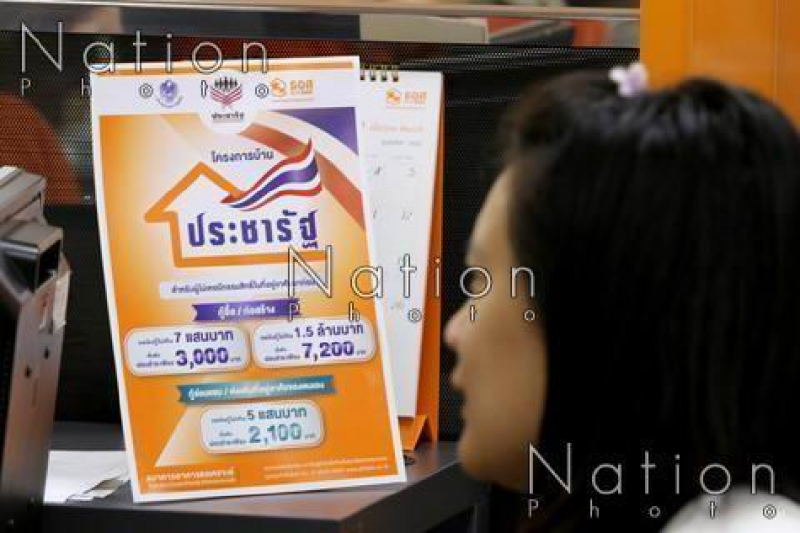
‘Baan Pracha Rath’ boost
Despite the expiry of the mortgage and transfer fees measure, the property market is expected to grow by between 5 per cent and 10 per cent over the rest of this year, because the market still has the “Baan Pracha Rath” incentives from state-own banks such as the Government Housing Bank (GH Bank) and the Government Savings Bank, he stressed.
Under the scheme, qualified buyers can benefit from a lower-than-normal interest rate and relaxed approval criteria for mortgages for homes priced below Bt1.5 million, Prasert said.
“The ‘Baan Pracha Rath’ measure will boost demand for housing priced up to Bt1.5 million per unit, as demand in the middle and upper residential segments will in any case grow thanks to lower interest rates at this time,” he added.
Meanwhile, Samma Kitsin, director-general of GH Bank’s Real Estate Information Centre (REIC), said he believed the residential market would drop between 20 per cent and 30 per cent for two or three months after the stimulus measure expired last month, before bouncing back to normal over the remainder of the year.
According to a report by the Metropolitan Bangkok Land Office, more than 120,000 residential transfers took place in greater Bangkok from October 28 through April 28 – some 20 per cent higher than in the same period in 2014-2015.
Meanwhile, new residential projects launched in the first quarter dropped 14 per cent year on year, according to the REIC’s own survey.
