
Thailand faces prolonged El Niño risk as DCCE steps up response
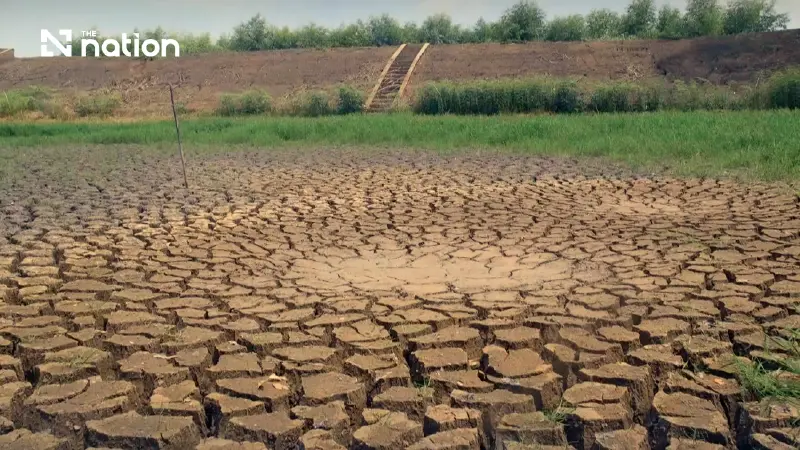


Thailand is expected to face a high risk of El Niño conditions from June 2026 to early 2027, with lower rainfall, warmer temperatures and possible impacts on water supplies, agriculture and disaster preparedness.
- Thailand is forecast to face a prolonged El Niño phase from June 2026 to early 2027, which is expected to cause below-average rainfall and higher temperatures.
- The Department of Climate Change and Environment (DCCE) is leading the government's response by developing proactive measures to mitigate the impacts.
- Key DCCE initiatives include creating a high-resolution climate database and a detailed subdistrict-level Climate Risk Map to identify vulnerable communities and economic zones.
- These tools are designed to shift the country from reactive disaster response to proactive prevention, supporting agricultural planning, food security, and resilient infrastructure development.
Thailand faces a high risk of entering a prolonged El Niño phase from June 2026 to early 2027, with the phenomenon expected to peak towards the end of 2026, according to forecasts by leading global climate agencies.
The latest assessments by leading global climate agencies, including the National Oceanic and Atmospheric Administration, the International Research Institute for Climate and Society and the European Centre for Medium-Range Weather Forecasts, point in the same direction, indicating a 96–98% likelihood that the world will transition into El Niño conditions between June and July 2026, with the pattern likely to continue until early 2027.
Climate models also suggest that the phenomenon could reach its strongest phase between November 2026 and January 2027. Without adequate preparation, the event may affect economic and social systems and cause wider damage.
The government, led by Prime Minister Anutin Charnvirakul, has made disaster and environmental policy a key priority. Its agenda includes systematic water management and disaster prevention, the development of a national disaster insurance system, efforts to push Thailand towards net-zero greenhouse gas emissions by 2050, and the balanced conservation and use of natural resources.
The Department of Climate Change and Environment (DCCE) has been assigned to drive proactive measures, including the development of a high-resolution climate database to support drought response, reduce losses and strengthen the country’s resilience. The department is also accelerating public awareness and adaptation guidance for people and relevant agencies.

Impacts Thailand must monitor
Dr Phirun Saiyasitpanich, director-general of the DCCE, explained that Thailand must closely monitor the effects of El Niño on both rainfall and temperature.
From June 2026 to January 2027, many parts of the country are likely to receive less rainfall than normal. Although Thailand will still be influenced by the southwest monsoon during the main rainy season from June to August, stronger El Niño conditions could reduce rainfall during this period.
Towards the end of the rainy season, from September to October, tropical cyclones in the Pacific Ocean may form farther away from the Asian coast than usual. If these storms do not move close to Thailand, rainfall late in the season could fall further.
Southern Thailand, which has its rainy season between December and January, is also likely to experience lower rainfall.
In terms of temperature, Thailand is expected to record slightly higher average temperatures than normal, making overall weather conditions warmer. This is especially likely between December 2026 and February 2027, which could make this year’s cool season less cold than the previous year.
Climate database developed for long-term planning
Phirun noted that, in line with the policy of the Minister of Natural Resources and Environment, the DCCE has developed climate projection data extending to 2100 to support adaptation and response to the climate crisis.
The data covers both the current greenhouse gas emissions scenario, known as SSP2-4.5, and a high-emissions scenario, known as SSP5-8.5. It is available at resolutions of 25 x 25 kilometres and 5 x 5 kilometres, and includes rainfall, maximum temperature, minimum temperature, average temperature and relative humidity.
The information has been made available to agencies for long-term flood and drought planning through the Climate Change Information Centre, which serves as Thailand’s central platform for climate change data.
The department is also working with Weathernews Inc to develop a high-resolution river flood risk dataset at 90 x 90 metres. The dataset is expected to be completed by early 2027.
Subdistrict-level Climate Risk Map in development
Amid increasingly severe climate variability, the DCCE plans to develop a Climate Risk Map with subdistrict-level detail. The map will cover risks from floods, drought, landslides, sea-level rise and rising temperatures.
The map is expected to be completed by 2028 and is intended to become a key scientific tool for strengthening Thailand’s climate resilience.

Tool to identify risk areas and support management
A major benefit of the Climate Risk Map will be its ability to integrate climate data with high-resolution spatial information. This will allow government agencies and relevant organisations to pinpoint communities, agricultural zones and economic areas that are vulnerable to different climate threats.
The information will be important for budget allocation, workforce planning and targeted disaster preparedness. It will also support a shift from reactive disaster response to proactive prevention, Phirun added.
Strengthening food security and local economies
In economic terms, the Climate Risk Map will help the agricultural sector plan more effectively for droughts and floods.
When farmers and agricultural agencies can identify trends and high-risk areas in advance, they can adjust planting calendars, choose suitable crop varieties and prepare backup water sources more appropriately.
Such adaptation will not only help reduce the impact on farmers’ incomes, but also protect Thailand’s food security from the effects of the climate crisis, he noted.
Supporting resilient urban planning and infrastructure
Data from the Climate Risk Map will also play an important role in future urban planning and infrastructure development.
Using risk-area data in decision-making will help the government avoid building key infrastructure in hazard-prone areas. It will also support the design of public utilities, such as drainage systems and roads, with stronger climate resilience.
Thailand would be able to grow sustainably through a low-carbon economy and stronger climate resilience, supported by public participation, Phirun concluded.
