
Grid modernisation strengthens Thailand’s clean energy shift


Thailand is modernising its power grid to integrate more renewable energy, strengthen system flexibility and support its net-zero emissions target by 2050.
- Thailand is modernizing its national power grid to support its 2050 net-zero emissions goal by accommodating fluctuating renewable energy sources like solar and wind.
- The strategy, led by the Electricity Generating Authority of Thailand (EGAT), focuses on deploying diverse Energy Storage Systems (ESS), including large-scale batteries, pumped-storage hydropower, and hydrogen.
- Modernization efforts also include a Renewable Energy Forecast Centre to predict output, a Demand Response Control Centre to manage consumption, and upgrading conventional power plants to operate more flexibly.
Thailand’s move towards cleaner energy is putting greater pressure on the country’s electricity network to accommodate more renewable power while maintaining reliability, affordability and system stability.
As climate change intensifies, governments and businesses are accelerating efforts to cut greenhouse gas emissions. Thailand has also stepped up its environmental ambitions, with a national target of reaching net-zero greenhouse gas emissions by 2050.
For the country, modernising the power grid is becoming increasingly important not only to support the energy transition but also to strengthen investment competitiveness as businesses seek greater access to clean and renewable electricity. The shift is also aimed at supporting economic growth while protecting the environment, marking an important step towards long-term sustainable development.

Grid modernisation becomes central to the transition
The Electricity Generating Authority of Thailand (EGAT) is upgrading the national power system through “grid modernisation”, bringing new technologies and innovations into energy management and transmission to make the network more flexible.
That flexibility is increasingly important because solar and wind generation depend on natural conditions and can fluctuate throughout the day. Unfavourable weather can prevent these renewable sources from generating electricity continuously.
EGAT’s approach combines energy storage, renewable energy forecasting, demand-response management and more flexible power plants.
Together, these technologies are intended to address the intermittency of renewable generation while maintaining electricity security during Thailand’s transition towards a lower-carbon system.
Energy storage adds flexibility to the grid
Energy Storage Systems (ESS) are a major part of the modernisation programme. They store surplus electricity when demand is low and release it when demand rises or renewable generation falls.
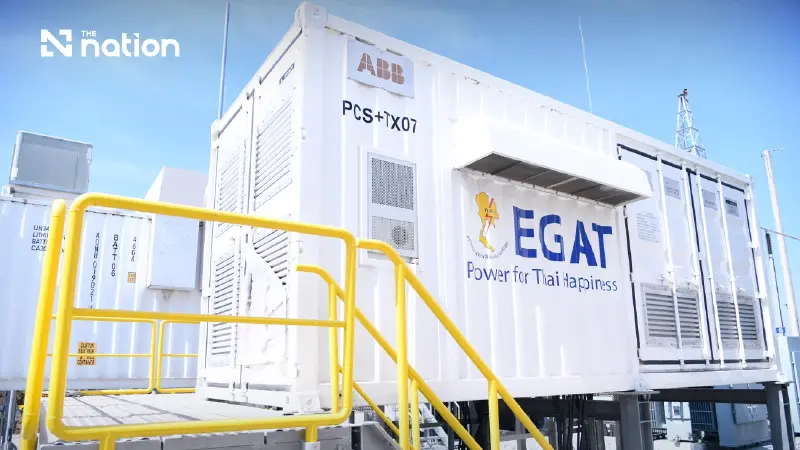
One form is the Battery Energy Storage System (BESS), which uses large lithium-ion batteries and functions in a similar way to a large-scale power bank. The system can respond within milliseconds while also helping regulate voltage and frequency.
EGAT has installed BESS facilities at Bamnet Narong Substation in Chaiyaphum and Chai Badan Substation in Lopburi, both in areas with significant renewable energy generation.
Another form is pumped-storage hydropower, which effectively works as a large water-based battery.
Water is pumped from a lower reservoir to an upper reservoir during periods of low electricity demand, then released through turbines to generate electricity when demand increases. Generation can begin within about two to five minutes.
EGAT currently operates pumped-storage facilities at Srinagarind Dam in Kanchanaburi, Bhumibol Dam in Tak and Lamtakong Jolabha Vadhana Power Plant in Nakhon Ratchasima. It is also developing a project at Chulabhorn Dam in Chaiyaphum, with electricity supply to the grid planned for 2034.

Hydrogen and EVs offer additional storage options
Hydrogen Energy Storage Systems provide another way to store energy. Hydrogen can be produced from several sources, including natural gas, coal and oil, as well as from water through electrolysis using renewable electricity.
The hydrogen can then be stored and later converted back into electricity through a fuel cell when required.
EGAT has tested this approach at Lamtakong in Nakhon Ratchasima, using electricity from wind turbines to produce green hydrogen. The stored hydrogen can then be converted into electricity to supply the EGAT Lamtakong Learning Centre.
Vehicle-to-Grid (V2G) technology could also turn electric vehicles into distributed energy-storage resources. Through bidirectional charging, EV batteries can both receive electricity from the grid and send power back when required.
EGAT has been testing and studying V2G and plans to explore links with the wider grid, potentially allowing large numbers of EVs to provide backup electricity and support system stability in the future.

Forecasting renewable output more accurately
Grid modernisation is not limited to storing electricity. EGAT has also established the Renewable Energy Forecast Centre (REFC) to forecast solar and wind generation from small power producers under power purchase agreements with EGAT, as well as from plants covered by data-sharing arrangements.
The centre combines weather information, technical data and statistical information to estimate renewable electricity output as closely as possible to actual generation in each area. The forecasts support the system operator in planning and dispatching power plants as conditions change.
Demand response helps balance peak electricity use
EGAT’s Demand Response Control Centre (DRCC) adds flexibility on the consumption side of the system.
The centre can coordinate reductions in electricity use among consumers during peak-demand periods or when fuel prices are high through a Load Aggregator (LA), which aggregates and manages electricity demand from participating users who agree to reduce their consumption in return for compensation.
Demand response therefore gives system operators another tool to balance the grid when renewable generation fluctuates, while helping reduce pressure during periods of high electricity demand.

Flexible power plants support renewable growth
Conventional power plants will continue to play a supporting role during the energy transition, particularly when renewable generation falls unexpectedly.
EGAT is therefore improving existing fossil-fuel power plants to operate more flexibly. The Flexible Power Plant programme allows generating units to raise or lower output more quickly in response to changes in renewable generation.
Under the improvements, the minimum operating level can be reduced from 60% to 45% of generating capacity, allowing plants to remain online at lower output and ramp up when the grid requires additional electricity.
If a plant needs to restart, the process can be completed within two hours, about twice as fast as previously.

Building a grid for a cleaner energy future
Grid modernisation is increasingly becoming a foundation of Thailand’s energy transition. By combining storage, forecasting, demand response, flexible generation and upgraded transmission management, the power system can accommodate a larger share of renewable energy without sacrificing reliability.
For Thailand, that capability will be important as electricity demand evolves, clean-energy requirements become more prominent in investment decisions and the country works towards its net-zero emissions target by 2050.
