
Thai Power Giant EGAT Unveils ‘Triple S’ Strategy to Hit Net Zero by 2050
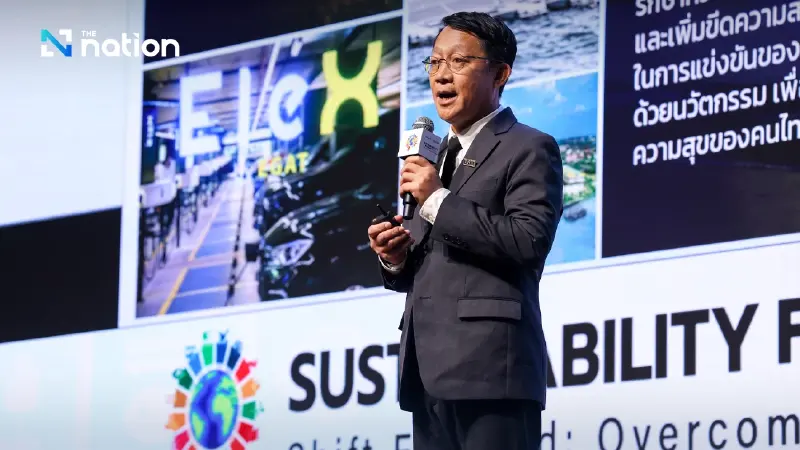


State utility confirms ambitious plan to double renewable energy share in national grid, focusing on massive Floating Solar projects and advanced SMR/Hydrogen technologies
The Electricity Generating Authority of Thailand (EGAT) has outlined its decisive path towards achieving carbon neutrality, committing the nation’s power sector to a Net Zero Emission goal by 2050.
Speaking at the SUSTAINABILITY FORUM 2026 Shift Forward: Overcoming Challenges during the Special Talk under the topic "EGAT’s Path to a Sustainable Energy Future" on Wednesday, Eakarat Samintarapanya, EGAT's Assistant Governor for Power Plant Planning, unveiled the organisation’s "Triple S" Strategy, designed to fundamentally restructure Thailand's energy mix.
The new national Power Development Plan (PDP) is set to increase the share of renewable energy in the country's electricity generation from the current 26% to an ambitious 51%.

“The global trend and Thailand's energy direction are clearly moving towards a significant increase in renewable energy use,” Eakarat stated, explaining how the Triple S framework will guide this massive transition:
Sources: Shifting production from fossil fuels to renewables and advanced, clean technologies.
Sinks: Maximising the absorption and storage of carbon dioxide from the atmosphere.
Support: Promoting efficiency among consumers to reduce overall emissions.

Floating Solar and Next-Gen Stability
Regarding sources, EGAT is accelerating its flagship Floating Solar Project, installing large arrays of solar panels on reservoirs across the country.
This initiative is highly strategic: it avoids the cost of purchasing land, reduces water evaporation from reservoirs, and creates eco-tourism and local economic opportunities, such as at the already operational Sirindhorn Dam project.
Currently, two of the sixteen planned Floating Solar projects are complete.
To counteract the inherent instability of solar and wind power, EGAT is simultaneously deploying advanced storage solutions:
Pumped Hydro Storage: Using excess daytime renewable power to pump water uphill, which is then released to generate electricity during high-demand periods (e.g., at night).
Battery Energy Storage Systems (BESS): Installing large batteries in provinces like Chaiyaphum and Lopburi to stabilise the grid when renewable output fluctuates.

SMRs and Hydrogen on the Horizon
Looking to the future, EGAT is actively preparing for two zero-emission, combustion-free power technologies:
Small Modular Reactors (SMRs): Eakarat noted that these smaller nuclear units are designed to address historical safety concerns, as the reactors are manufactured and assembled as prefabricated sets in a factory, ensuring higher quality control.
EGAT has already dispatched staff for international SMR training in preparation for their possible inclusion in the new PDP.
Hydrogen Power Plants: This clean energy source is also viewed as a crucial part of the long-term sustainable energy mix due to its zero-pollutant output.

Beyond technological solutions like Carbon Capture Storage (CCS), EGAT’s Sinks strategy also relies on natural solutions, utilising forest areas and tree planting around its projects to absorb carbon dioxide.
Finally, the Support pillar includes the decades-long "No. 5 Energy-Saving Label" programme, which has promoted efficient electrical appliances since 1995, helping consumers reduce both their utility bills and their personal carbon footprint.
“The execution of EGAT’s Triple S strategy is akin to adjusting the course of a large vessel,” Eakarat concluded, “to ensure the country’s energy system journey is secure, stable, and ultimately reaches the destination of Carbon Neutrality.”
