
Mixed response to upcoming CO2 tax structure


Play
While some auto-makers say it's fair basically, many are complaining
The government’s approval of the new automobile tax structure seems to run in the opposite direction to the populist First Car Buyer Programme.
As auto companies celebrate historic sales in 2012 due to the government’s excise tax promotion under the programme, many are already beginning to complain about the next tax structure, which is based on carbon dioxide emissions.
Many promising vehicle segments, especially pickup trucks and hybrid vehicles with engine sizes of more than 2,000cc, will suffer from higher taxes (as much as double in the case of these two segments) when the new structure hits the road in 2016.
After the announcement, there were rumours that Toyota – which is a major producer of pickup trucks and hybrid vehicles – is considering relocating to Malaysia, where zero-per-cent tax is being offered for hybrid vehicle production.
However, there are many companies that are preparing further investments here in answer to the new tax rates.
AIC says auto prices will go up
Surapat Sirisuwannangkura, chairman of the Auto Industry Club, Federation of Thai Industries (FTI), said the new tax structure approved by the Cabinet on December 18 was expected, but it would cause vehicle prices to increase.
“The 1-tonne pickup truck segment will be mostly affected, particularly the spacecab models, which will experience a sharp excise tax increase from the current 3 per cent to 5 per cent, if they are able to produce less than 200g/km of CO2. If it is higher, it will suffer from 7 per cent excise duty,” he said, adding that small passenger cars with engine sizes below 1,600cc will also face higher taxes.
However, the eco-car segment will enjoy further benefits, with a 3-per-cent reduction in excise tax.
“The current tax is 17 per cent for eco-cars, but if they are able to produce less than 100g/km of CO2, the tax will be lowered to 14 per cent. And if they can run on E85 gasohol, the excise duty will be further lowered to 12 per cent,” said Suparat, who is also executive vice president at Toyota Motor Thailand.
Presently, four auto-makers are offering eco-cars – Nissan, Honda, Suzuki and Mitsubishi. Toyota has yet to introduce its eco-car.
This raises the question whether other automobile companies would be granted the same privileges if they are able to develop vehicles that conform to the new tax structure.
TAIA accepts Cabinet resolution
Thai Automobile Manufacturers Association (TAIA) president Piengjai Kaewsuwan said the new excise tax structure is not surprising. The CO2 standards as well as the designated starting period on January 1, 2016, is suitable, he added.
“Surely, some companies may be dearly affected, especially those with newly launched pickup truck models or those that are planning to launch a new model in the next 1-2 years, since the lifespan for a pickup model is 8-9 years. This means that after just 2-3 years after the launch of a new model, auto-makers will have to invest further in technology so that their vehicles meet the CO2 standards,” she said.
“Nevertheless, the government has consulted with specialists before coming up with these CO2 standards in order to best suit the Thai scenario, and we believe that every manufacturer knows about this so they have the time to prepare in advance,” Piengjai added.
Pickup brands take a blow
According to an auto industry source, pickup manufacturers will suffer from the new tax structure, especially PPVs (Pickup Passenger Vehicles). Those with engine displacements of below 3,250cc usually pay 20 per cent excise duty, but with the new structure, vehicles that emit less than 200g/km of CO2 will be taxed 25 per cent. If the engine size is larger than 3,250cc, the rate goes up to 50 per cent.
Double-cab pickups with engine sizes not over 3,250cc enjoy the same tax rate of 12 per cent, but if the CO2 emission is more than 200g/km, the tax goes up to 15 per cent.
Pickup manufacturers like Toyota, Isuzu, Nissan, Mitsubishi, Mazda, Ford, Chevrolet and Tata needs to develop new technologies to lower CO2 emissions, especially Isuzu, which offers only trucks and PPVs.
Hybrids of over 2,000cc face 100% increase
Although the number of hybrid vehicles in Thailand is still small, it is another segment that will be clearly affected. Under the present system, hybrid vehicles enjoy 10 per cent duty. With the new structure, hybrids with engines smaller than 2,000cc and CO2 emissions below 100g/km enjoy the same 10-per-cent excise duty. But for those with engine displacements of 2,001-2,500cc and emissions of 101-150g/km, the tax will double to 20 per cent. Those with 2,501-3,000cc engines and 151-200g/km of CO2 will have to pay 25 per cent, while these vehicles with emissions of more than 200g/km will have to fork out 30 per cent excise duty.
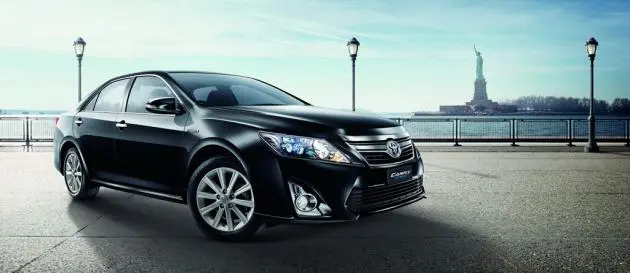
Sources say it is noticeable that the excise duty for hybrids has been raised across the board. The most affected is Toyota, which assembles the Camry Hybrid and Prius (the latter won’t be affected) at the Gateway plant in Chachoengsao. Toyota also has plans to introduce more hybrid models in the future.
Honda’s Jazz Hybrid, with a 1.3-litre engine, is not affected.
“In the case of hybrids, Toyota will feel the biggest impact. This comes after the Thai government offered incentives for auto-makers to assemble hybrid vehicles in the country. Toyota was the first to respond, and started production of the Camry Hybrid. But the new tax structure directly affects hybrids and we’ll have to see what Toyota will do next. In countries like Japan, the government offers incentives and is supporting hybrid production for 10 years. In Malaysia, the government is offering zero-per-cent tax, and it is possible that Toyota may consider relocating its hybrid production to Malaysia instead,” he said.
Honda: Tax shouldn’t be according to technology, vehicle type
Honda Automobile (Thailand) senior vice president Pitak Pruittisarikorn said the carmaker agrees in principle with the new tax structure as well as the 3-year grace period.
“Although it may seem tough for the auto industry, Honda is able to accept the new conditions. However, if this is the direction to be taken, there should not be classifications in vehicle type. Only the carbon dioxide emission level should be used to determine the tax for each vehicle. The government should also re-consider the vehicle type. For example, SUVs [Honda CR-V] and PPVs [Toyota Fortuner, Pajero Sport] should use the same standards in order to be fair and lower redundancy,” he said.
Mitsubishi planning further investment
Mitsubishi Motors Thailand president Nobuyuki Murahashi said the new tax structure supports eco-cars, and that is the right way to go.
“Eco-cars are intended to be eco-friendly and affordable. They are not luxury items and there is no need to raise the tax on them,” he pointed out.
Murahashi said the 200g/km limit for pickup trucks is suitable but challenging at the same time.
“Presently, Mitsubishi does not qualify and we have to make further improvements in this area,” he said.
Murahashi also pointed out that the tax increase in the passenger car segments may be due to compensation for support given to eco-cars and alternative fuel vehicles.
“The 3-year timeframe given is adequate and the changes are acceptable and understandable,” he said.
Nissan: New tax structure is redundant
Nissan Motor Thailand president Takayuki Kimura said the government is heading in the right direction on tax levels for CO2 emissions since it encourages eco-friendly vehicles.
“But it can also complicate things with the classifications of each technology, which should be the choice of the manufacturer in achieving the CO2 figures,” he said.
Company senior vice president Praphat Choeychom said the new structure clearly supports the use of E85 and auto companies will have to upgrade their vehicles to be compatible with the high ethanol content, despite the fact that fuel consumption will increase by 30 per cent when running on E85 compared to regular gasoline.
Mazda: CO2 will become a factor when buying vehicles
Mazda Sales Thailand marketing director Sureethip La-Ongthong Chomthongdee said the industry would see auto-makers racing to achieve lower CO2 emissions with various technologies.
“Those that don’t have the technology will have to eventually raise their prices, and this will seriously affect their competitiveness. Meanwhile, customers will also change their behaviour – apart from considering prices, options and promotions, they will also be considering the CO2 factor,” she said.
Mazda, which doesn’t have an eco-car model, is hoping that its Mazda2 subcompact would be awarded some sort of privilege if it is able to produce the required CO2 level or even lower.
Fear of changing policies
The new tax structure is raising questions, as well as criticism, of the government’s changing policies.
There are unresolved – and unclear – issues, such as the standard for active safety in passenger cars. It is expected that the Office of Industrial Economics will be responsible for drawing up the standards. Auto-makers are also expected to group and ask the government for clarity on this issue early next year.
It will be interesting to watch whether the new tax structure will unfold or not, since this is only a Cabinet decision: an official announcement from the Excise Department has not been made.
Many feel the new tax is fair and benefits the environment, although political issues may be involved.
Industry sources say the planned taxation based on CO2 emissions had been anticipated for some time, but the surprisingly large hike in excise tax has been seen as a way for the government to generate more income in order to compensate for its huge spending on populist projects including the First Car Buyer Programme.
