
Nectec, Chula join up for new project


Play
Goal of Thai speech-to-text system is to narrow the communication divide
The National Electronics and Computer Technology Centre (Nectec) and Chulalongkorn University have jointly developed PARTY Thai Speech-to-Text technology, with the aim of narrowing the communication divide and reducing costs for Thai-language call centres. The system, which is now being tried out, could be provided both free of charge and commercially in the next phase.
Chai Wutiwiwatchai, project leader and researcher at Nectec’s Speech and Audio Technology Lab, said the joint research team had started to develop the PARTY Thai Speech-to-Text last year, using the automatic speech recognition (ASR) technology.
The system, which comprises three models – language, pronunciation dictionary and acoustic – has installed more than 70 million Thai words and over 40,000 Thai pronunciations, as well as a support body of 230 hours of continuous Thai speech and broadcast news.
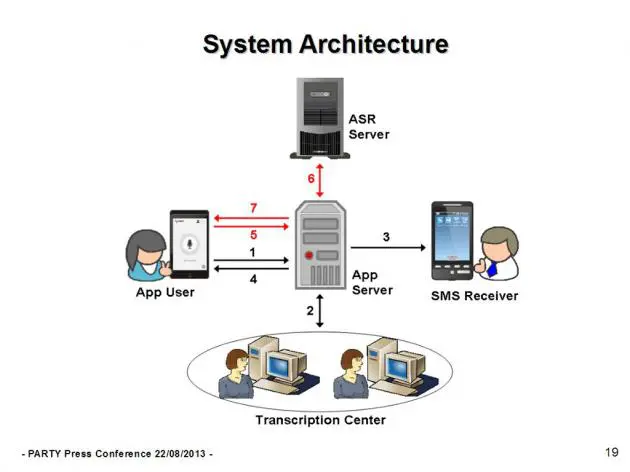
With the system’s current accuracy rate at 50 per cent, the team is now inviting Thais to participate in the ASR technology via the PARTY mobile application, which is based on the iOS operating system, he said.
Thai mobile users wanting to experience the trial Thai speech-to-text service can download the PARTY app and register via their mobile device.
This will enable them to send short messages by voice to the system’s call centre, which will then translate the speech into text and send it via SMS to the mobile receiver, free of charge. The application server will also send e-mail to users.
The research team expects to trial the system on this basis for around 10 months with a view to continuous development and improvement, prior to making an official announcement as the next step.
“I believe the ASR technology will save costs for communication services such as call centres and in the medical sector, where it will allow doctors to record details of a patient’s disease into the voice database. The voice message then will be translated into text and inputted into the patient data base,” said Chai.
While ASR technology is currently not available in the Thai language for commercial purposes, two US-based companies – Nuance Communication and Google – are developing a Thai version, about which an official announcement is expected to be made next year.
VAJA project
Chai said the Speech and Audio Technology Lab had also successfully developed text-to-speech synthesis (TTS) under a project named VAJA.
The system is now able to provide bilingual Thai/English TTS and has been integrated into a variety of applications and services.
For example, more than 70 state hospitals use VAJA to call patients’ names in accordance with their registration numbers in the queuing system.
VAJA has also been applied in voice information services at some telephone call centres, such as a diabetes self-care service at Chulalongkorn Hospital and a traffic information service at Nectec, he said.
Also used as an assistive technology, VAJA has been applied as an interface for people with visual disability to access information in online newspapers since 2010. The project is now being intensively improved in three aspects, said the researcher.
First, a completed English-text analysis part is being developed, so that the system will be able to produce sounds smoothly in both Thai and English.
Second, further research is under way to make the synthetic speech more natural and expressive, with in-depth analysis of practical human conversation key to making the system efficiently produce more human-like speech.
Lastly, VAJA’s compatibility with screen-reader software on both PCs and smart phones is being evaluated and improved, he said.
