
Digital opportunity centre helps rural community build better future
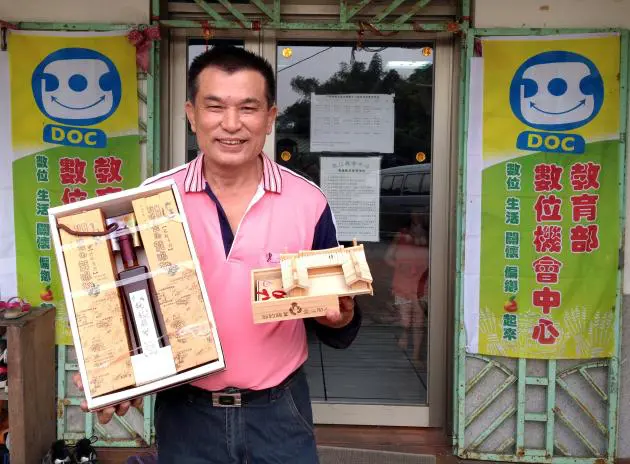


Every crisis presents an opportunity, and this is certainly the case for a rural community in Taiwan that has become a model of proof that information and technology can help revitalise people as well as the local industry and economy.
Situated in the central part of Taiwan, Longyan-Lin community in Chungliao Township of Nantou County, was one of the areas hit the hardest in the “921” (September 21) earthquake in 1999.
During the relief activities, the community formed the Chungliao Longyan-Lin Welfare Association to help local people rebuild their homeland and seek support from the outside world. The association offers several services to the local population.
In early 2004, the association actively sought help from Taiwan’s Institute of Information Industry, with support from the country’s Education Ministry, to build the nation’s first digital opportunity centre (DOC) in the community.
To coordinate with the “bridging the digital divide” project, the institute rebuilt second-hand computers from Chungliao Township and established the Chungliao DOC with the revamped equipment.
Within one year of operation, seven more DOCs were established in isolated towns and villages in central Taiwan.
“The centre has helped reduce the digital divide in the town because we can learn many things from computers,” said centre manager Jin Yi Liao.
From the outset, the centre offered opportunities by training junior and middle-aged people how to use computers. Now, with these computer skills, they can find jobs in the city, he said.
The centre provides services such as computer software and hardware maintenance; community programme promotion and enrolment; organising digital-related promotional activities and group receptions; data collection for community culture, agricultural products, processed products and tourism; introducing community resources; community video equipment; community computer-repair service; and building and managing the community website.
Agricultural benefits
The community association also facilitates agricultural transformation by promoting local products. As a major longan-farming town, people in the community have learnt how to preserve their fruit longer by using an oven to make dried longan, which means the crop can be kept for up to one year.
The dried longan was an instant hit when marketed, and its price has grown exponentially, said Jin.
He said that not only does it increase the economic value of longan and improve local farmers’ livelihoods, it also helps the association secure great profits, which are then used to promote public welfare.
“The DOC has helped farmers learn how to design packaging for local products so we can earn more income,” he added.
For example, a bottle of nutritional drink cost 500 Taiwan new dollars (Bt533), but after they created a well-designed wooden box as a container, $1,200 can now be fetched.
So far, there are around 260 DOCs set up by the Education Ministry of Taiwan.
Moreover, some of the centre’s works and methodologies will be practised in Apec Digital Opportunity Centres (ADOC) in order to make them sustainable in the near future, according to the ADOC organisation.
The Asia-Pacific Economic Cooperation forum’s ADOC initiative was launched by Taiwan in August 2004 with the aim of bridging the digital divide and making a contribution to inclusive growth in the Apec region by enabling people to overcome limitations due to age, gender, health, social or educational status, allowing those people to enjoy the “4A” benefits – anytime, anyone, anywhere and anything – of digitalisation.
As the ADOC project will officially end in December next year, the organisation is trying to continue its sustainability and upgrade Apec DOCs’ capacities to a higher level.
Raising value of SMEs
ADOC secretary-general Meili Hsiao said the organisation wanted to do something new, for example, raising small and medium-sized entrepreneurs (SME) to business clusters in order to strengthen industrial development.
“A single SME is not powerful enough. Clusters are good way to group different kinds of enterprises or entrepreneurs to have their own unique value and provide their value to customers,” she said.
Using ICT tools such as the Internet and social media would help them to open their stores 24 hours a day and reach customers all over the Apec region, she added.
In order to give support to regional economic development based on the existing ADOC centres, Malaysia and Peru this year were selected to implement trial pilot projects that are deeply related to local SMEs.
The two pilot projects aim to establish value-added business clusters by leveraging ICT and collaborating with local governments, local partners and SME owners.
