
Co-bots to give Thailand competitive edge


Play
Early this year, Thai exports saw a significant drop as a result of sluggish global demand, with February recording a 21-per-cent slump in shipments to China and an 11.7-per-cent slide in exports to Japan. Therefore, it is no surprise that in recent month
It is convenient to attribute the regression of Thailand’s economy to the strengthening of the baht relative to the US dollar, but analysts have singled out export competitiveness as a main factor. HSBC Thailand economist Nalin Chutchotitham opines that productivity-enhancing reforms and an emphasis on innovation are vital to Thailand’s successful climb up the value chain.
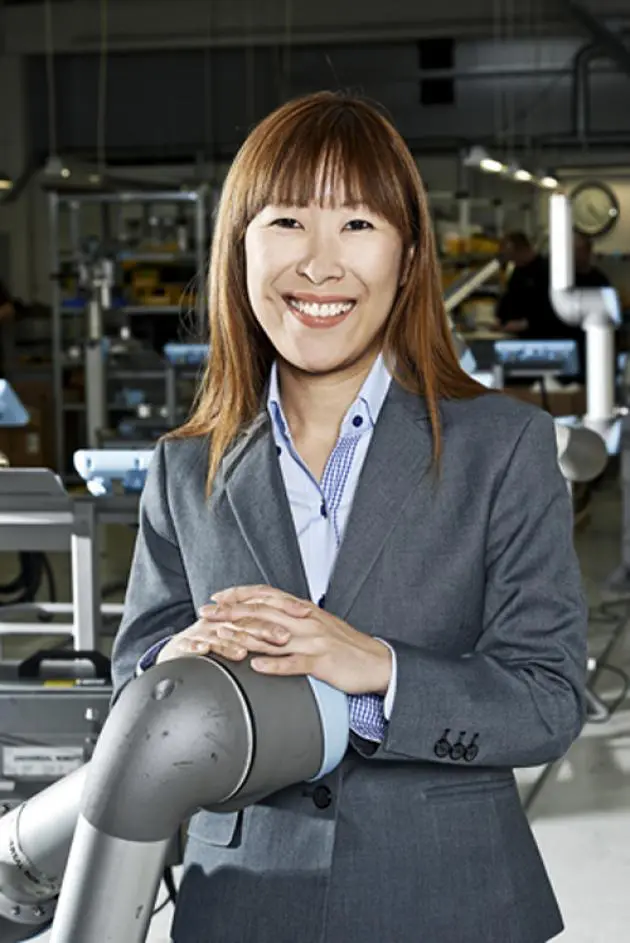
One such innovation is the “co-bot”. The term, short for “collaborative robot”, was coined in light of the wave of affordable and easy-to-implement robotic technologies that work collaboratively with humans. Co-bots today are well suited for industrial use in small and medium-sized enterprises it terms of functionality and cost. Also, recent key developments such as safety features and intuitive interfaces have made co-bots increasingly attractive to SMEs.
When industrial robots were first introduced in the late 1900s, workplace accidents were commonplace. Now, thanks to an in-built force-sensing feature, safety concerns are reduced, as some of the present-day robots will halt their actions when they sense an obstruction. Workers can be further kept safe by assigning high-risk, repetitive tasks to the robots. Additional costs are also cut when safety guarding is deemed unnecessary after conducting prior risk assessments.
SMEs also tend to be apprehensive about new technology, as additional costs are incurred to retrain workers. This can have a crippling effect on smaller companies with limited finances and resources. Fortunately, intensive training is not necessary, as the co-bots are user-friendly and easy to program. This way, the factory can integrate co-bots smoothly with minimal reliance on expensive technical support.
Although robotic technology has come a long way since its primitive days, preconceived notions of clunky and heavy machinery remain. The modern industrial robot has evolved to take on qualities such as portability and low weight. It is now compact, occupies a small footprint, and is easy to move around. This is ideal for smaller production lines that face space constraints and require the robots to handle multiple stations. The factory layout can thus remain unchanged, saving significant restructuring costs and time.
In addition, contrary to popular belief, the time taken to commission these co-bots for basic applications from the set-up and programming to deployment phases can be as little as an hour. Not only is the integration of co-bots into operating systems fast, but tangible results arrive quickly too. These technologies boast some of the fastest payback periods in the market, relieving the initial investment outlay that can be daunting for companies.
Co-bots are quickly penetrating industrial markets all over the world, and gaining a reputation for revolutionising production lines. Thailand now has the option of leveraging on robotic technology to give Thai exports an edge over their competitors. This will revitalise Thailand’s economy and restore it to its original position as a manufacturing giant in Asia.
Shermine Gotfredsen is general manager, Asia-Pacific, for Universal Robots.
