
Uber Service: Question over BRTA stance
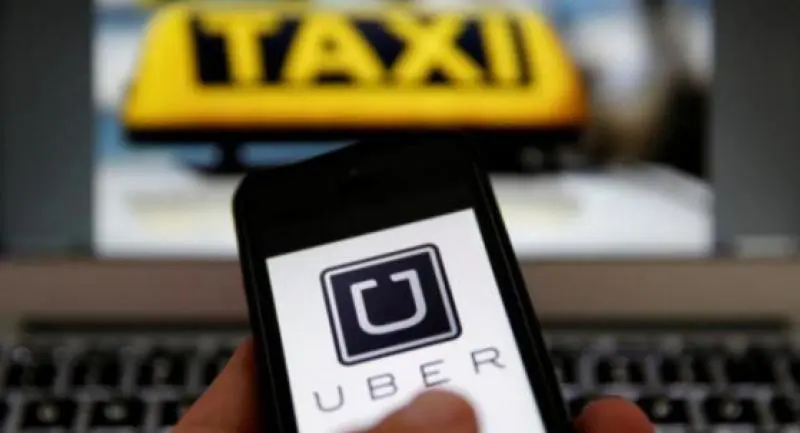


DHAKA - Uber has been declared as an illegal service by the Bangladesh Road Transport Authority yesterday, as it was operating without seeking the necessary approvals.
The Bangladesh Road Transport Authority (BRTA) yesterday declared Uber, an on-demand transport service, illegal saying the company did not take permission for running the service in the country.
In an advertisement published in several dailies, the BRTA said operating any taxicab service without permission from it or the government was totally illegal and a punishable offence.
Taxicabs are operated under the 'Taxicab Service Guideline, 2010.' Any company seeking to operate a taxicab service must take permission from the BRTA.
Hired or rent-a-car vehicles would have to be registered (with the BRTA) under separate series (Pa/Cha), it read.
Referring to the colonial Motor Vehicle Act of 1940 and the outdated Motor Vehicle Ordinance of 1983, the advertisement also said Uber was being operated illegally, and that the service was totally against the motor vehicle rules and regulations of the country.
It also requested the owners and drivers of Uber vehicles to not engage in such “illegal” activities.
“Otherwise, stern legal actions will be taken against them,” it said.
However, sources in Uber and some experts said the BRTA came up with the advertisement, considering that Uber is a conventional taxi service and due to a lack of understanding of the system.
Uber was gaining popularity among Dhaka's commuters after its official launch in partnership with the country's leading telecom operator Grameenphone on Tuesday.
It is an online platform that connects people to facilitate transportation through a mobile application.
“Uber is a technology platform that has transformed urban mobility in more than 450 cities across 74 countries by connecting riders with drivers, with the tap on a smartphone,” an Uber spokesperson told The Daily Star yesterday.
Responding to an email, the spokesperson said, “In line with the government's vision of Digital Bangladesh, we want to work with the government and its policymakers to help bring innovation to our cities through constructive dialogue and engagement.”
On the launch day, Uber issued a press release where it quoted State Minister for Information and Communication Technology Zunaid Ahmed Palak as saying, “Smart cities are integral parts of the Digital Bangladesh and I'm very excited to have Uber in Dhaka as a part of our efforts to build smart cities."
“In countries across the world, Uber has been a glaring example of a sharing economy and bringing efficiency in our urban life. It will also give our community the ease of having rides at the push of a button. Uber has the potential to bring untapped economic opportunity to Bangladesh,” he said.
The service of the US-based firm can come as a relief for many in Dhaka where commuters suffer every day due to the lack of transportation services. Uber started its operations at a time when the existing taxi services had failed to gain popularity due to unavailability and high fares.
On the other hand, Uber cars will be available and cheaper than the existing usual taxis, said a source at Uber.
The biggest advantage of Uber is it does not own any cars. It acts as a middleman between customers and cab drivers. It has made the task of booking a cab easier. Any car owner can become a driver after getting registered with Uber with valid documents, a national identity card and a photograph.
Sources in Uber and the ICT ministry said the service was introduced after consultation with the ministry.
When contacted, Road Transport and Bridges Division Secretary MAN Siddique said the new service might be good for the people, but it should be within a system or legal framework.
He stressed that Uber is taxicab service and has to get permission from the BRTA to operate in the city.
Urban transport expert Prof. Shamsul Hoque of Buet's civil engineering department is of the view that Uber is a positive concept but believes its full advantage cannot be tapped due to inadequate road space and traffic chaos.
