
The house of manga


Play
A Kyoto museum serves up a collection of the Japanese stylised cartoons, some of which date back more than 100 years
As the van comes to a halt outside the Kyoto International Manga Museum, I find myself checking that my hair is tidily tied back and my clothes are not too rumpled.
It’s an automatic gesture brought on by the look and feel of the museum, once Tatsuike Primary School and which retains a very scholastic air. Today though, it serves as a showcase for the largest collection of Japanese cartoons in the world.
Manga are Japanese printed cartoons conforming to a style developed in Japan in the late 19th century. Manga have played a significant role in Japanese culture. Elements of expression in Japanese manga, which have become increasingly popular around the world, can be found in picture scrolls produced as early as the Heian period (794-1192). Unlike in other countries where cartoons tend to be reserved for the young, the Japanese of all ages read manga and delight in storylines that draw on a broad range of genres from action-adventure, romance, sports and games to historical drama, comedy, science fiction, fantasy, mystery, detective and even business.
Since the 1950s, manga has been a major part of the Japanese publishing industry and has gained a significant worldwide audience.
Kyoto International Manga Museum was established as a joint project of Kyoto City and Kyoto Seika University, home to Japan's first faculty of manga. The museum was opened in 2006 with the aim of fostering manga culture and passing it down to the next generation. Functioning as both museum and library, it is the first comprehensive cultural facility for manga in Japan. It also has at its core a function as the research centre of the University. The basement of the museum houses 250,000 materials kept in the archives for conservation. This section is not open to the public but may be accessed on request for research purposes.
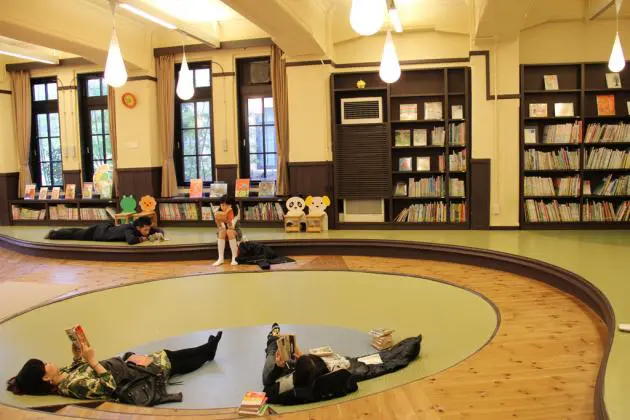
Walking through the main hall, the hectic pace of modern Japan seems a world away. The serene atmosphere makes it more library than museum. But unlike other libraries where visitors sit quietly on chairs, manga lovers of all ages are scattered over the floor, propped against the walls, noses deep into their favourite cartoons.
“On sunny days, many cartoon fans go outside and read manga on the artificial grass in the courtyard,” says Hiroko Nakamura, a public relations officer at the Manga Museum.
Open shelves spread seemingly for miles on the Wall of Manga, home to nearly 50,000 cartoons. The Wall of Manga on the first floor is dedicated to Shonen Manga or Manga for Boys. The second floor is packed with Shojo Manga or Manga for girls while the third floor is Seinen Manga or Manga for Youth.
The Manga Expo on the first floor exhibits Japanese manga that have been translated into other languages along with home-grown cartoons produced in many other countries and regions. This is where you’ll find much loved favourites such as Doraemon, One Piece, Pokemon, Crayon Shin-chan printed in French, English, Thai, Chinese, Korean and other languages.
The Manga Studio and Portrait Corner are open on weekends and national holidays. Young artists patiently demonstrate how to draw manga in the studio, starting from the initial pencil sketch to black-and-white and full colour images, while in Portrait Corner more young artists draw the visitor for a fee.
Nearby is the Children’s Library, which reinforces the primary school feel, though here the youngsters are sprawled on the colourful floor enjoying their favourite cartoons and picture books.
The hallways on the first and the second floor are hung with illustrations of Maiko, apprentice geisha aged between 15 and 20 years old, an exhibition by 174 manga artists with different interpretations of how a maiko looks.
Tatsuike Memorial Room on the second floor shows the history of Tatsuike Elementary School, which was built in 1869 with donations from the people of Tatsuike district.
“Next to the memorial room is the ‘Kamishibai’ playhouse, a traditional Japanese style of story-telling with pictures,” says Hiroko.
The street performance hits its peak in the 1950s, when 3,000 Kamishibai performers roamed around Tokyo out of the some 50,000 in all of Japan. Though the popularity of television in the late 1950s and early 1960s gradually killed Kamishibai, its stories, characters, and some of its patterns of expression are still alive in manga.
“This is one of the highlights of the museum ‘Objet d’Art Hi No Tori’,” says Hiroko gesturing towards a gigantic phoenix. “Hi No Tori is the signature character of Tezuka Osamu, a manga artist who made a significant contribution to the development of Japanese manga.”
The Phoenix is the work of one of Kyoto's best artisans, Sudo Mitsuaki, who creates Buddhist statues using the traditional engraving techniques known as yosegizukuri (mosaic wood construction) and gyokugan (spherical eye). The wooden bird, which stands 4.5 metres high and 11 metres across, can hardly be missed.
Sharing space in the Main Gallery on the second floor are manga masterpieces from 1945 to 2005 and the “What is Manga?” exhibition. The exhibition is an introduction to manga and looks at its history, social significance, and other aspects the reader doesn't normally get to see, such as the process through which manga are created and mass produced. English and Japanese explanations are available around the exhibition.
The Research Reference Room on the third floor houses hundreds of academic journals, textbooks and research concerning Manga. This room is a heaven for students and anyone wanting to learn more about the cartoon, its cultures, readers and effects.
Growing up with manga and a loyal fan for many years, I can hardly pull myself away from the cartoons on the Wall of Manga. Though most of them are printed in Japanese, the unique drawing style, the pattern of the characters expressions, and even the pattern of the speech bubble speak louder and clearer than any written words.
Next time I visit Kyoto, you’ll know exactly where to find me.
If you go
<< Kyoto International Manga Museum is located on Karasuma-Oike, Nakagyo-ku, Kyoto 604-0846 Japan
<< It can be reached by calling (+81 75) 254 7414.
