
Blending the old with the new


Play
Hobart's convention-flouting art museum takes a bow
A young Australian gets filthy rich from gambling, and with his winnings buys more and more works of art and founds a museum.
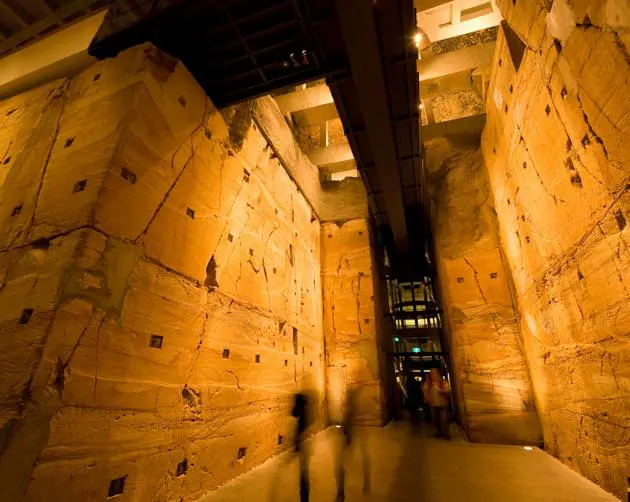
This is how the story of David Walsh and of Mona – the Museum of Old and New Art – starts out. The museum is located about 12 kilometres north of the Tasmanian capital of Hobart on the banks of the Derwent River.
Opened in January 2011, it is the largest privately owned museum in Australia.
Those planning to visit the island of Tasmania and make a stopover in Hobart in order to visit Mona are best advised to allow for several hours. This is both because of the broad expanse of the museum area and because the many works of art are, well, perplexing.
“We’ll provide the access, but we aren’t saying that this or that explanation is the sole possible interpretation of a work of art,” says research curator Delia Nicholls. The basic idea of Mona is that “we aim to be unorthodox, and we want people to have fun here”.
Among the conventions being flouted is that right in front of the entrance there’s a tennis court that visitors must first cross.
“David did not want this to look like at a normal museum,” Nicholls says. In fact, when Mona is closed on Tuesdays, the 52-year-old Walsh can be seen smashing tennis balls over the net.
Walsh is from Tasmania and he wanted to give some of his immense wealth, won at betting on horses and other forms of gambling, back to his home state. In 2001 he founded the Moorilla Museum of Antiquities which he later remodelled and expanded at great expense.
According to the Australian broadcaster ABC, the museum recovers only about one-fourth of its operating costs from income, but this apparently does not disturb Walsh too greatly. And Tasmanians continue to be let in free of charge.
Walsh's collection, only about 40 per cent of which is on display, illustrates his interest in the whole world.
Be it antique coins from southern Europe or artefacts from ancient Egypt and pre-Columbian South America, Walsh has collected treasures from every corner of the globe, treasures he gladly shows to others.
Focal points are works of the Australian modern art period from the 1940s to the 1970s, as well as contemporary international art.
Among these are a shiny red pumped-up Porsche called “Fat Car”, videos by Swiss artist Pipilotti Rist with titles like “Blutclip” (blood clip) and “Pickelporno” (pimple porno).
Sexual themes are not omnipresent, but they are also not a rarity.
There was a storm of protests when for awhile Mona staged an exhibition of 151 vagina sculptures by Australian artist Greg Taylor. But Nicholls notes that “it was above all women who wanted to see it”.
“Mona is the vision of one individual,” Nicholls says. “This should not be forgotten.”
