
Walks on the wild side


Play
The world's 10 most awesome volcanoes
A holiday on the edge of a smouldering volcano is one of the hottest vacations possible, in every sense of the word. Peeping at one of nature’s most deadly threats from close up is an awing experience. It’s also a risky one, as the recent Mount Ontake eruption in Japan that left several hikers dead and missing proves.
Crater tours to live or only recently dormant volcanoes are possible across the globe, with 10 sites especially scenic and beautiful.
KRAKATOA, INDONESIA
Over two thirds of the volcanic island of Krakatoa located between Java and Sumatra was obliterated in a cataclysmic eruption in 1883. More than 20 cubic kilometres of rock, ash and pumice were sent into the atmosphere, while huge tsunamis killed tens of thousands of people. In 1927 a new island, Anak Krakatau, or “Child of Krakatoa”. emerged from the caldera formed in 1883. A visit to the island is not recommended due to safety concerns, as it is one of the world’s most active volcanoes. However, Anak Krakatau can be observed from the sea thanks to boat tours organised by several operators.
Web: www.Indonesia.travel
PITON DE LA FOURNAISE, LA REUNION
This remote French outpost in the Indian Ocean east of Madagascar owes its existence to its location above a hotspot in the Earth’s crust. The 2,621-metre-high Piton de la Fournaise has erupted 160 times since 1640 and can be explored by helicopter or by hiking around its crater.
Web: www.Reunion.fr/en
HAWAII VOLCANOES NATIONAL PARK, HAWAII
Big Island is the only volcanic island in Hawaii that is still active today. The park is located 30 miles southwest of Hilo and is the home of Kilauea and its Puu Oo Vent, one of the most active volcanoes on earth. Kilauea has been erupting since 1983, during which time it has spewed out around 3.3 million tons of lava. The lava tube is best viewed by helicopter, but the fiery spectacle can also be enjoyed with a cocktail in hand from the lounge of the Volcano House Hotel, where the 6-kilometre-long Kilauea Iki Trail begins.
Web: www.GoHawaii.com
YELLOWSTONE NATIONAL PARK, USA
Home to Old Faithful and the majority of the world’s geysers, America’s first national park is located in a huge caldera formed during the last of three super-eruptions over the past 2.1 million years. The park is home to grizzly bears, wolves, and herds of bison and elk, attracting over 3 million visitors each year.
Web: http://www.NPS.gov/yell
ETNA, ITALY
Rising ominously above the island of Sicily, Mount Etna is Europe’s largest and most active volcano. Its craters, lava flows, caverns and a depression known as Valle del Bove make Etna a fascinating place to visit. Visitors can wander the park via a number of nature paths and the volcano’s smaller openings, produced by eruptions over time, are easily accessible.
Web: www.Italia.it/en/travel-ideas/unesco-world-heritage-sites/mount-etna.html
POPOCATEPETL, MEXICO
Together with neighbouring Iztaccihuatl (5,230 metres), Popocatepetl (5,462m) forms a twin volcano. Popocatepetl has been extremely active since the turn of the millennium and is closed off for hikers and mountain-climbers alike, but the currently inactive Iztaccihuatl offers a wonderful view of its larger brother.
Web: www.VisitMexico.com/en
COTOPAXI, ECUADOR
A tour of Cotopaxi normally begins in Quito and the trail from the entrance of the national park winds its way up to a small car park at an altitude of 4,500 metres from where mountain climbers can strike for Cotapaxi’s 5,987m summit.
Web: www.Ecuador.com/protected-areas/cotopaxi-national-park
SNAEFELLSJOKULL, ICELAND
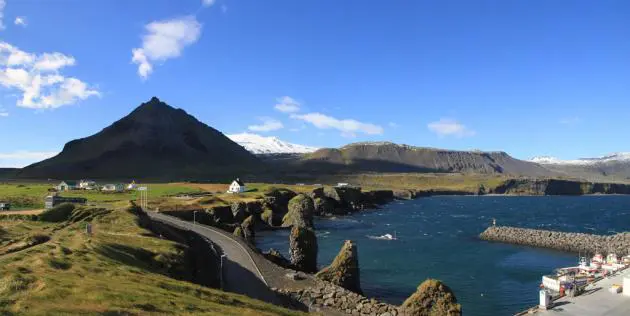
Snaefellsjokul rose to fame when used by Jules Verne as the entrance point to the underworld in his novel “Journey to the Centre of the Earth”. Located in the west of the Snaefellsnes peninsula, the 1,446-metre-high volcano has become a symbol of the island of fire and ice, with its summit now covered in a sheet of snow and ice. It is not necessary to reach the summit, as a hike through the national park along the coast of Hellnar offers the stunning experience of a mystical landscape formed by cooling lava.
Web: www.Snaefellsjokull.com
PICO DEL TEIDE, SPAIN
Spain’s highest volcano on the island of Tenerife rises 3,718 metres above sea level and has lain dormant for over a century. A permit is required to climb the volcano, or else visitors can take a cable car, although this does not run in poor weather. There are also excellent hiking trails through the surrounding 17-kilometre-wide caldera with the Roques de Garcia, which can be reached by taking the TF-21 highway, particularly worth a visit.
Web: www.ToDoTenerife.es
GALAPAGOS ARCHIPELAGO, ECUADOR
The effects of volcanic activity through the ages is especially noticeable on the Galapagos Islands. While new islands are springing up in the south, older islands to the north are slowly sinking back beneath the waves. On Santa Cruz it is possible to wander through hollow lava canals and observe prehistoric creatures such as giant tortoises – which gave the island their name – strolling around the highlands at an altitude of 900 metres.
