
Living it up with Capone


Play
The gangster boss's former Miami villa gets a makeover for its new life as a movie backdrop
HOW LONG does it take to go from revulsion to admiration? In the case of Al Capone, about 90 years. When he first moved to Florida in 1928, the governor and Miami Beach residents were horrified to have a brutal criminal in their midst.
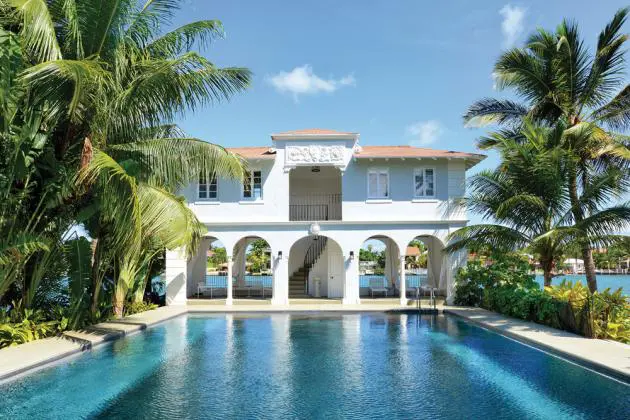
His old mansion has just been restored to take advantage of the fascination people still have with the notorious gangster boss.
“Capone is no worse than a lot of others down here,” the mayor of Miami Beach in 1928, John Newton Lummus, argued at the time.
Lummus was also a real estate agent. Despite protests, he sold a mock colonial mansion with nearly 2,800 square metres of floor space to Capone. It had been erected in 1922 on Palm Island.
Lummus had to overcome the opposition of residents who passed a resolution declaring Capone unwelcome in the newly created city.
Miami Beach’s sunny, balmy weather through most of the year was drawing tourists and mafia bosses, like Capone. Many of the gangsters had links with Havana, at that time even more immersed in crime than Miami.
“He came down here because of the good weather, that was the main reason,” says historian Paul George.
He adds that Palm Island, with its open views, allowed an easy exit, either into Biscayne Bay by boat or via a nearby airport, for Capone should he need to make a quick escape.
Capone, who knew Miami after having spent a couple of winters there, decided to buy the property in his wife’s name for US$40,000.
He had to leave it in 1931 when he was convicted of tax evasion and locked up in Alcatraz prison, much colder than a Miami Beach villa.
Capone returned in 1938 and he died in Miami Beach in 1947 after living in seclusion because of illness.
Nearly seven decades later, the rundown compound might well have been demolished had property investors not seen an opportunity.
“Our investor didn’t mind that it had been Al Capone’s house,” says Marco Bruzzi, the executive director of the MB America, a real estate, architecture and investment firm.
Bruzzi’s company had received a commission to find “a luxury property, especially an historic one with a lot of personality”.
MB America acquired the Capone villa for $8 million, restored it and waterproofed it, investing an additional $1.4 million. The villa now also has protection against hurricanes, a regular event in these parts.
The walls of the rooms on the second floor, where Capone died, still need to be plastered and painted, after the beams were renovated.
That is all that has to be completed for the property to be used as a background for video-clips and movies or for advertising photography shoots. That is such a big money-making opportunity in Miami that the investor hopes to recoup the money by charging fees to camera teams.
“(This mansion) is a part of the history of Miami and is a part of the history of the United States,” says Bruzzi. He is convinced the Capone villa will also develop into a drive-by tourist attraction, especially for visitors who take boat tours on the bay.
“This house cannot be compared to others on the market, because its historic value is immense,” Bruzzi adds. “We have saved a bit of Miami’s history and we like that very much as well.”
The overall look at the villa has been maintained and only room untouched in the remodelling is an art deco style bathroom in gold and black.
Deirdre Marie Capone, the gangster’s great-niece, has fond memories of learning to ride a bicycle at her great-uncle’s home and also swimming there.
She was there on the day in January 1947 when Capone died at age 48 following a stroke.
In contrast to other relatives, Deidre Marie Capone, who was present at the media event to present the renovated Capone mansion, does not back off from her surname.
She is not afraid of admitting that her great-uncle was the most wanted, the most sought and the most feared criminal in the United States.
