
Communing with the ghosts
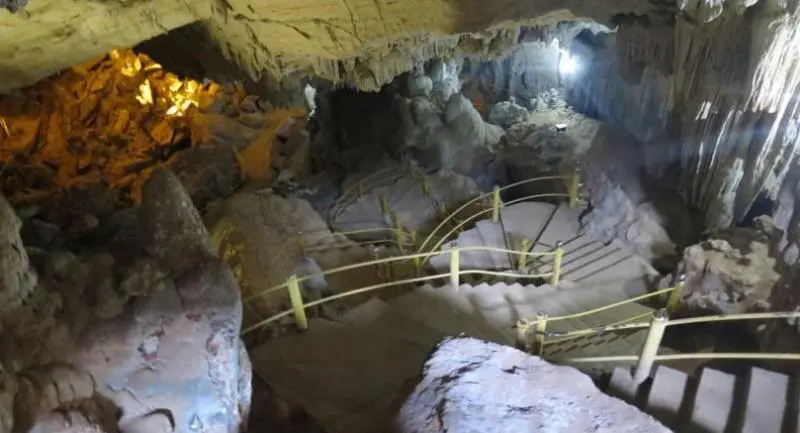


Hua Ma cave in Vietnam’s Northwest corner was once filled with the spirits of soldiers interred there by a powerful enemy
With its karst topography and poetic peaks, Vietnam’s northwest province of Bac Kan offers travellers majestic landscapes and exciting discoveries. One of them is Hua Ma Cave in Quang Khe Commune, a hidden gem of impressive stalactites and mysterious legends.
Hua Ma Cave is located within the Ba Be National Park, about 80 kilometres from Bac Kan City. Peaceful scenery unfolds as the city is left behind and my travelling companion and I can see the distant mountains playing hide-and-seek with the dawn fog. The first rays of sun shining on the reeds blowing in the wind create a perfect painting, dotted with smiling local farmers, their cattle and market stalls along the road.
We realise we are near the cave from the cool breeze blowing off Ba Be lake. Passing a village of a local ethnic minority, we eventually reach the foot of the mountain where Hua Ma Cave lies.
The cave “hangs” in Leo Pen Mountain, more than 300 metres above sea level. There’s a convenient staircase leading up and the walk takes only about 15 minutes. My friend and I met only two other travellers along the way and we soon reach the entrance gate of the cave. Once inside, the surprises keep coming. The deeper we go in, the more the cave has to offer. It is much bigger than it appears, more than 300 metres long and nearly 60 metres deep.
There are curving limestones that look like rice terraces and 10-metre-high stone pillars resembling those found in ancient temples and pagodas. Stalactites of various sizes and shapes adorn the cave throughout.
The atmosphere inside is cool and rather humid and the quietness overwhelming and a little disconcerting. We can hear ourselves breathe, a rare occurrence in this busy world. The silence, though, adds to the creepiness, a sensation that is not alleviated by a friend informing me of a local legend.
Leo Pen is said to have been inhabited by ghosts. They could be heard howling from the cave every day when the sun went down. It was so scary that no one dared approach.
One day, as the sun was setting, a group of soldiers passed by the Leng River. They were about to cross the river to the neighbouring village when their horses started whinnying and refused to cross the river. At the same time, a howl echoed from the side of Leo Pen Mountain.
Finding it strange, the commander asked local residents about the sounds and was eventually told they were made by the spirit of dead soldiers. The soldiers, so the legend goes, helped the royal court fight against an enemy who was so strong and fierce that the soldiers had to hold him in the cave. But the enemy then filled the entrance so that the soldiers could not get out.
On hearing this, the general decided to carry out a ritual, offering horses to the ghosts. When the ritual ended, the howls also stopped and the locals never heard it again. The area was then abandoned and over the years grew the beautiful stalactites like those we see today.
In 2005, a group of international archaeologists examining the cave found some porcelain items from the Le and Mac dynasties of the 16th and 17th centuries. The collection included broken white-glazed plates and bowls with blue patterns.
These items may have been produced in ancient ceramics kilns in Hai Duong Province and belonged to a group of people who inhabited the cave.
The cave was opened to tourists in 2007. There are two gates: one on the mountainside, the other from Leng River. One can choose to climb the staircase or kayak on the river to Hua Ma Cave.
“I love the cave. It was bigger than I expected. While it is majestic inside, the landscape leading to it is also splendid. We saw some bats. We definitely had a good time,” says my new friend, French fellow traveller Calypso Jaladeau.
