
Bangkok dust worsens in 16 districts as dangerous heat grips city
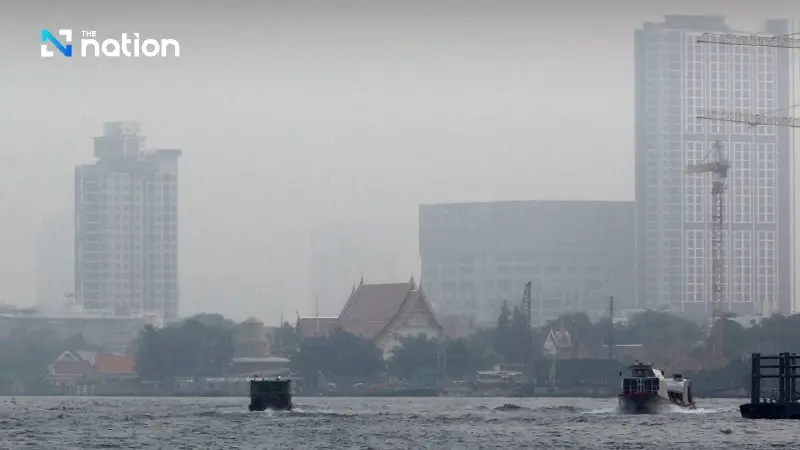


PM2.5 exceeded the standard in 16 Bangkok districts, with the highest reading at 44.8µg/m³, as authorities warned of health risks and dangerous heat.
Bangkok’s Air Quality Information Centre reported at 7am on Monday (April 6) that the city’s 24-hour average PM2.5 readings ranged from 27 to 44.8 micrograms per cubic metre, exceeding the official safety threshold of 37.5 micrograms per cubic metre.
A total of 16 districts were recorded at the orange level, meaning air pollution had begun to affect health. The highest readings were found in Bang Kho Laem and Nong Chok, both at 44.8 micrograms per cubic metre, followed by Bang Khun Thian, Ratchathewi and Lat Krabang.
People in these areas have been urged to closely monitor any unusual health symptoms.

Meteorological department warns of dangerous heat index
According to the Thai Meteorological Department’s forecast, Bangkok is expected to experience hot to very hot weather with hazy conditions during the daytime. The daily heat index has been classified at the “dangerous” level.
Although ventilation remains favourable and the city is under the influence of southerly winds, the lower atmosphere remains closed, allowing dust particles to build up at a moderate level.
Satellite hotspot data from NASA showed no abnormal heat hotspots in Bangkok, but meteorological conditions are still conducive to pollution accumulation from April 6 to 14.

Environment Department steps up five anti-dust measures
Bangkok’s Environment Department said it had coordinated with all agencies to tighten enforcement under the city’s dust pollution action plan, while also encouraging public participation through five recommended dust-reduction measures.
These include cleaning homes regularly, avoiding the burning of rubbish and incense, planting trees to trap dust, using public transport, and switching off engines while vehicles are parked.
Authorities also stressed that vulnerable groups and the general public should wear masks to protect themselves from PM2.5 every time they go outdoors and should limit strenuous outdoor activities.
Any sources of pollution can be reported immediately via the Traffy Fondue application.

