
'Uncle Tony' Warns Thailand: Pause 53% Airport Fee Hike or Risk Losing Budget Travellers to Regional Rivals
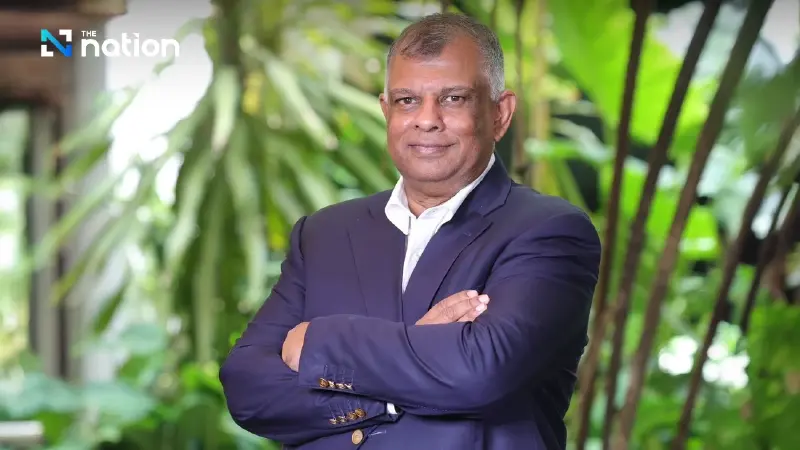


AirAsia founder Tony Fernandes calls for a one-year delay on Thailand's 1,120-Baht airport fee rise and tiered pricing to protect its tourism crown
- AirAsia founder Tony Fernandes has warned Thailand to pause a planned 53% increase in its international airport passenger fee (from 730 to 1,120 Baht).
- He argues the timing is poor, as the fee hike combined with high fuel costs will make travel too expensive for budget tourists, who are vital to the local economy.
- Fernandes fears that if the fee is implemented, price-sensitive travellers will choose more affordable destinations, causing Thailand to lose its competitive edge to regional rivals.
- As an alternative, he suggests a one-year postponement of the fee and implementing a tiered pricing system that differentiates between budget and premium carriers.
AirAsia founder Tony Fernandes calls for a one-year delay on Thailand's 1,120-Baht airport fee rise and tiered pricing to protect its tourism crown.
Capital A Chief Executive Tony Fernandes has delivered a pointed but affectionate warning to Thailand’s airport authority: delay a major passenger fee increase or risk driving away the budget travellers who underpin the kingdom's tourism economy.
Speaking at a media briefing in Bangkok on Thursday, the aviation veteran of over 25 years described himself as "Lung Tony" (Uncle Tony)—the longest-serving airline CEO in Thailand. Fernandes stressed he was speaking out as a representative for consumers, operators, and grassroots tourism businesses.
The state-controlled Airports of Thailand PCL (AOT) recently secured final approvals to raise its international Passenger Service Charge (PSC) by 53%, pushing the fee from 730 Baht to 1,120 Baht effective from 20 June 2026. The revenue is earmarked for long-term infrastructure upgrades across its six hubs, stretching up to 2060.
While Fernandes clarified he does not dispute AOT’s right to fund development, he strongly questioned the timing and structure of the hike, arguing it comes during the industry's most challenging era.

The Dual Squeeze: Fuel Spikes and Surcharges
The timing of the levy intersects with a severe operational crisis for regional airlines. Since the escalation of conflicts in the Middle East, jet fuel prices have surged from $85 to a peak of $240 a barrel. This massive overhead inflation has already forced AirAsia to raise ticket prices by roughly 20% and trim unprofitable routes.
To absorb these volatile fuel costs, Fernandes explained that airlines require breathing room rather than compounding government surcharges. Layering a 53% airport tax on top of fuel-inflated fares threatens to breach the price threshold for budget travellers.
"There is a point where you simply won't pay. You won't fly," Fernandes warned.
He noted that most global governments and airport operators are currently moving in the opposite direction—reducing fees to stimulate economic recovery and attract foot traffic.

A Three-Point Alternative Framework
Rather than enforcing a flat fee increase, Fernandes urged AOT to reconsider its strategy by adopting a more flexible, market-oriented approach:
Implement a One-Year Postponement: With AOT currently enjoying comfortable 25% profit margins and no immediate construction deadlines, Fernandes argued a 12-month pause would allow fuel prices to stabilise and give airlines vital recovery time.
Introduce Tiered, Flexible Pricing: Fernandes strongly opposed a flat-rate tax system. He pointed out that a 1,120-Baht ($36) levy is negligible on a $10,000 first-class ticket, but accounts for more than half the value of a $55 budget fare. He proposed categorising the PSC by airline and airport type, citing London’s differentiated Heathrow, Gatwick, and Luton systems as a blueprint. "You cannot charge Hermès prices at Uniqlo," he remarked.
Decentralise Beyond Tourism Hotspots: Roughly 80% of Thai tourist spending remains heavily concentrated in Bangkok and Phuket. Fernandes suggested implementing lower, tiered charges at secondary hubs like Chiang Mai, Hat Yai, and U-Tapao to redistribute traffic to regions left behind by the tourism boom.

Defending the Grassroots Economy
Fernandes pushed back directly against proposals within the Thai government to pivot exclusively toward "high-quality" or high-net-worth travellers, calling it a dangerous economic misconception.
According to Fernandes, while luxury travellers confine their spending to closed, high-end hospitality ecosystems, budget travellers inject liquidity directly into the local street economy—benefiting markets, independent shops, temples, and small restaurants. Citing research by Malaysia’s central bank, he noted that low-cost travellers often yield a higher net contribution to local GDP.

Broadening Non-Aviation Revenue
To protect passengers from bearing the brunt of infrastructure costs, Fernandes advised AOT to diversify its revenue streams into commercial and industrial sectors where Thailand is currently losing market share to regional competitors like Singapore.
Specifically, he urged the rapid expansion of air cargo facilities at Don Mueang Airport and the fast-tracking of Maintenance, Repair, and Overhaul (MRO) infrastructure. Fernandes revealed he has spent two years trying to construct an aviation hangar in Thailand but has been blocked by persistent regulatory delays.
He further called for an end to ground-handling monopolies at Thai airports, where operational charges currently run up to 300% above global benchmarks. He reiterated that Capital A remains highly motivated to invest heavily in Thai MRO and food catering sectors, provided the regulatory bottleneck is cleared.
"Thailand is my home," Fernandes stated. "I have had a deep connection with this country for a long time. I fully understand the reasoning behind this and acknowledge AOT’s long-term development plans leading up to 2060. Speaking out today is not about questioning or opposing their decision but rather offering well-intentioned advice from an old man who has been immersed in the aviation industry for 25 years."

Restructuring and Beyond Aviation
The policy dispute comes at a pivotal moment of expansion for Fernandes’ conglomerate. Capital A recently formalized its exit from Bursa Malaysia’s PN17 financially distressed status and secured a landmark $19 billion order for 150 Airbus A220 aircraft to service thinner, high-efficiency regional routes.
The group is also aggressively driving non-aviation growth. Fernandes confirmed the upcoming launch of an entirely new airline venture, alongside unorthodox brand licensing plays including the launch of "AirAsia Hotels" with an international hospitality chain, and an "AirAsia Hospital" in Malaysia later this year.

"Malaysia has managed to rise as a global aviation megahub because its infrastructure development facilitates the simultaneous growth of low-cost carriers and related ancillary businesses. I hope AOT recognizes this opportunity and shift its focus from collecting passenger taxes and ticket fees toward generating supplementary income unrelated to ticket costs, so we can work together ensuring the future sustainability of Thailand's tourism industry," Fernandes concluded. "I am a builder. I do not want to threaten anyone. I want to grow both. But listen to some of this advice — it is good advice."
