
Energy crisis batters aviation, 150,000 flights cut worldwide
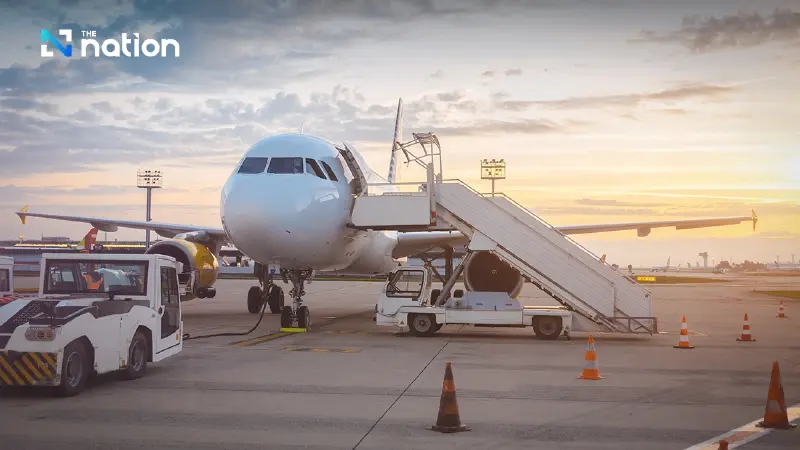


A global oil crisis driven by Middle East tensions is forcing airlines worldwide to cut over 150,000 flights, raising fares and straining aviation markets including Thailand.
A deepening oil crisis triggered by ongoing conflict in the Middle East is dealing a severe blow to the global aviation industry, with Thai airlines also facing mounting pressure as jet fuel prices surge and supply risks intensify.
Jet fuel prices have surged by between two and three times — or about 129% — amid growing concerns over possible supply shortages.
According to the International Air Transport Association (IATA), global jet fuel prices rose sharply from US$99.04 per barrel (about 3,300 baht per barrel) in late February 2026 to US$209 per barrel (about 7,400 baht per barrel) in early April.
The sharp increase has added to pressure on airlines, as higher operating costs continue to weigh heavily on the industry.

More than 150,000 flights cut globally
Research by Kasikorn Research Centre indicates that the global aviation sector faces heightened risks from the Middle East crisis. Between March and June 2026, more than 150,000 international flights have already been cut compared with pre-war schedules.
Fuel costs — which account for more than one-third of airline operating expenses — have risen sharply. By early April, jet fuel prices had increased by more than 129% compared with the end of 2025, reaching US$209 per barrel.
As a result, average airfares on European routes to Thailand rose by around 58% in April 2026, dampening travel demand. If tensions in the Strait of Hormuz persist, the risk of jet fuel shortages in some countries could intensify, potentially leading to further reductions in global flight capacity.
Airlines raise fares but struggle to offset costs
Although airlines have begun increasing ticket prices and fuel surcharges to mitigate the impact, these measures have only partially offset rising costs. Most airlines have hedged only about 10% of their total fuel consumption for 2026, leaving them highly exposed to price volatility.
Fitch Ratings has warned that surging fuel prices are placing significant strain on airline liquidity, as fuel accounts for around 25% of total operating costs. Low-cost carriers are particularly vulnerable, especially those without fuel hedging strategies.
Airlines worldwide have responded by raising fares and additional fees:
- AirAsia X increased ticket prices by 31–40%
- United Airlines raised fares and increased checked baggage fees by US$10 (about 370 baht)
- Indonesia approved domestic fare increases of 9–13% for two months
- Cathay Pacific raised fuel surcharges by 34%
- AirAsia increased fares by 30–40% and fuel surcharges by around 20%
- Bangkok Airways raised fares by 15–20%
- Thai Airways International increased fares by 10–15%
- Korean Air raised fuel surcharges sevenfold

Europe faces severe jet fuel shortage risk
The International Energy Agency (IEA) warned of what it described as the biggest energy crisis in history, saying Europe may have only six weeks of jet fuel reserves left and could soon be forced to begin cancelling flights if oil transport routes through the Strait of Hormuz remain blocked by the Iran war.
Airports Council International Europe (ACI Europe) has also warned that if shipping routes are not restored within the next three to six weeks, Europe could face acute jet fuel shortages.
Large volumes of crude oil remain stranded in the Persian Gulf, while jet fuel prices have more than doubled and some countries hold only 8–10 days of reserves.
ACI has therefore urged the European Union to take swift action, including assessing oil supply against demand, securing alternative import sources, reviewing risks to fuel transport within Europe, and evaluating both commercial and strategic reserves.
It also called for emergency measures such as easing restrictions on jet fuel imports, relaxing some EU environmental rules, introducing centralised fuel procurement, and providing state support to airlines, airports and ground handling operators.
Flight cuts spread worldwide
Jet fuel shortages are already tightening supply at several airports, particularly in northern Italy — including Milan Linate, Bologna, Venice and Treviso — where refuelling restrictions have been imposed.
Airlines globally are adjusting operations by cutting, cancelling and consolidating flights to reduce costs amid fuel shortages and volatile oil prices.
Examples include:
- Ryanair cancelling over 1,000 flights in April
- KLM reducing its European network by 1% and cancelling 160 flights next month
- Beond Airways suspending Europe–Maldives routes
- Lufthansa CityLine retiring 27 CRJ-900 aircraft
- Delta Air Lines cutting capacity by 3.5%
- Norse Atlantic suspending London–Los Angeles ticket sales
- British Airways suspending Middle East routes such as London–Jeddah
In Asia:
- Cathay Pacific cut flights by around 2%
- HK Express reduced flights by more than 6%
- AirAsia X cut capacity by about 10%
- Greater Bay Airlines suspended Hong Kong–Suvarnabhumi services รวม 114 เที่ยวบิน
- Indonesia AirAsia halted Surabaya–Don Mueang flights
- Starlux reduced routes to Thailand and across ASEAN
- T’way Air cut Incheon–Bangkok services

Thai airlines hit by fuel costs and weak low-season demand
Thai airlines are also facing a double blow from rising fuel costs and weakening passenger demand during the low season.
Thai Airways International has postponed the launch of its Changsha route until June and cut numerous domestic and international flights in May, affecting more than 46 services.
Thai AirAsia has suspended several routes, including Suvarnabhumi–Narathiwat and Don Mueang–Xi’an. Thai AirAsia X has halted Don Mueang–Shanghai and Don Mueang–Riyadh services, while Thai Lion Air has suspended Don Mueang–Seoul and Nok Air has halted Chiang Mai–Udon Thani.
Thai VietJet Air will suspend Bangkok–Fukuoka flights from May 11 to June 30 and Bangkok–Kolkata services until May 31, while also reducing frequencies on Phnom Penh and some domestic routes.
A defining test for the aviation industry
The current oil crisis is shaping up to be one of the aviation industry’s most severe tests, following the disruption caused by the Covid-19 pandemic.
With fuel costs soaring, supply risks rising and demand weakening, airlines worldwide are now navigating a new and uncertain turbulence that could reshape the industry for years to come.
