
Investment in sustainable aviation fuels encouraged
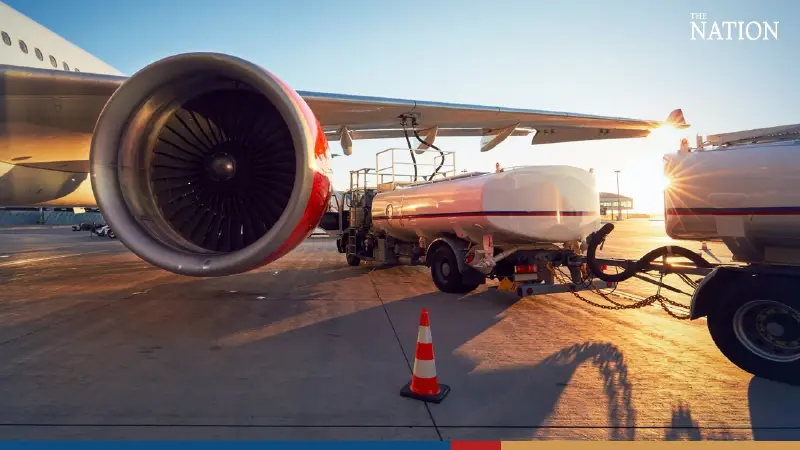


The Department of Energy Business (DOEB) is planning to provide promotional packages for investment in the sustainable aviation fuels (SAF) business to push the country’s aircraft industry towards achieving net-zero emission goals.
Talks have been planned with related authorities to provide benefits to investors in the first five years to speed up the manufacturing of SAF, Pattira Saiprathumthip, the DOEB’s deputy director general, said on Tuesday.
Made from renewable biomass and waste resources, SAFs have the potential to deliver the performance of petroleum-based jet fuel but with a fraction of its carbon footprint.
Pattira said SAFs would help contribute to the climate change efforts and are in line with the country’s plans for oil management and alternative energy development.
She expected the talks with the related parties including the Transport and Agriculture and Cooperatives ministries to start this week and to be concluded in 2 months.
A few domestic manufacturers of ethanol have already expressed interest in manufacturing SAFs from the main raw ingredients of used oil and molasses, she added.

Meanwhile, ML Natthasit Diskul, president of Bangkok Aviation Fuel Services Plc (BAFS), said that the company has been seeking partners to co-invest in the sustainable manufacturing of SAFs, including Bangchak and Mitr Phol groups.
The aim is to utilise used oil and byproducts of agriculture to produce a fuel that will help reduce greenhouse gas emissions, bringing Thailand closer to the goal of achieving net zero emissions by 2050, he said.
“Currently SAFs are 2-3 times more expensive than traditional fuel, so manufacturers will need government support to increase their competitiveness, notably excise tax exemption for SAFs,” he said.
