
State agency to speed up issuance of money-free certificates to coconut growers


The Department of Agriculture (DOA) would speed up surveys and issuance of money-free certificates to coconut growers who have already earned Good Agricultural Practices (GAP) logo, the department chief said on Thursday.
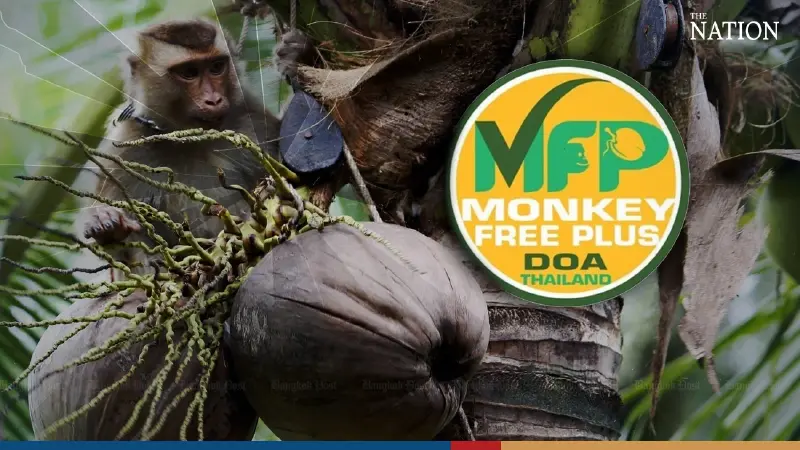
Director-general Raphiphat Chantharasriwong said the Plant Standard and Certification Division and the legal affairs division of the department had drafted criteria for coconut growers and exporters to receive the “GAP Monkey-Free Plus” logo.
The criteria would be published in the Royal Gazette soon, he said.
The GAP Monkey-Free Plus will be an enhanced version of the Monkey-Free Plus developed last year in response to campaigns by People for the Ethical Treatment of Animals (Peta).
Peta accused Thai farmers of abusing monkeys by using them to pick coconuts and Peta called on the United Nations and the European Union to boycott coconut products from Thailand.
Raphiphat said exporters would receive the GAP Monkey-Free Plus certificates for their coconut products only if they used coconuts from plantations that had received the GAP logo, and after the department had verified that the farmers had not used monkeys to pluck coconuts.
He added that every step of the product processing would be recorded to verify back in every step to assure buyers that monkeys were not used to pick the coconuts.
Raphiphat said department officials would give priority to their survey and verify that there was no use of monkey labour by coconut growers, who had received the GAP certificates, and they would be awarded with GAP Money-Free Plus certificates.
Then, the department would check and verify the coconut plantations of exporters, who had not received the GAP, so that they could be awarded the normal Monkey-Free Plus certificate.
The department would also encourage farmers to replace coconut trees that are over 50 years old with new coconut trees.
Raphiphat added that the new coconut tree saplings would yield trees with shorter trunks so farmers would not have to use monkeys to pick the coconuts.

