
Environmental impact of chemicals among topics at International Weed Science Congress in Bangkok
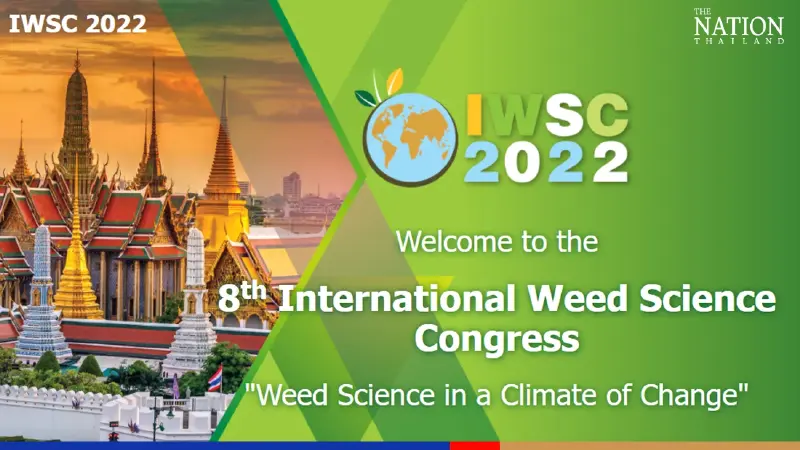


Thailand will host an international forum next week on environmental impact from the use of chemicals to get rid of weeds as well as lessons from the collapse of Sri Lanka’s ambitious organic farming venture.
Dr Chanya Maneechote, president of the Weed Science Society of Thailand, said the 8th International Weed Science Congress will be held at the Marriott Marquis Queen's Park in Bangkok from December 4-9.
The congress, which will be held in cooperation with the International Weed Science Society, will be attended by more than 400 scientists from 50 countries.
During the congress, several scientists would present their studies on several subjects, including how climate change affects the handling of weeds; biology and ecosystem of weeds; how to get rid of weeds with mixed chemical and non-chemical measures; weed resistance to chemicals, invasion of alien weeds; and parasite weeds, Chanya said.
She said other subjects included weed issues in Asia, residues of anti-weed chemicals in soil, water and the environment, the use of new technologies to get rid of weeds, and how to make use of weed DNA data.
A khon dance show would be performed by students from Kasetsart University during the opening ceremony, Chanya said.
During the conference, there would also be special lectures on the topic of how to produce foods for the global population with sustainability, how to use robots to get rid of weeds, and necessary evolution for handling weeds as well as how to classify herbicide chemicals in accordance with the Herbicide Resistance Action Committee.
Chanya said a highlight of the conference would be a special speech by an academic from Sri Lanka on issues related to its ban on chemical herbicides last year.

Chanya said the lecturer from Sri Lanka would recount and explain why the country abandoned its 100 per cent organic farming policy and returned to use chemicals again.
During the conference, there would also be sight-seeing trips for attendants to see how to handle weeds that are resistant to herbicides at the TJC Research Centre in Suphan Buri and how to handle weeds against corns and tapioca at a Bayer’s research station in Lopburi province.
Chanay said the International Weed Science Congress is held every four years. The next conference will be held in Israel.
