
Onus on new government to reduce greenhouse gas emissions


ANALYSIS The Nation
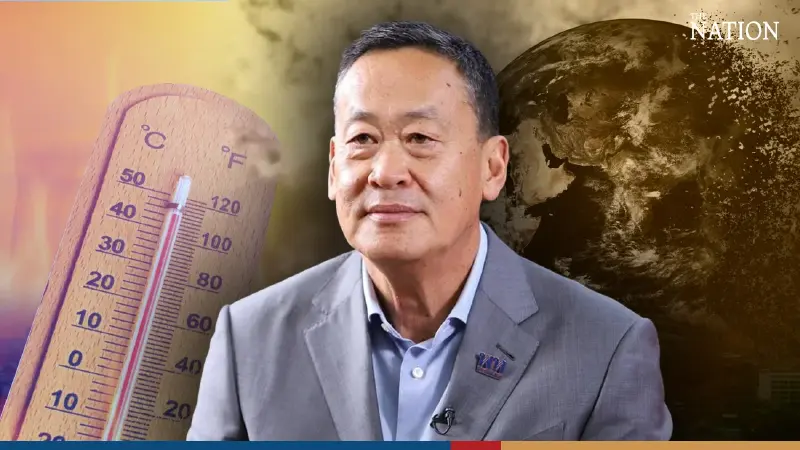
The Prayut Chan-o-cha government has passed on the baton to tackle global warming to the new coalition government led by Prime Minister Srettha Thavisin.
The objective is to reduce greenhouse gas emissions and manage potential natural disasters.
Addressing global warming and climate change is a crucial worldwide concern, and the previous Thai government had taken clear steps to address climate change under the 12th National Economic and Social Development Plan (2020-22).
The plan outlined strategies to prepare for reducing greenhouse gas emissions, enhancing adaptability to climate change, and managing natural disaster risks. The National Economic and Social Development Council (NESDC) has summarised the results of the plan's efforts, which are part of the fourth strategic area, “Environmentally Friendly Growth for Sustainable Development”. Overall, there has been progress in the following aspects:
Greenhouse gas emissions
Thailand has made progress in improving efficiency in the reduction of greenhouse gas emissions. In 2021, carbon dioxide (CO2) emissions in the energy sector decreased from 258.5 million tons to 246.9 million tons. This reduction is attributed to lower emissions in power generation, transportation, and other economic sectors due to strict Covid-19 control measures in 2020-21, such as travel restrictions and remote-work arrangements.
The initial cost of greenhouse gas emissions reduction per unit (baht per ton of carbon dioxide equivalent) is trending downward.
When compared to the reduction in greenhouse gas emissions per unit of gross domestic product (GDP) in the energy sector, it was 23.46 tons of carbon dioxide equivalent per 1 million baht of the GDP in 2021. This trend has been consistent from 1997 to 2021, which is positive for the environment.
The 12th plan
For adapting plans to address the impact of climate change in vital sectors, such as water management, agriculture, public health, and forestry, the National Committee on Climate Change Policy has approved (draft) national adaptation plans during the 12th National Economic and Social Development Plan.
To serve as a framework for the country in addressing the impact of climate change, these plans are currently under review by related agencies and will be presented to the Cabinet for consideration. Furthermore, efforts are ongoing to implement the first phase of the national climate change adaptation plan for public health for the period 2021-30.
Financial support mechanisms
In addition, there are domestic mechanisms to support finance, technology, and capacity-building related to climate change. Relevant agencies are jointly promoting financial mechanisms for climate change and knowledge exchange. A five-year cooperation framework (2022-26) is being developed to support Thailand's Nationally Determined Contribution (NDC).
An NDC is each country's self-defined national climate pledge under the Paris Agreement, detailing what it will do to help meet the global goal to reduce the temperature by 1.5 degrees Celsius, adapt to climate impact and ensure sufficient finance to support these efforts.
A project is underway to support climate change adaptation efforts in Thailand, with higher budget allocation and public expenditure management. This includes supporting policies that align with climate change adaptation and focusing on gender equality and social inclusion in policies and strategies, along with action on climate change.
Next phase development
For future development towards the 13th NESDC Plan, the council has stated that progress was made in conserving natural resources and the environment during the 12th plan. Progress included the expansion of forested areas, an increase in protected forest areas, and rehabilitation of degraded forest areas. Additionally, the management of water resources has been improved to alleviate water scarcity and support agriculture. This includes expanding large, medium, and small-scale irrigation areas.
However, as urbanisation continues and lifestyles change, production patterns and service delivery have adjusted to meet rapid and convenient consumer demands. Pollution reduction in various forms to maintain environmental quality has not fully achieved its goals.
For instance, the amount of solid waste has increased, and proper disposal and recycling of community waste is still limited. Water and air quality remain problematic in some areas due to inadequate resource conservation and environmental protection. Public awareness and cooperation with the government in conserving natural resources and the environment are lacking.
Therefore, future development should prioritise promoting changes in societal behaviour towards environmentally friendly consumption. This includes fostering markets for eco-friendly products and services and promoting the continuous use of environmentally friendly goods and services. Simultaneously, clean technology adoption in pollution-free production processes should be promoted.
In agriculture, organic farming and sustainable agricultural practices should be promoted to reduce the use of harmful chemicals in food, and to encourage public participation in conserving natural resources and the environment.
Stringent laws should be enforced to reduce raw material usage and appropriately manage waste from production processes to minimise their impact on communities and the environment.
In addition, community-based pollution control and management should be emphasised, with specific industrial types and quantities aligned with local conditions to control pollution throughout the process, from the beginning to end, which can be linked to the government's database.
