
Move Forward launches policy-making roadshow with 15 working teams
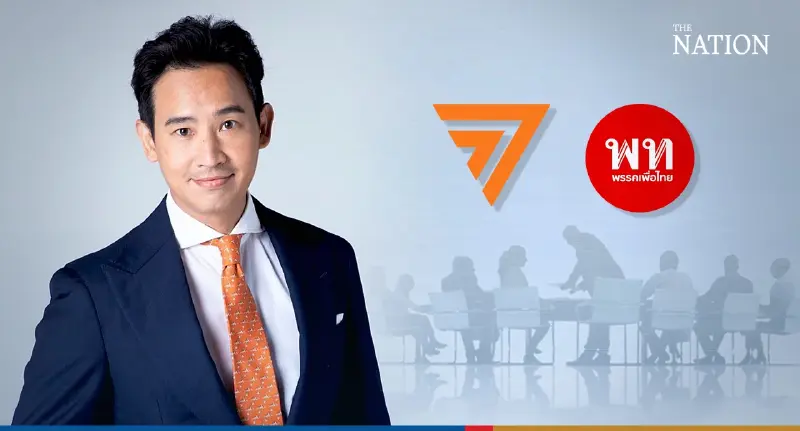


Move Forward and Pheu Thai have taken another concrete step in laying the foundation for the next government by setting up 15 working teams to address the country’s core issues.
The working teams, led by Move Forward, aim to solve urgent problems faced by the people. The problems were listed in the memorandum of understanding (MoU) signed by potential coalition members on May 22.
The 15 working teams will look into the following issues:
• Rising electricity and fuel costs
• The impact of drought and the El Niño phenomenon
• Turmoil in the deep South
• Amendments to the Constitution
• Air pollution and other environmental problems
• Economic difficulties
• Drug issues
• Economic and digital policies
• Corruption
• Fishing industry reforms
• Transition of the national budget
• Public healthcare and load on the medical industry
• Property and land ownership
• Economic and social inequality
• Effect of government transition on Bangkok
Move Forward leader Pita Limjaroenrat said the transition teams will travel upcountry to conduct public hearings on several issues. For instance, he said, they will speak to communities in the Northeast about supporting locally brewed liquor and in the North about the yearly scourge of haze and fine dust pollution.
One of the transition teams led by Pita met with Bangkok governor Chadchart Sittipunt and the Bangkok Metropolitan Administration (BMA) earlier. The meetings resulted in a joint pledge to collaborate on law, budgets and a Parliament-Bangkok Council link-up.
Pheu Thai Party, meanwhile, has devised five policies to serve as a framework for the upcoming Move Forward-led coalition. Pheu Thai won 142 MP seats in the May 14 election, coming in second after Move Forward, which bagged 152.
The coalition partner’s five policies are:
• Financial stability: Every fiscal policy on the national agenda should be thoroughly examined and planned. Pheu Thai said it hopes to gradually eradicate the financial imbalance and believes that achieving financial balance in the next seven years will make Thailand a stronger economy.
• Efficient tax collection: Boosting state revenue through a wider and more efficient tax collection system that does not hurt the private sector.
• Transparent policymaking: The country’s policies should take into consideration economic growth in line with income distribution.
• Short- and long-term plans: Every government committee should ensure that all policies take into account short- and long-term impacts.
• Stepping up internationally: Thailand needs to open its doors wider to connect with the rest of the world, attract more foreign investment and trading to generate revenue.
According to the timeline set by the electoral law, Thailand should have a new government in about two months.
However, the Election Commission has said the final result may be delayed as the ballots at 47 polling stations will be recounted on Sunday.
Initially, the new Cabinet and PM were expected to be endorsed by the first week of August.
