
Resilient farmers: Peatlands paving sustainable agriculture
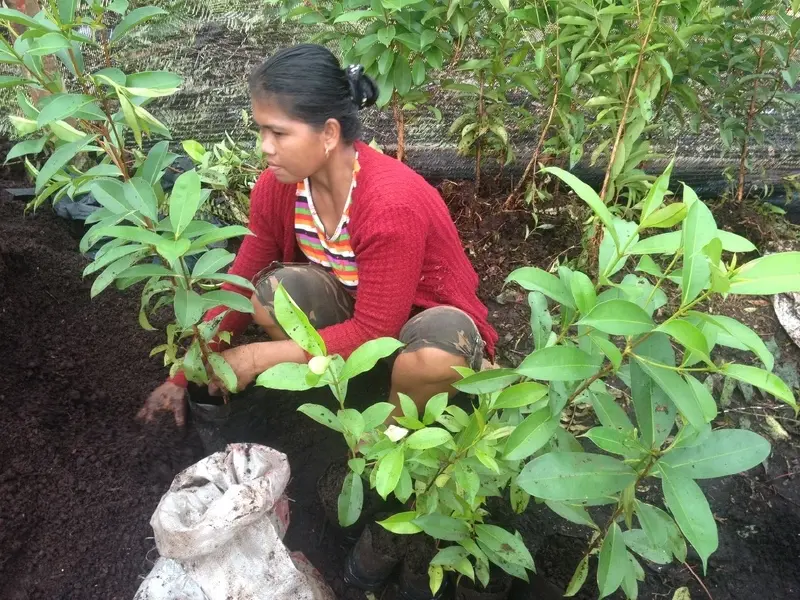


Thailand, akin to Southeast Asia, contends with severe peat forest damage from intermittent fires. The government addresses this by proactively deploying specialized forest fire control units in every province, prioritizing high-risk regions.
Their primary objective centres on maintaining consistently high water levels, a strategy that has shown considerable success in fire management. However, persistent challenges loom, such as limited resources and personnel shortages, compounded by deliberate burning by encroachers and hunters, as well as accidental incidents that spark occasional fires during the dry season.
A holistic resolution demands a comprehensive approach involving grassroots communities, recognizing the widespread presence of peatlands across Southeast Asia and the escalating development that poses a threat to these delicate ecosystems.


Yusuf's Peatland Oasis: Thriving Horticulture for Sustainable Futures
In the sprawling peatlands of Riau, Muhammad Yusuf treads lightly on the fragile ecosystem that he has come to call home. Proudly displaying a massive pumpkin weighing over 9 kilograms, Yusuf symbolizes the agricultural innovation blossoming in these peatlands. As chairman of the Cemerlang Forest Farmers Group in Dayun Village, his journey mirrors the struggle to safeguard these vital ecosystems.
Indonesia's 21 million-hectare peatlands face similar issues, with 7.5 million hectares cleared for unsuitable oil palm and Industrial Forest Plantations (HTI), leading to severe damage, land sinking, and significant global CO2 emissions, surpassing 5%. Immediate action and sustainable alternatives are imperative to address these escalating threats to global ecosystems and climate stability.
Amidst the environmental discord, Muhammad Yusuf and his fellow farmers offer hope. While industrial giants encroach on peatlands, they demonstrate that alternative, profitable livelihoods can exist without compromising the fragile ecosystem. They show that peatlands can thrive, be restored, and sustainably support the surrounding community. "We must endure for the long term, not just for our survival but for the environment as well. We must strive for greater independence and not rely solely on landowners and oil palm plantations," said Yusuf.
Yusuf has transformed his 2-hectare peatland into a thriving oasis that reflects his unwavering dedication.


Within this space, he skillfully tends to a diverse array of crops, including pumpkins, watermelons, eggplants, and cayenne peppers, alongside nurturing timber trees like meranti, punak, sago, matoa, and rubber. His dedication bore fruit last October, yielding an extraordinary 60 tonnes watermelon harvest that surpassed all expectations. This success led him to advocate for his colleagues to embrace watermelon cultivation as well.
Eggplants and cayenne peppers also particularly shine in productivity. One harvest of eggplants can yield up to 200 kilograms in three months, while a cayenne pepper tree produces around 8-9 ounces. These crops not only bring profit but also sustainability, maturing much faster than oil palm.
"We aim to empower the local community economically by promoting the shift to horticultural farming. Beyond fostering self-reliance, horticultural farming offers eco-friendliness. By diversifying, we enhance self-sufficiency and contribute to a more environmentally friendly approach beyond the monoculture of palm oil."
Despite his efforts to persuade the local government to transition to horticulture farming due to its proven success, he has yet to achieve success. However, amidst the dominance of oil palm in Siak's landscape, Yusuf and his peers persist in showcasing that peatlands are capable of supporting diverse crops beyond the confines of monoculture.
Yusuf believes in cultivating these alternative crops for the future. His group, the Cemerlang Forest Farmers, is dedicated to identifying the best-suited horticultural crops for peatland farming challenges. Farming in peatlands requires unique techniques, including careful soil compaction, water management to prevent rapid water loss, and essential fertilization due to low nutrient content.
"That's why I consistently encourage Siak's farmers to transition towards horticulture. With relatively modest investments, they can own and harvest from their plots of land. I also frequently motivate and train my workers, emphasizing the importance of them having their farms in the future, ensuring sustainable utilization of these peatlands."
Despite the challenges, farmers like Yusuf embrace the opportunity these lands offer. Reduced chemical use and easier pest control make this environmentally friendly farming approach appealing.
Collaborative Efforts and Transformation
In this evolving agricultural landscape, initiatives like Perkumpulan Elang step in to bridge gaps. Recognizing the need for policy-level solutions and alternative livelihoods, they advocate for sustainable practices like Paludiculture in peatlands. Alternative crops like pineapple, squash, eggplant, cayenne pepper, and long beans offer economic and environmental benefits, with faster harvest cycles than oil palm.
Perkumpulan Elang collaborates with farmers like Yusuf and government stakeholders, conducting research, campaigns, and community programs. The result is evident in Dayun Village, with reduced oil palm reliance, increased prosperity, and ultimately reduced forest fire risk.
Muhammad Yusuf's story embodies hope in adversity, emphasizing the urgency of protecting Indonesia's peatlands and their potential for sustainable agriculture. By embracing alternative crops and eco-friendly farming practices, these farmers secure livelihoods while safeguarding our planet's delicate ecosystems. The time to act for the peatlands, for Indonesia, and global climate stability is now.


