
It takes 14 years of serious scrimping to own a home in Seoul
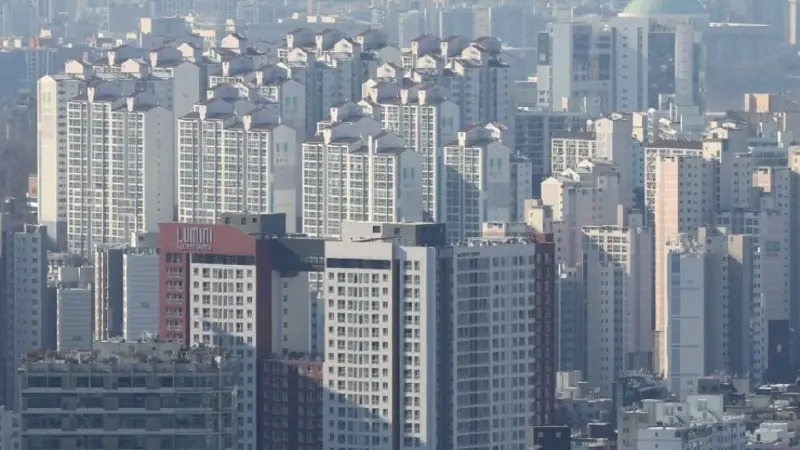


An average wage earner in South Korea would have to save up their entire income for 14 years to buy a home in Seoul, a recent government study shows.
The price-to-income ratio — the median home price divided by the median annual household income — for Seoul in 2021 jumped to 14.1 from 12.5 in 2020, according to the 2021 Korea Housing Survey released by the Ministry of Land, Infrastructure and Transport.
The figure was higher than that of any other region in the country, with Sejong being the only other city where it was in double digits, at 11.3.
The ratio rose for all regions in the country, with the nationwide figure being 6.7, up from 5.5 in the year before. After Seoul and Sejong came Gyeonggi Province, Daejeon, and Daegu, with 9.9, 7.7 and 7.5, respectively.
The ratio of homeowners in the greater Seoul area — comprising the capital and Gyeonggi Province — logged a slight increase from 53% to 54.7%, while the rest of the country marked a slight drop. The figure for the entire country was unchanged at 60.6%.
Housing prices and related policies have always been key points of interest for South Koreans. The previous Moon Jae-in administration was widely slammed for its housing policy, with some 76% of the respondents in a January survey by Data Research saying it was “not doing well” on housing, despite the outgoing president’s relatively-high overall approval rating of 44.1%.
President Yoon Suk-yeol has vowed to loosen regulations on real estate to increase the supply of homes since his campaigning days, leading up to his election victory in March of this year.
While house prices have risen, rents have become more affordable. The annual government report released on Wednesday also showed that the national rent-to-income ratio dropped from 16.6% in 2020 to 15.7% in 2021. It took an average head of a family 7.7 years to buy his or her first home, the same as the year before.
The survey showed that 88.9% of the respondents believe that owning a home is necessary, up from 87.7% the year before. Newlyweds in particular showed a strong desire to own a home, at 90.7%.
In the interest of achieving that goal, 41.3% said there was a need for government-funded housing support programmes. Specifically, loans for purchasing homes (36%), loans for deposits when renting homes (23.9%), providing more long-term public housing (10.9%), and rent support (9.8%).
The annual report was conducted on 51,000 households across the country, the details of which have been made public on the homepage of the MOLIT Statistics System, provided in Korean and English.
The Korea Herald
Asia News Network
