
German auto industry in deep crisis: 50,000 jobs cut in H1
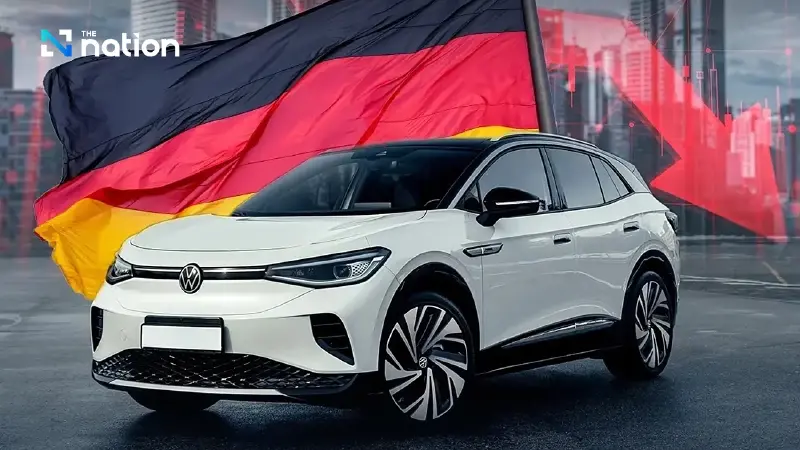


Germany’s auto industry reels from crisis, cutting 51,500 jobs in H1 amid profit slump, overcapacity and recession, with Trump tariffs set to intensify export and cost pressures.
CNBC reported that Germany’s automotive sector, under pressure from economic headwinds and mounting challenges, shed tens of thousands of jobs in the first half of 2025.
An analysis by audit firm EY, based on data from the Federal Statistical Office (Destatis), found that the German auto industry, one of the country’s largest sectors, reduced its workforce by nearly 7%, or about 51,500 positions, during the period.
Over the 12 months to 30 June, German industry as a whole cut around 114,000 jobs, meaning almost half of all layoffs came from the automotive sector. “No other industry has seen such a sharp reduction in employment,” the report noted, adding that automotive jobs have fallen by 112,000 compared with 2019, the year before the Covid-19 pandemic.

Jens Brorhilker, managing partner for audit at EY Germany, said the job cuts reflect the severe difficulties facing the country’s carmakers.
“With profits collapsing, significant overcapacity, and weak demand in international markets, major job reductions have become unavoidable,” he said in a statement.
The EY report added that auto industry revenues fell 1.6% in the second quarter of 2025 from a year earlier. Volkswagen, one of Germany’s automotive giants, reported a sharp Q2 profit drop and lowered its full-year outlook.
However, the decline in auto revenues was still less severe than the 2.1% fall in overall German industry sales, suggesting that while heavily impacted, the automotive sector continues to outperform much of the country’s industrial base.
Three pressures weighing on Germany’s auto industry
Competition from China
Germany’s car industry has long struggled against fierce competition from Chinese manufacturers, both in terms of cost and innovation. The challenge is particularly acute in the electric vehicle (EV) market, where German carmakers and analysts argue that complex government procedures and regulations have hampered their ability to keep pace.

Trump tariffs squeeze exports
Trade policy under US President Donald Trump has further heightened concerns, particularly for Germany’s export-reliant auto sector. The United States remains one of Germany’s largest markets, yet shipments of cars and auto parts to the US fell 8.6% in the first half of 2025 from a year earlier, according to Destatis. Carmakers have repeatedly warned about the impact of new tariffs and ongoing uncertainty.
There was a glimmer of relief in a recent US-EU trade agreement, which set a 15% import tariff on cars, lower than feared. However, the deal is contingent on the EU agreeing to reduce industrial tariffs, leaving questions about its final implementation.
Economic downturn compounds the pain
The broader economic climate in Germany has only added to the industry’s woes. GDP contracted in both 2023 and 2024, with a modest 0.3% rebound in Q1 2025 followed by another 0.3% decline in Q2, underscoring the lack of sustained recovery.
Job cuts likely to continue
EY’s Brorhilker warned that exports to both the US and China will remain under pressure, the US from tariffs, and China from weak demand, mirroring the slowdown within Germany itself.
“Many of Germany’s industrial giants are now restructuring or cutting costs, which means job losses in the sector are likely to continue,” he said.
