
Money-laundering at heart of baht instability
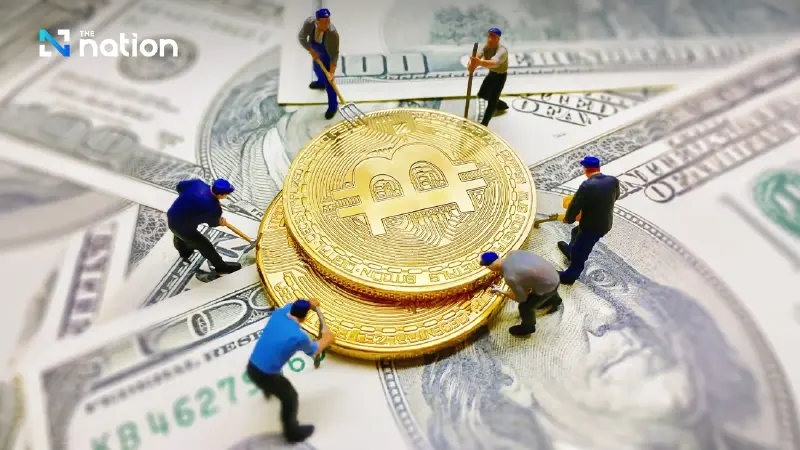


Economists warn transnational criminals are using crypto-to-baht conversions, a key factor behind the baht’s 7% rise this year.
- The Thai baht's recent instability and sharp appreciation are largely attributed to large-scale money laundering operations by transnational crime syndicates converting illicit cryptocurrency into baht.
- An estimated 500 billion baht has been laundered through this crypto-to-baht channel, with the funds then used to purchase assets like gold, real estate, and corporate bonds.
- Evidence for these illicit "grey money" inflows is reflected in the unprecedented surge of Thailand's Net Errors and Omissions (NEO) figure, which reached 530.86 billion baht in 2024.
- A significant regulatory gap, specifically the lack of legislation to control crypto-to-baht exchanges, is a key factor allowing these criminal operations to thrive and impact the currency.
Signs of the abnormalities in the Thai financial market have become increasingly evident, with the baht strengthening by 7 % since the start of 2025. The Bank of Thailand (BOT) has attributed the surge to a current account surplus and online gold trading.
However, digital asset experts have revealed a more troubling factor: large-scale money laundering operations abroad, converting cryptocurrency into Thai baht.
They estimate that as much as 500 billion baht has been laundered through this channel, far exceeding the value of online gold trades that the BOT is seeking to regulate.
Transnational crime syndicates set their sights on Thailand as a base
A source in the digital asset industry revealed that the baht’s appreciation is largely driven by overseas money laundering networks funnelling crypto into Thailand. The converted baht is then used to purchase assets such as gold, real estate and corporate bonds, draining liquidity from the market.
The source warned that crypto-to-baht transactions could ultimately reach the trillions of baht, with around 500 billion baht already suspected to have been laundered. If the trend continues unchecked, the baht is likely to strengthen even further, adding pressure to the Thai economy.
“The operations of transnational criminal groups are highly sophisticated. They convert digital assets obtained from illegal activities into Thai baht, then use the proceeds to purchase gold, real estate, or corporate bonds, effectively laundering illicit money,” a digital asset source explained.
A critical problem, experts warn, is that the BOT has no reliable data on the daily volume of cryptocurrency transfers into or out of the country. Domestic operators are equally in the dark, leaving a loophole that cross-border crime syndicates can exploit.
In some cases, gold shops and buyers collude to settle payments in digital assets via crypto wallets. Shops then inflate prices to offset the risk and turn a profit, making the transactions even harder to trace.
The most pressing issue is that Thailand lacks specific legislation to regulate such activities. This regulatory gap allows criminals to exchange crypto for baht and funnel the money into other asset classes. Authorities are expected to push forward an amendment to the Anti-Money Laundering Act early next year to close these loopholes.
BOT data shows “grey money” inflows surging past 500 billion baht
Alarming irregularities in Thailand’s balance of payments have emerged, reflected in the sharp rise of the Net Errors and Omissions (NEO) figure. According to BOT data, NEO stood at 340.29 billion baht in 2021, before turning negative in 2022 at -2.52 billion baht.
The figure rebounded to 180.40 billion baht in 2023, and in 2024 soared to an unprecedented 530.86 billion baht, nearly triple the previous year. In the first quarter of 2025 alone, NEO reached 80.91 billion baht; if sustained, it could total roughly 323.64 billion baht for the full year.
In theory, the balance of payments should always equal the sum of the current account and capital account, as double-entry bookkeeping requires inflows and outflows to match. In practice, however, incomplete or delayed data collection creates discrepancies, captured as NEO.

Supavud points to “grey businesses” as the real culprit
Supavud Saicheua, chairman of the National Economic and Social Development Council (NESDC), argued that the BOT’s focus on curbing gold trading to slow the baht’s rise is misguided. He noted that gold transactions make up only a small share of flows, while tightening regulations risk penalising legitimate traders.
Instead, he pointed to the abnormal surge in NEO over the past 2–3 years, particularly since the end of the pandemic, when unexplained inflows began to swell. “This comes from grey businesses. We don’t know where the money is from; it doesn’t appear in any account. On average, it’s around US$3 billion per quarter. The BOT needs to scrutinise this, rather than focus on online gold trading,” he said.
Historically, Thailand recorded unexplained outflows, such as in 2015–2017, when about US$500 million a month left the country, figures small enough to be statistical gaps. But in recent years, the trend has reversed into unexplained inflows, fuelling an unusually fast appreciation of the baht. Even before COVID-19, between 2015 and 2019, the baht had already strengthened by 10 %.

Business sector highlights crypto’s impact on the strong baht
Visit Limlurcha, vice-chairman of the Thai Chamber of Commerce and president of the Thai Future Food Trade Association, said the baht’s sharpest appreciation in four years is not only the result of a weaker US dollar and soaring global gold prices, which encourage gold exports and subsequent conversion of dollars into baht, but also a reflection of surging cryptocurrency trading in Thailand.
He explained that investors are increasingly converting crypto into baht for trading. When profits are made on Bitcoin, Ethereum or other coins, they are often cashed out into baht, creating additional demand in the market and pushing the currency higher.
“What we can gather from the financial sector is that the baht’s appreciation stems not only from the weaker dollar but also from two new forces: firstly, rising demand for gold, which drives demand for baht to exchange into gold, and secondly, the expansion of cryptocurrency trading, which creates similar demand for baht. Both are new dynamics in global finance, driven by speculation. The key question is how we manage this without hurting the real sector,” Visit said.
Revealing 500 billion baht in grey money inflows
BOT defines NEO as “statistical discrepancies” calculated from the difference between the balance of payments and the sum of the current and capital accounts. Yet the rapid growth of NEO indicates factors far more complex than data collection gaps.
One major driver of large NEO figures is the presence of illegal businesses and the underground economy, which generate real capital flows but are not captured in official records. This includes smuggling goods without customs clearance, leading to import values in official trade data being understated.
Drug trafficking and contraband trade are also significant contributors. While revenues from such activities are not recorded as official exports or services, they result in real foreign exchange inflows and outflows, creating imbalances in the balance of payments.
Money-laundering transactions add another layer of complexity. Illicit funds are often transferred abroad through unreported channels, bypassing the BOT’s monitoring system. These capital movements do not appear in official statistics but have real effects on the financial system.
Informal labour and unregulated services compound the problem. Income from such activities is typically remitted home via informal channels rather than through the banking system, leaving official remittance data incomplete.
Over the past five years, Thailand’s NEO figures have fluctuated dramatically: from 340.29 billion baht in 2021 to -2.52 billion in 2022, before climbing to 180.40 billion in 2023 and an alarming 530.86 billion in 2024.
A negative NEO in 2022 may have signalled unrecorded capital outflows. By contrast, the steep surge in 2024 likely reflects an expansion of the underground economy or rising unrecorded financial activity.
The continued rise of NEO is a warning sign of a shadow economy potentially larger than expected, implying lost tax revenue and inadequate oversight of illicit activity. The unprecedented spike to 530.86 billion baht in 2024 underscores the scale of grey and illegal businesses in Thailand’s financial system.
