
Qatar blast doubles LNG prices, pressures Thailand’s power tariff
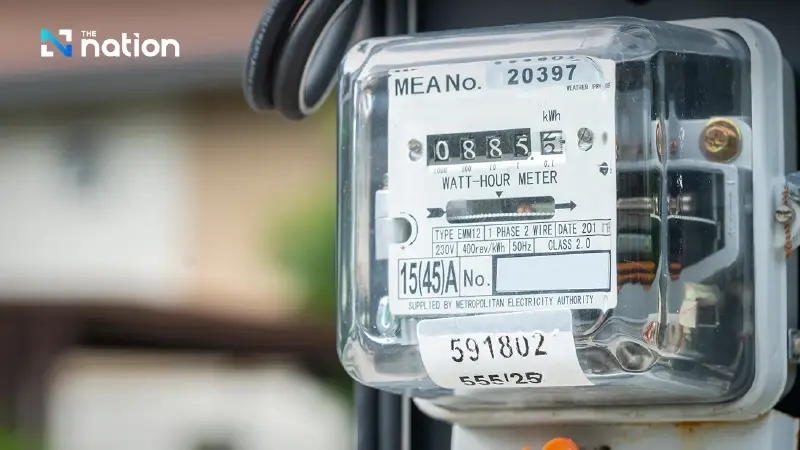


Thailand’s next Ft review faces fresh uncertainty after a gas production explosion in Qatar sent global LNG spot prices sharply higher.
- An explosion at a natural gas production site in Qatar caused global liquefied natural gas (LNG) spot prices to more than double overnight, jumping from $11 to $25 per million BTU.
- The sharp price increase puts direct pressure on Thailand's upcoming electricity tariff for the May-August 2026 period, as the country relies on imported LNG for a significant portion of its power generation.
- To mitigate the impact, Thai authorities are considering using a financial buffer of over Bt9 billion to reduce the tariff and are pursuing strategies to lower LNG dependence, such as reviving a coal plant and increasing domestic gas production.
Global energy markets have been shaken once again after an explosion at a natural gas production site in Qatar triggered a sharp surge in global liquefied natural gas (LNG) prices, placing direct pressure on Thailand’s electricity cost structure, particularly the Fuel Adjustment Charge (Ft) for the second 2026 period (May-August), which is due to be announced soon.
Poonpat Leesombatpaiboon, Secretary-General of the Office of the Energy Regulatory Commission (OERC), said geopolitical factors, especially tensions in the Middle East linked to the Iran war, have significantly increased uncertainty in global energy markets and have already begun to affect Thailand immediately.
“Qatar blast” triggers global LNG prices to double overnight
The latest development to send shockwaves through energy markets was the explosion at a natural gas production site in Qatar, one of the world’s leading LNG exporters and a key import source for Thailand.
The impact was almost immediate, with LNG spot prices jumping from US$11 per million BTU to US$25 per million BTU overnight, more than doubling in a single session.
Although this remains below the 2022 crisis peak of US$57 per million BTU, the speed of the rise reflects the fragility of the global energy market.
For Thailand, the impact is even more severe because the country’s power generation structure still relies heavily on natural gas, which accounts for 57% of total generation capacity.
Of that, as much as 50% comes from imported LNG, directly linking electricity costs to global market prices.
The 2/2026 power tariff: a pivotal test requiring day-by-day assessment
Poolpat said consideration of the Ft for the second 2026 period (May-August) is in an “extremely sensitive” state because energy prices are changing all the time.
The ERC aims to announce the tariff at least one month in advance, by April 2026, so that the public and businesses can plan accordingly.
“We have to finalise the figures every day because the situation changes very quickly. Whenever there is unrest or an explosion, gas prices move immediately, so we need to assess everything very carefully before making an announcement.”
A Bt9.4 billion buffer could cut 13-17 satang per unit
Amid surging energy cost pressures, the ERC is preparing to use financial tools to cushion the impact on electricity users.
The key figures are as follows.
Management funds: There is an investment surplus from the three electricity authorities, or claw back, of around Bt9-9.4 billion, which could help reduce the power tariff by about 13 satang per unit.
Accumulated debt burden (AF): The Electricity Generating Authority of Thailand (EGAT) has accumulated outstanding receivables of around Bt36-40 billion, while PTT Public Company Limited has around Bt12-13 billion in outstanding debt.
“These figures reflect the state’s limitations in holding down electricity prices over the long term and make this round of decision-making particularly important to economic stability.”
“Reduce LNG dependence” by reviving Mae Moh and boosting Gulf gas
However, to reduce the impact of expensive imported LNG, the ERC has set out three urgent strategies.
Revive the Mae Moh power plant: Plans are underway to bring retired coal-fired units at Mae Moh back into operation, doubling capacity from 700 megawatts to 1,400 megawatts.
Generation costs are below Bt2.6 per unit, significantly cheaper than LNG-fired power.
Accelerate gas production in the Gulf of Thailand: Domestic natural gas production will be increased by about 150 million cubic feet per day from the current base of around 2 billion cubic feet per day to reduce import dependence.
Step up hydropower imports from Laos: Thailand will accelerate imports of hydropower from Lao PDR as much as possible because the cost is lower than that of fossil fuels.
In addition, the ERC is encouraging households to switch to solar energy by supporting solar rooftop installations, with related expenses eligible for tax deductions of up to Bt200,000.
“Such measures not only help lower household electricity bills, but also reduce dependence on imported energy and support the country’s carbon reduction goals.”
Long-term strategy for data centres and clean energy
Over the longer term, the ERC is preparing to shift its role into that of an “Active Regulator” to support the growth of new industries, especially data centres that require clean electricity.
Under the Utility Green Tariff (UGT 1) scheme, around 142 million units have already been allocated out of a total of 2 billion units.
UGT 2 is being prepared to open procurement for an additional 2,100 megawatts of green electricity.
Meanwhile, a Direct Power Purchase Agreement (Direct PPA) framework is being designed to support direct clean power demand while maintaining electricity system stability in terms of voltage, frequency and inertia.
However, the latest developments have turned the May-August 2026 electricity tariff into a key test of the state’s ability to manage an energy crisis.
While fuel costs are rising rapidly, the tools available to hold prices down are limited, including the accumulated debt burdens of EGAT and PTT, as well as the available support budget.
“Our goal is to strike a balance between energy security, the environment and reasonable prices, or the Energy Trilemma, to move towards Net Zero by 2050.”
Amid global volatility, the second 2026 power tariff is therefore not just a figure on an electricity bill. It reflects the fragility of Thailand’s energy system and the urgent need to strengthen self-reliance in the future.
