
Wildfires in Thailand engulf animals over 1 million hectares
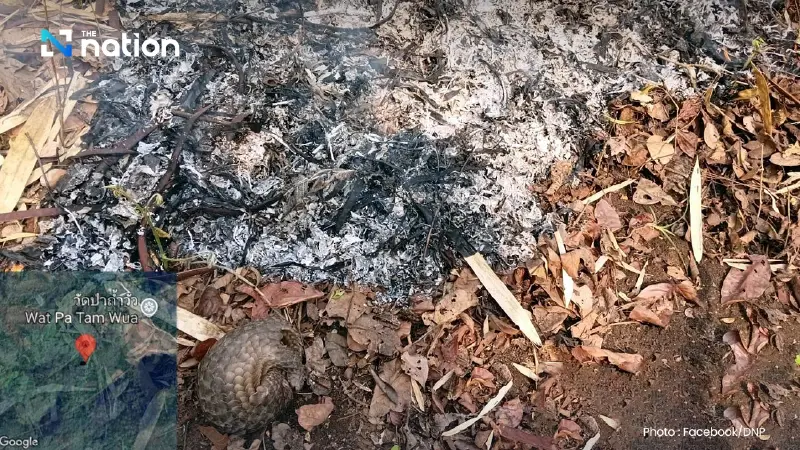


As wildfires scorch over 1 million hectares, the impacts stretch beyond the forests, threatening ecosystems, livelihoods, and public health. Calls are growing for Thailand to invest in modern tools before the next fire season worsens the crisis.
As wildfires swept through forests across Thailand, animals fled through smoke and flames. Experts urged the government to act more proactively to tackle wildfire, particularly by adopting modern technology.
Forests have been destroyed, wildlife displaced, and lives lost. These fires are not only an environmental crisis but also a growing threat to public health and long-term climate stability.
Witsanu Attavanich, director of the Center for Applied Economics Research, said the fires in 2026 have already surpassed previous years in terms of damage.
“Two years ago, burned areas were around 19.5 million rai. But in just the first few months of 2026, the numbers have already exceeded those seen in 2024,” he said.

According to Thailand’s space agency, Geo-Informatics and Space Technology Development Agency, nearly 6.7 million rai, or about 1.07 million hectares, of land was burned nationwide between April 1 and 10 alone.
Satellite data from VIIRS also detected more than 90,000 wildfire hotspots across the country, with most concentrated in conservation areas and national reserved forests.
Wildfires are not new to Thailand. They typically occur during the dry season, beginning in January. However, the situation tends to worsen by March, when air pollution peaks, and reaches its highest intensity in April.
Several factors are driving the increase. Poor management of dry leaves and forest debris has made forests more vulnerable, as these materials act as fuel for fires, according to Wisanu, adding that, El Niño conditions have brought significantly less rainfall, creating drier environments that allow fires to spread more easily.
However, he noted that beyond natural causes, human activity also plays a role, underscoring that some fires are believed to be deliberately set for agricultural purposes or wildlife hunting, further complicating efforts to control them.
The consequences extend far beyond the forests. Wildfires contribute to biodiversity loss, damaging ecosystems that may take years to recover. They also worsen air pollution, particularly PM2.5 levels, which have heavily affected northern provinces, putting millions at risk from hazardous smog.
Moreover, Witsanu raised concerns about watershed areas and ecosystem services, which serve as vital sources of food and natural drainage but only when forests remain healthy.
“Wildfires cause forest degradation, especially in watershed areas. Without trees, there is less rainfall because forests can no longer retain water. As a result, rainfall becomes irregular. Equally important, food sources may decline as ecosystem services are damaged by wildfires.” he added.
In addition to the natural environment, at least two volunteer firefighters lost their lives while battling blazes in northern Thailand.
Jatsada Saiwadech, a reinforcement officer deployed to assist firefighting efforts, pointed to a shortage of personnel on the ground. He explained that officials from other departments, including marine parks, had to be mobilized to help.
“The wildfires in the area were unstoppable, not to mention, the heat and terribly hot. The weather said it was going to rain, but three days passed by and none of that happened until April 19 it rained.”, Jatsada opined.
Experts say one of the biggest challenges is the lack of modern technology. Fires often break out in mountainous and hard-to-reach areas, where firefighters struggle to gain access quickly. Without tools such as drones or helicopters, controlling these fires becomes significantly more difficult.
Dr. Witsanu stressed that while agencies like GISTDA are already using satellite data to monitor hotspots, more investment is needed in advanced tools that can help prevent and respond to fires in real time.
He added that legal and budget limitations are holding back progress. Current regulations restrict local authorities from acquiring certain technologies, and funding remains insufficient to support large-scale improvements.
This gap, he said, must be addressed if Thailand hopes to break the cycle of recurring wildfires.
Looking ahead, the outlook remains uncertain. There are warnings that a stronger El Niño could hit next year, potentially worsening drought conditions and increasing wildfire risks even further
