

Thailand’s 2025 national campaign against transnational scammer networks, led by two Prime Ministers, saw unprecedented border cuts, multi-billion-baht asset seizures, and a powerful diplomatic push at the IPU, reshaping the country's political landscape and regional relationships.
The year 2025 will be remembered in Thailand as the period when the government transitioned from passively managing the threat of transnational scammer networks—a blight on national security and economy—to launching an aggressive, multifaceted, and politically charged offensive against them.

Designated a "National Agenda" by subsequent governments, the campaign saw Thailand deploy decisive physical countermeasures at its borders, engineer complex, multi-billion-baht financial seizures, and successfully push the issue of cybercrime onto the global diplomatic stage.
The urgency stemmed from the sheer scale of the fraud, which globally resulted in losses estimated at over 1 trillion USD, with Asia bearing the brunt. In Thailand alone, accumulated losses over three years amounted to more than 100 billion baht, with new cases occurring daily. This threat forced Thai leaders to take extraordinary measures, fundamentally altering domestic governance and regional diplomacy.

The Evolution of Policy: From Utility Cuts to Financial Purges
The campaign’s aggressive phase began under Prime Minister Paetongtarn Shinawatra, who targeted the logistical hubs sustaining the criminal enterprises, primarily along the western border with Myanmar. In a display of decisive action on 4 February 2025, the government, through the National Security Council (NSC) and the Defence Minister, ordered the Provincial Electricity Authority (PEA) to cut the power supply to Myawaddy town in Myanmar, a known base for scam gangs. This was coupled with halting oil supplies across the border. By 7 February 2025, the Cyber Crime Investigation Bureau (CCIB) was actively shutting down unregistered cell towers in Sangkhla Buri, Kanchanaburi, that were sending internet signals across the border to areas like Phaya Thonsu, Myanmar, as part of a policy to cut electricity, internet, and fuel to five key border areas.

As these decisive operations decreased activity along the western border, syndicates adapted and shifted focus. The urgency intensified in June 2025 after a United Nations report identified Cambodia as the new global hub for cybercrime. In response, PM Paetongtarn convened a high-level meeting on 23 June 2025 and ordered an aggressive new strategy. Security agencies reported that the existing suppression efforts had already caused Cambodia to lose more than 30 billion baht in illicit income.
Five key measures were immediately approved on 23 June 2025, focusing on the eastern border: tightening border controls in seven provinces, prohibiting vehicle and foot traffic except for essential cases, barring foreign tourists from gambling in border areas, and monitoring air travel to Cambodian cities for gambling purposes. Crucially, the government decided to halt the export of electricity, fuel, and other key goods that might support illegal operations in Cambodia. The Ministry of Digital Economy and Society (DES) was tasked with intensifying investigations into mule accounts and suspending internet and undersea cable services supporting Cambodian facilities suspected of involvement.

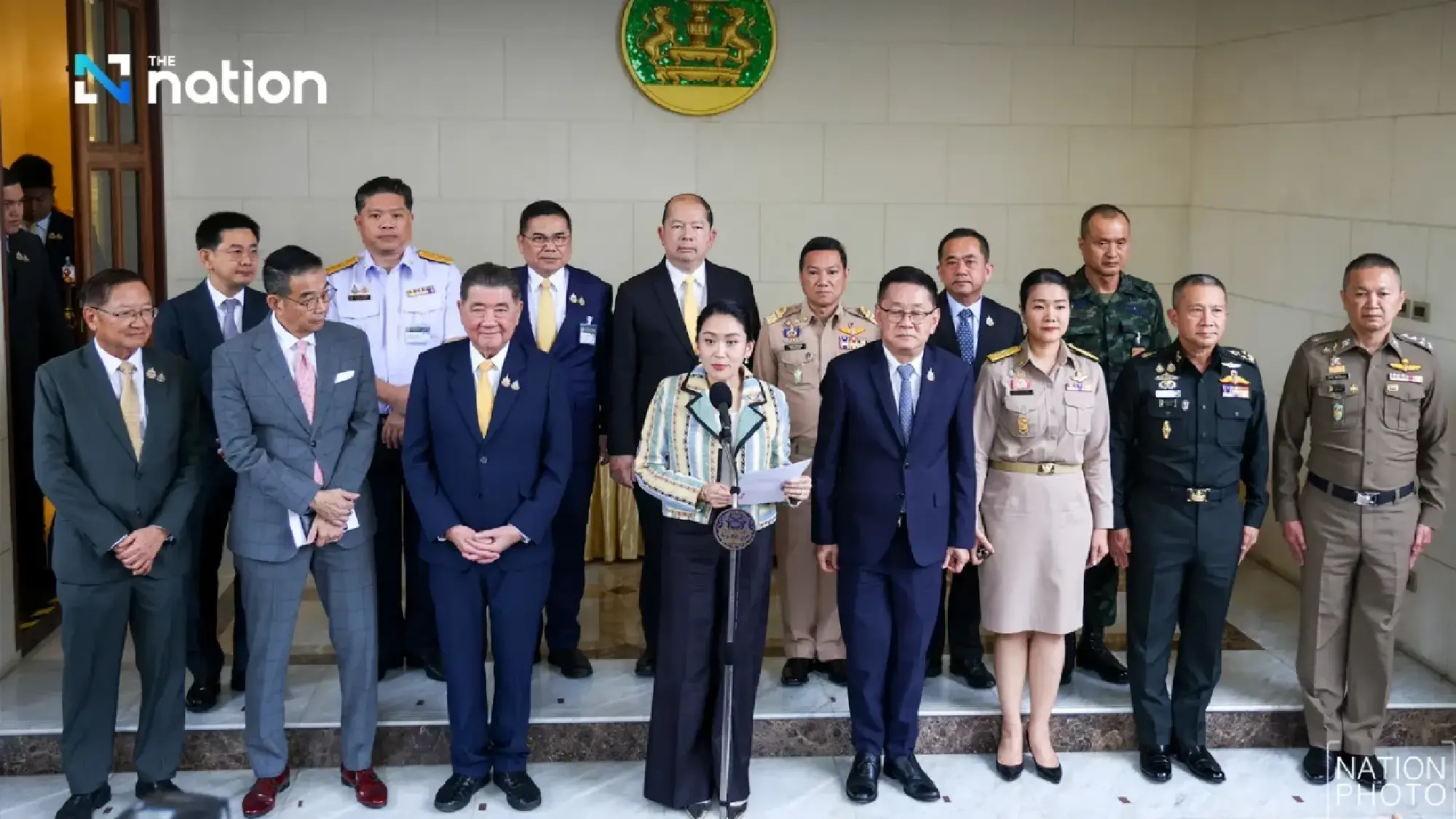
The crackdown accelerated with the change in administration. Prime Minister Anutin Charnvirakul, who took office later in the year, immediately elevated the fight to a matter of national survival, declaring it a “National Agenda”. On 20 October 2025, Anutin chaired the first meeting of the Committee on Technology Crime Prevention and Suppression, establishing subcommittees to handle various facets of the operation, including suppression, money laundering, prevention, and financial trail investigation. Anutin confirmed that authorities had the power to immediately halt services and utilities, announcing that internet signals had already been cut during the meeting. Furthermore, he issued instructions to investigate dual nationals connected to the gangs, including the potential revocation of Thai citizenship.

By 10 November 2025, PM Anutin affirmed the government’s commitment to shifting from a defensive strategy to an offensive one.
The Hammer Falls: Major Cases and Agency Roles
The campaign’s most tangible success was the unprecedented financial crackdown led by the Anti-Money Laundering Office (AMLO) and specialized police forces, demonstrating the government’s ability to follow complex transnational money trails involving digital assets and real estate.
The High-Profile Cases of Chen Zhi and Kok An
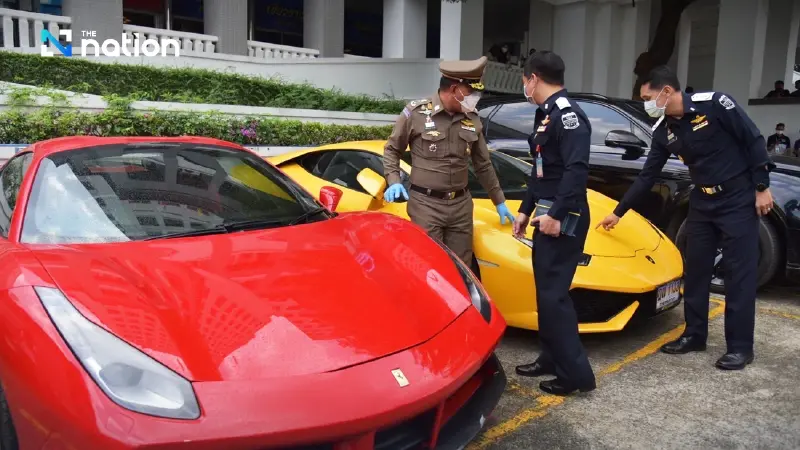
The crackdown culminated in a massive seizure on 2 December 2025, when AMLO announced the freezing of assets exceeding 10 billion baht from the networks of "Chen Zhi" and "Kok An".

Chen Zhi, a Chinese-born Cambodian tycoon and Chairman of the Prince Holding Group, was the primary target. AMLO’s investigation revealed his network was linked to online fraud, human trafficking, and money laundering activities, with Cambodia as the main operational base. The network employed sophisticated methods, converting currencies into digital assets to launder illicit funds. US authorities had previously filed civil proceedings on 14 October 2025 to seize approximately US$15 billion in Bitcoin, alleging it was obtained through Chen Zhi’s fraudulent activities. In Thailand, AMLO seized 102 items related to Chen Zhi, including land, cash, and luxury goods, valued at around 373 million baht.
Kok An was also targeted, with the investigation stemming from the arrest of individuals involved in a transnational criminal organisation. Kok An, a Cambodian national, owned key operational hubs in Cambodia, including buildings (25 floors, 18 floors, Hiso Building) and the Crown Casino, where account owners had to scan their faces to confirm transactions. AMLO seized 90 items connected to Kok An, valued at approximately 467 million baht. Separately, the assets of Cambodian Senator Ly Yong Phat, a close associate of Cambodian former Prime Minister Hun Sen, were also seized (70 million baht) in Thailand, and his Thai nationality was revoked.
On 22 October 2025, the Department of Special Investigation (DSI) launched a preliminary investigation into Prince International, a Thailand-registered company, for possible links to Chen Zhi’s sanctioned Prince Holding Group. Furthermore, on 3 December 2025, PM Anutin ordered the revocation of Thai citizenship for Yim Leak, Chairman of BIC Bank in Cambodia, who had obtained citizenship through marriage.
Roles of Key Enforcement and Regulatory Bodies
The success of the campaign relied on coordinated action across numerous agencies:
1. Anti-Money Laundering Office (AMLO) and Police: AMLO, under Secretary-General Thepsu Bowonchotidara, worked to seize assets and trace financial trails. The Police, notably the CCIB and Central Investigation Bureau (CIB), conducted operations like "Blowing Up Scammers’ Bridges" (February 2025) and "Operation Copperhead" (December 2025) aimed at dismantling illegal Bitcoin operations. The police also successfully recovered 312 million baht for victims through the “Money Cash Back” project.

2. Digital Economy and Society (DES) and NBTC: DES Minister Chaichanok Chidchob declared a "cyber war" on 21 October 2025, proposing a shift to a proactive strategy and the study of using ethical hackers to dismantle digital infrastructure abroad. DES implemented a three-pronged action plan: cutting connections when fraud is evident, integrating intelligence data (AOC 1441), and reforming laws to establish a Cyber Fraud Agency. The National Broadcasting and Telecommunications Commission (NBTC) imposed strict signal controls. Following PM Paetongtarn’s directive in June 2025, 14 licensed internet providers suspended connections to Cambodia. By 22 October 2025, the NBTC mandated the use of "Cell Radius" technology to geographically restrict signals at border base stations, particularly near Cambodia, and threatened licence revocation for non-compliant operators. The NBTC also imposed strict rules on registering and verifying mobile phone user data, limiting foreign national SIM registrations to three per person, and requiring suspension of suspicious services within 24 hours.

3. Securities and Exchange Commission (SEC): Following the discovery that seized assets included shares in seven Thai-listed stocks, the SEC intensified its review of financial trails and shareholder structures on 4 December 2025. The SEC focused on identifying ultimate beneficiaries and closing money-laundering loopholes in the digital asset market. Collaboration with DES led to blocking access to unauthorized foreign platforms and suspending over 44,000 "proxy" accounts. The SEC also joined the 'Connect the Dots' task force under the Ministry of Finance to enhance data sharing and enforce regulations like the Travel Rule for digital assets.

Thailand on the International Diplomatic Stage
Recognising that transnational crime demands a global response, Thailand aggressively pushed the issue onto the international stage in 2025.
The most significant diplomatic victory occurred on 22 October 2025, when the Thai parliamentary delegation, led by House Speaker Wan Muhamad Noor Matha, succeeded at the 151st Inter-Parliamentary Union (IPU) Assembly in Geneva. Thailand’s proposal on transnational organised crime, cybercrime, and hybrid threats was overwhelmingly approved, becoming the sole "emergency item" on the IPU's agenda for 2025. The resolution highlighted that Southeast Asia’s scam centres had led to severe human rights violations and financial damages exceeding US$15 billion.

On the regional front, Thailand committed to increased cooperation. At the ASEAN Summit, PM Anutin proposed Thailand host anti-scam cooperation with China, Japan, and South Korea, although immediate progress was limited. The Ministry of Foreign Affairs (MFA) announced on 17 November 2025 that Thailand would host the International Conference on Global Partnership against Online Scams (IC-GPOS) on 17-18 December 2025 in Bangkok. This event aimed to build global consensus, share best practices, and strengthen measures for protecting victims of human trafficking within the scam context. This initiative built upon Thailand’s ongoing participation in platforms like the United Nations Cybercrime Convention signing in Hanoi, the ASEANAPOL meeting in Bangkok (which adopted the “Joint Bangkok Declaration on Eliminating Deception Centres Linked to Human Trafficking for Forced Criminality”), and holding the chairmanship of the ASEAN Working Group on Anti-Online Scams (WG-AS).

Bilateral cooperation was also pursued, with an agreement made in early November 2025 between Anutin and US Ambassador Robert F. Godec to exchange information and lists of individuals involved in scams. Domestically, authorities like Pol Lt Gen Jiraphop Phuridej were assigned to sign cooperation plans with the Cambodian National Police.
Political Aftershocks and Future Trajectory
The intense anti-scammer campaign inevitably became deeply intertwined with Thailand’s precarious political stability and regional relationships in late 2025.
Domestic Political Landscape
The crackdown, while popular, became a source of significant political pressure on Prime Minister Anutin Charnvirakul’s minority government. The opposition Pheu Thai Party seized on the issue, preparing to file a no-confidence debate immediately after the parliamentary session opened on 12 December 2025, specifically targeting the government’s handling of grey capital and scams.
The controversy was exacerbated by accusations linking politicians and officials to the grey business sector. Public concern lingered over high-profile names, including the case of former Deputy Finance Minister Vorapak Tanyawong, who resigned due to links to a Cambodian business group. Furthermore, revelations about "Politician Ch." being linked to the Klatham Party, led by Deputy PM Thammanat Prompao, further dragged the Anutin government into negative public sentiment.

Anutin navigated this pressure by attempting to depoliticise the action, stressing that enforcement would be based purely on conduct and evidence, regardless of names or positions. He famously stated on 10 November 2025, "If it can’t be cleared, there is no clearing" regarding state officials involved. Facing the imminent no-confidence motion, Anutin signalled on 7 November 2025 that he was ready to play the "dissolution card" sooner than expected (the deadline for dissolution power was before 12 December 2025) if the political game became unmanageable, highlighting the extreme sensitivity of the scam issue to his government's tenure.
Regional and Global Relationships
The campaign placed considerable strain on the relationship with Cambodia. Thailand’s aggressive border measures—cutting power, fuel, and restricting movement in June 2025—were direct punitive actions against the criminal networks based there, actions which the Cambodian government reportedly viewed with suspicion or hostility. The difficulty in securing full cooperation was acknowledged, as cracking down on scammers was viewed as the most difficult condition for the Thai-Cambodian peace agreement, given that these businesses potentially represent a "vital source of income" for the Cambodian ruling family.
Conversely, the campaign boosted Thailand’s international standing as a serious, proactive leader in combating transnational threats. By successfully lobbying the IPU and hosting the international conference in December 2025, Thailand fulfilled the foreign ministry’s goal of positioning the country as a regional hub for joint cybercrime operations and enhanced its credibility on the global stage.

Suggestions for Future Expansion
To ensure the anti-scammer campaign sustains its momentum and effectiveness beyond 2025, future governments must build upon the infrastructural, legal, and educational foundations established:
1. Codify the Proactive Stance and Legal Reform: Future governments must proceed with Chaichanok Chidchob's plans to fully establish a specialised Cyber Fraud Agency. They must expedite legal amendments to strengthen data access authority, fully implement global financial standards like the Travel Rule and Ultimate Beneficiary Identification (UBI), and clearly define the legal frameworks for aggressive digital countermeasures (such as counter-hacking) to overcome diplomatic sensitivities.
2. Sustain Unrelenting Cross-Border Pressure: The effectiveness of infrastructural disruption (cutting power, internet, fuel) was proven. This policy must be sustained and expanded to deny logistical support to criminal compounds, coupled with stringent maintenance of border technology measures like the NBTC’s 'Cell Radius' enforcement.
3. Embed Political Integrity: Future administrations must uphold the principle reiterated by PM Anutin: that the fight against crime is constant work, not political spectacle, and enforce sanctions against any politician or official found linked to grey networks with absolute severity.
4. Prioritise Public Literacy: The government must invest heavily in maintaining high public awareness, continuously promoting the simple yet effective defense mantra: “Do not believe, do not rush, and do not transfer”.
By maintaining the multi-agency coordination achieved in 2025—a blend of technological disruption, aggressive financial tracing, and diplomatic outreach—Thailand can cement its role not just as a combatant, but as a leader dedicated to eliminating this complex, corrosive form of modern transnational organised crime. The sustained effort is the lock, and cross-agency collaboration is the key, needed to turn the temporary decline in scams into a permanent dismantling of the grey capital networks threatening the region.
