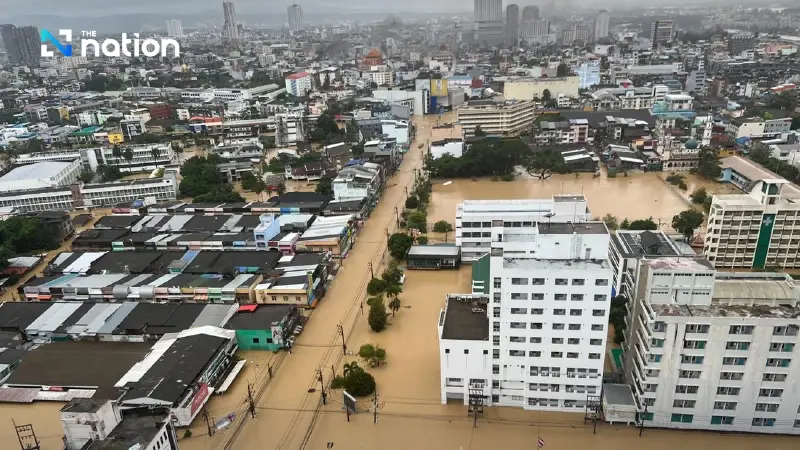


Analysis of the November 2025 flood crisis in Southern Thailand, detailing the record 300-year rainfall event in Hat Yai, Songkhla, the 145 confirmed fatalities, US$700 million economic damage, and the critical need for structural reform in Thailand’s outdated disaster response and water management systems.
The Deluge that Submerged Thailand’s Southern Hub
The final weeks of November 2025 witnessed a devastating flood crisis sweep across Thailand’s southern region, culminating in the near-total inundation of Hat Yai, Songkhla, the nation's fifth largest city and primary commercial hub in the South. The disaster, triggered by extraordinary meteorological events, brought the bustling city to a grinding halt and exposed profound vulnerabilities within Thailand's national disaster preparedness framework.

Hat Yai, a district housing over 400,000 people, found itself completely submerged by a seemingly "impossible chain of events", with floodwaters reaching up to 2.5 metres in some areas. This extreme event was quickly deemed a "turning point" by experts, demonstrating that existing flood management systems were tragically ill-equipped for the "new era" of climate shifts. In response to the escalating crisis, Prime Minister Anutin Charnvirakul declared an emergency situation in Songkhla province on 25 November 2025, elevating the disaster management level to the highest severity (Level 4) under the Disaster Prevention and Mitigation Act.

The resulting impact was catastrophic: as of 28 November 2025, the Emergency Flood Crisis Operations Centre (EFCOC) confirmed 145 flood-related fatalities across the southern provinces. The vast majority of these deaths, 110, occurred in Songkhla alone. Furthermore, the Department of Disaster Prevention and Mitigation (DDPM) reported that over 1.2 million households (3,542,583 people) were affected across nine Southern provinces. Financial analysts estimated the total cost of damages and losses across the area could exceed $700 million USD, potentially soaring to over $780 million USD.

Causes, Development, and the Unprecedented Scale of Damage
The crisis was rooted in record-breaking weather phenomena colliding with systemic deficiencies in Hat Yai’s infrastructure and governance.

The overwhelming factor was the sheer volume of precipitation, which shattered historical models. Between 19-21 November 2025, Hat Yai received a record 630 millimetres of rainfall over just 72 hours, which experts described as a high-intensity downpour with a probability of occurrence similar to only once in 300 years. Critically, 335 mm of this rain fell on 21 November alone. This level far surpassed the rainfall recorded during previous major flood events in 2000 (497 mm) and 2010 (428 mm).

The phenomenon was compounded by three overlapping climatic factors: a cold air surge from China, a nearby low-pressure system (near Kota Bharu, Malaysia), and the La Niña phenomenon, which intensified easterly winds bringing vast moisture from the Gulf of Thailand. Furthermore, the duration of heavy rainfall in the lower South (Phatthalung, Songkhla, Yala, Pattani) was significantly prolonged, persisting for five to seven days, compared with the typical three-day duration of past events.

Despite having invested heavily in infrastructure after the 2010 floods—and being considered a "paragon for the prevention and management of water"—Hat Yai’s flood control systems were overwhelmed. The city's key asset, the Khlong Phuminat Damri diversion channel, was rendered inadequate. The immense water volume simultaneously flowed into the city from three tributary basins (Khlong Tam, Khlong Waat, and Khlong U-Taphao), surpassing the capacity of the diversion structures. Water resource engineer Chawalit Chantharat noted that Thailand's critical vulnerability stems from outdated "water masterplans" and obsolete infrastructure, which were inadequate for the new era of "high-intensity storms" or "cloudbursts". Adding to the severity, rapid urban expansion in Hat Yai over the past decade had reduced natural floodwater retention areas, exacerbating the inundation.

Casualty and Damage Figures
The human cost was devastating. As of 28 November 2025, 145 flood-related deaths were confirmed across eight southern provinces, with Songkhla accounting for 110 of those fatalities. By 4 December 2025, the EFCOC reported 145 confirmed deaths in Hat Yai district alone. A wider compilation up to 2 December 2025, which included losses in Malaysia (Perlis, Kelantan, Selangor), placed the total death toll at 305. Amidst the official figures, a volunteer rescue worker claimed the actual number of fatalities was "certainly up to 1000 bodies".

The damage extended critically to core infrastructure:
-
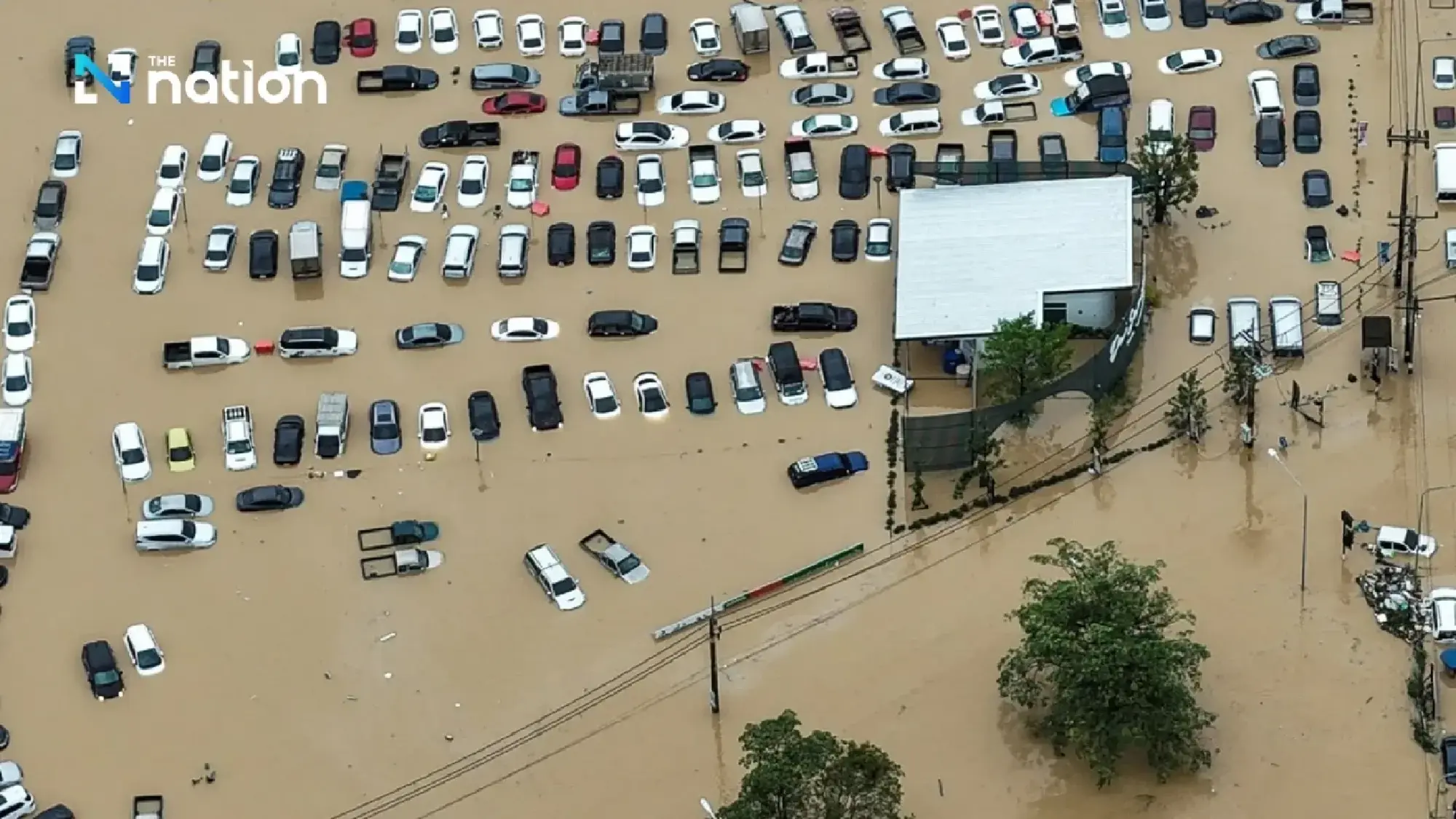
Health: Hat Yai Hospital was severely damaged, forcing a temporary relocation to Prince of Songkla University. The Director of Hat Yai Hospital reported that initial property damage to medical equipment alone was estimated at 1,000 million baht. Close to 50 schools and eight hospitals were shut down.
-
Population: Over 243,778 people in Hat Yai (approximately 104,917 households) were affected. The Songkhla Chamber of Commerce estimated that 80-90% of the city was hit, including homes, retail spaces, and industrial facilities.
-
Economic Paralysis: Hat Yai, which contributes up to $5 billion USD or 2.6% of the country’s GDP, was paralysed. Krungsri Research estimated the overall economic loss from the Southern floods to be between 1.18 to 2.36 billion baht.

Government Action and Rehabilitation Measures
The government, led by Prime Minister Anutin Charnvirakul, responded with legal declarations, command centralisation, and an expansive package of relief and recovery measures.
The Emergency Decree, declared on 25 November 2025, aimed to consolidate ministerial powers under the Prime Minister to ensure swift and unified actions, reduce bureaucratic hurdles, and integrate resources from the military, police, civil service, and private sector. The primary goals were saving lives, ensuring rapid response, coordinating sectors, and preventing exploitation such as looting or price gouging.

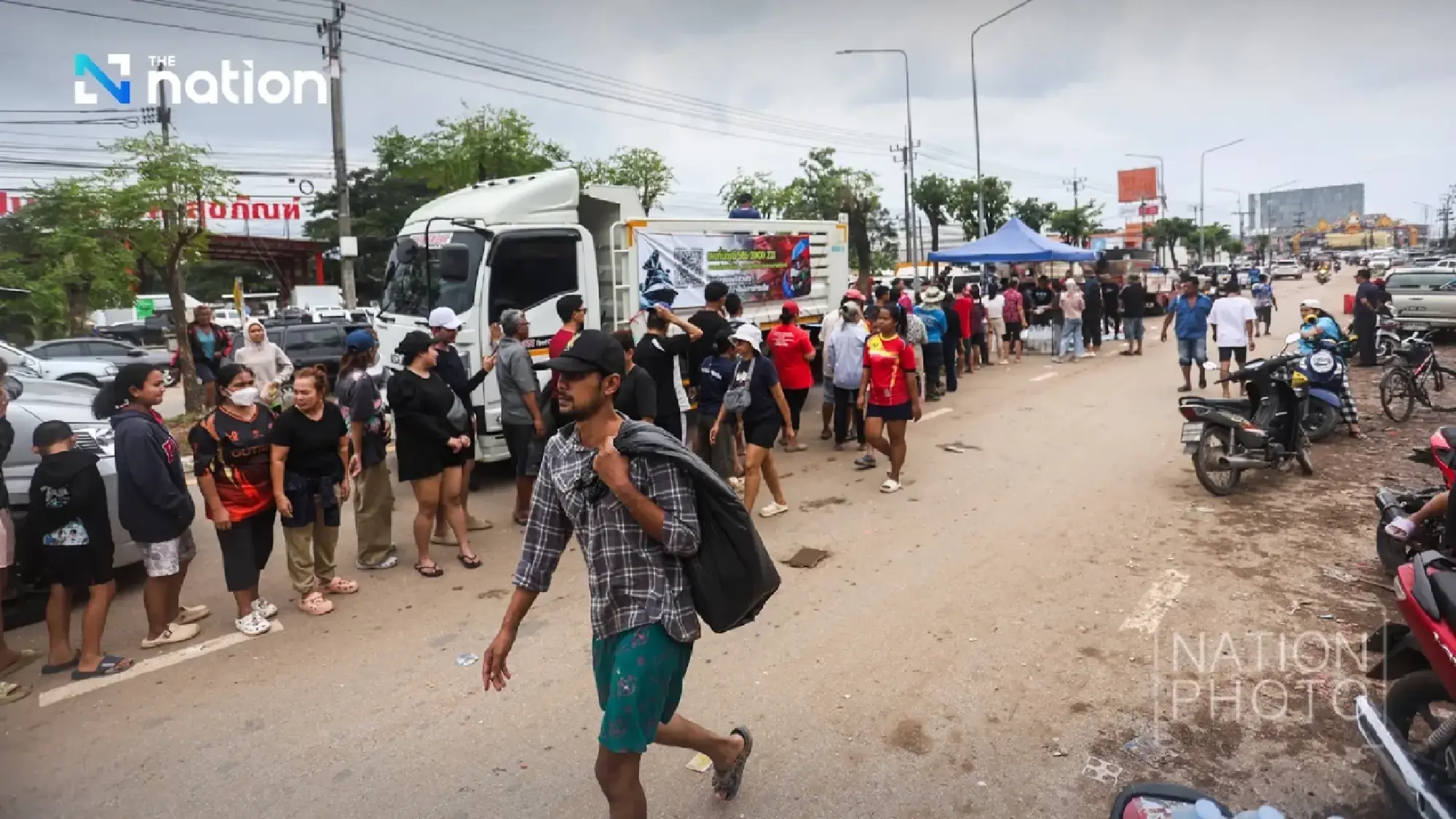
The Emergency Flood Crisis Operations Centre (EFCOC) was established to manage the response. By 27 November 2025, relief efforts had successfully assisted 1,734 of 1,934 requests for help, and over 14,000 people were housed in shelter centres, providing over 90,000 meals daily. Due to floodwaters receding and the response coming "under control," the emergency situation declaration in Songkhla was officially cancelled on 5 December 2025.

Recovery and Financial Relief
The government swiftly shifted focus to rehabilitation, announcing an expansive financial relief programme for the victims. Key measures, announced on 29 November 2025, included:
-
Compensation: The government confirmed a compensation payment of 2 million for the family of each person who died in the Southern floods, specifically designated to cover funeral costs. This relief was extended to nine affected Southern provinces, including Pattani, not just those initially under the Emergency Decree.
-
Debt Relief and Loans: Measures included a one-year moratorium on principal and interest payments for loans up to 1 million baht. Furthermore, interest-free personal/business loans (up to 100,000 baht for six months) and interest-free home repair loans (up to 100,000 baht for one year) were made available.
-
Direct Aid and Waivers: The 9,000-baht financial relief funds were allocated for immediate transfer to affected citizens. The Prime Minister also ordered a waiver of November electricity bills for 450,000 Songkhla flood victims.
-
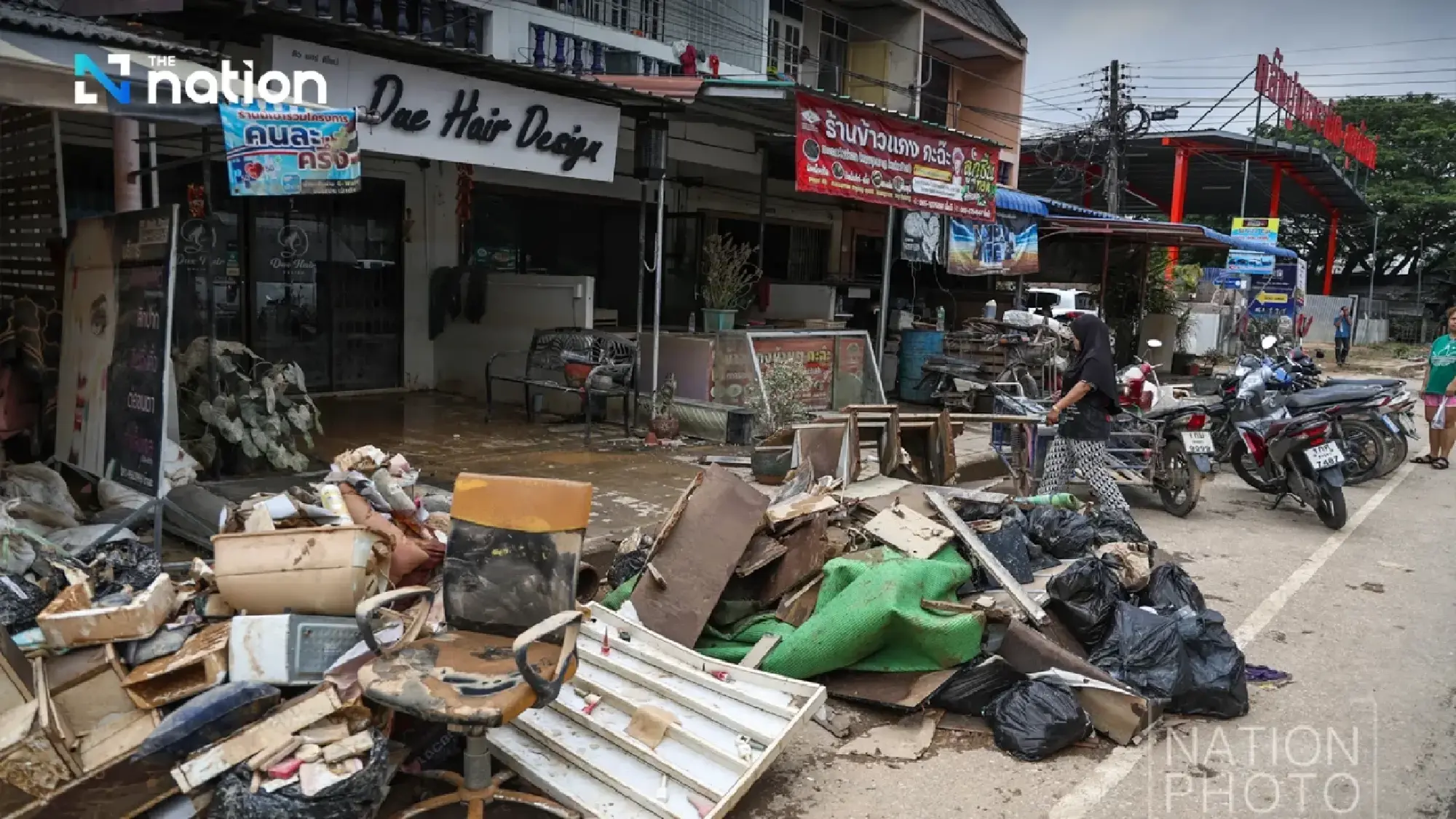
Clean-up and Restoration: The PM instructed local authorities to dedicate the next seven days, particularly night hours, to swiftly transporting the "mountain of waste" left by the receding floods. The government prioritised infrastructure restoration, aiming to restore power to all affected households by 29 November 2025. Experts were deployed to expedite damage assessment for the swift disbursement of housing repair funds. The Ministry of Commerce confirmed plans to sell consumer goods at or below cost price to ease financial burdens.

Support from the Royal Family and Other Parties
The crisis elicited significant support from non-governmental sectors, highlighting coordinated national efforts.
His Majesty the King expressed deep concern for the flood victims and graciously accepted the bodies of the deceased into royal care. To aid the crippled health sector, the King granted 100 million baht to Hat Yai Hospital to assist with rebuilding and purchasing new medical equipment damaged by the floods. The King also provided unmanned aerial vehicles (drones) for search operations and food delivery to the Royal Thai Armed Forces and National Police for relief efforts in the southern regions.
The government also welcomed private sector support. Airlines, including Thai AirAsia and Thai Lion Air, cancelled flights to Hat Yai due to disruption. The severity of the crisis was tragically underlined when a volunteer rescue worker, Cherdpong Piyawannangkun, died from acute heart failure on 30 November 2025 after returning from the Hat Yai mission.

Criticism and the Urgent Need for Structural Reform
Despite the massive mobilisation, the crisis triggered widespread criticism regarding the initial response and highlighted fatal flaws in Thailand’s long-term climate preparedness.
The immediate administrative response was fraught with confusion and delays:
-
Slow and Confused Leadership: The young administration was accused of being "too slow to act". The Prime Minister’s rapid assumption of command, after initially assigning the Supreme Commander to the role via the Emergency Decree, "added to confusion and a slowing of actual aid work". Former PM Abhisit Vejjajiva criticised the government for establishing too many command centres (at Government House, ministries, and in the South), arguing this showed a lack of unity.
-
Fragmented Command: The Federation of Thai Industries (FTI) pointed to the overlapping bureaucratic structures and fragmented command systems, which caused confusion for ground officers and slowed response operations.
-
Ineffective Warning System: The crisis revealed a severe failure in the early warning mechanism. Associate Professor Dr Seri Supharathit confirmed that the Cell Broadcast (T-Alert) system issued 99 warnings to the Southern region between 18-22 November 2025, urging evacuation. However, citizens did not respond because the authority to order evacuation rested solely with the provincial governor, and local agencies did not respond to the warnings or prepare for them. Furthermore, the public often does not understand what 'Warning Level 1, 2 or 3' means.
-
Lack of Experienced Officials: The crisis was compounded by the fact that many key officials, including the new Governor of Songkhla and the Director-General of the Department of Disaster Prevention and Mitigation, had only recently been appointed to their positions in the preceding weeks.

The Mandate for Long-Term Reform
Experts universally agreed that the Hat Yai disaster was a failure of structure, not just weather, necessitating a profound shift from reactive recovery to proactive climate adaptation.
-
Financial Urgency: Melinda Good, World Bank Division Director for Thailand and Myanmar, warned that if climate impacts are left unchecked, they could cost Thailand between 7% and 14% of its GDP by 2050, jeopardising long-term economic stability. Strengthening water management must become an urgent national priority.
-
Governance and Command: There is an urgent need to streamline authority and establish a dedicated national agency for disaster management and early warning systems, rather than leaving individual provinces to handle crises alone.
-
Science-Based Decision-Making: Reforms must strengthen decision-support systems by integrating academic expertise and technical specialists as "mentors". This is crucial to ensure that critical actions, such as evacuations, are based on robust, science-based information rather than single-person discretion.

-
Infrastructure Adaptation: Thailand must urgently reform its outdated infrastructure and adopt proactive planning for extreme scenarios. This includes protecting core assets like hospitals and power plants with worst-case measures, such as dedicated flood barriers, and reassessing floodwater retention areas.
-
Communication Upgrades: Warning systems need an overhaul, including the implementation of clear, practical three-tier warning protocols and the use of visual aids like "flood marks" (colour-coded water-level poles) in high-risk areas to improve public comprehension and response. Developing human capacity through regular disaster-preparedness drills for both officials and the public is also vital.
The crisis served as a brutal reminder that Thailand has entered an era of permanent climate shifts. The failure of Hat Yai, once considered flood-proof, underscores that relying on historical data and fragmented governance is no longer viable; strategic, sustained reform is the only defence against future climate catastrophes.
