
JSCCIB cuts GDP view as energy shock deepens stagflation risk



Thailand’s top business group cut 2026 growth to 1.2-1.6%, raised inflation to 2-3% and warned the energy crisis is spreading through the whole economy.
- The Joint Standing Committee on Commerce, Industry and Banking (JSCCIB) has cut Thailand's 2026 GDP growth forecast to 1.2-1.6% from 1.6-2.0%, citing risks from a deepening energy shock.
- The committee warns of a growing risk of stagflation, as it sharply raised its inflation forecast to 2.0-3.0% from a previous 0.2-0.7%.
- The economic pressure is attributed to the Middle East conflict driving up oil and commodity prices, which negatively impacts production costs, exports, and the tourism sector.

The Joint Standing Committee on Commerce, Industry and Banking (JSCCIB) has assessed the latest situation and made clear that risks are now spreading from energy prices to the real economy as a whole, while cutting its 2026 outlook for Thailand again amid mounting inflationary pressure and clearer signs of stagflation.
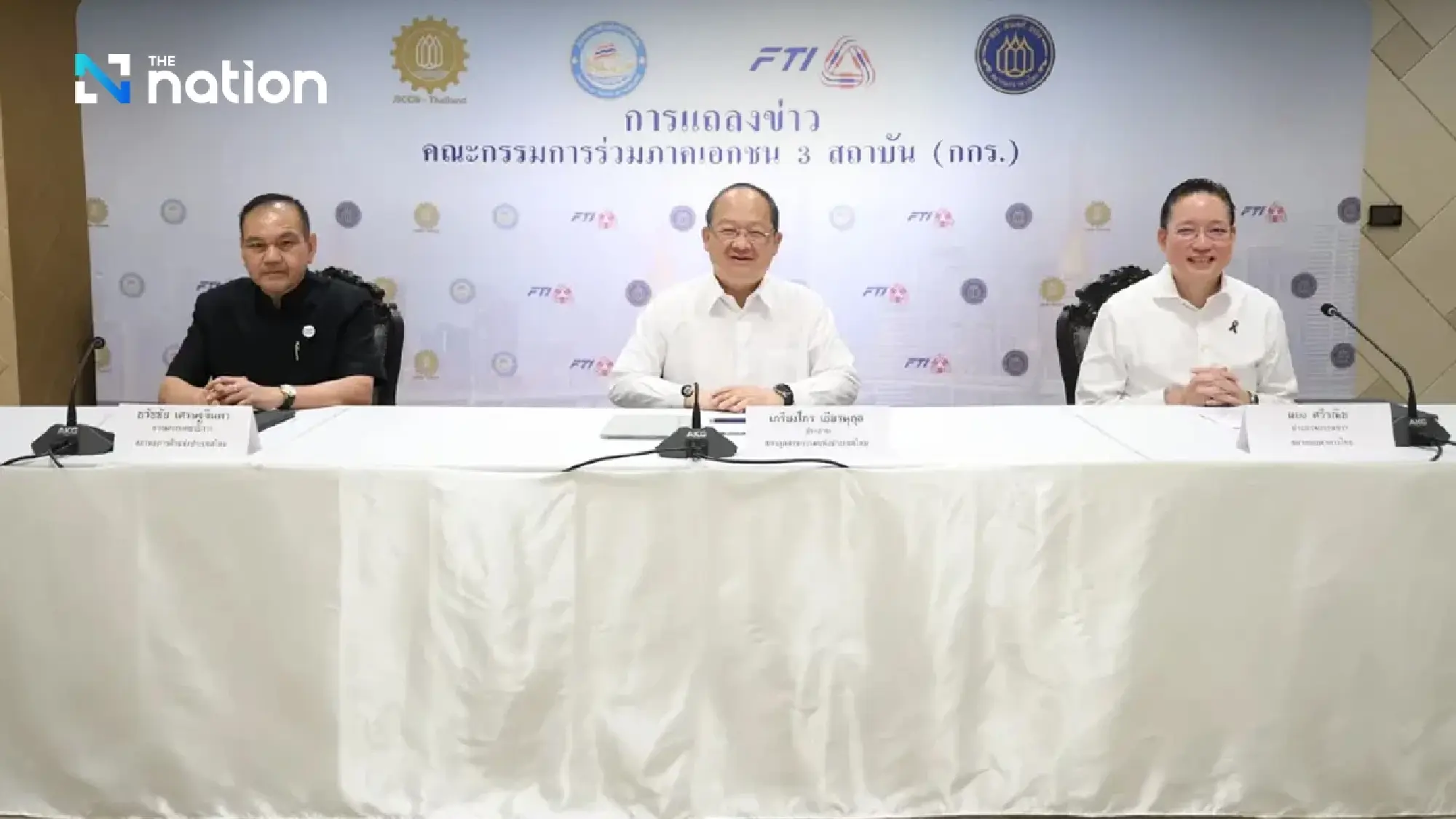
Kriengkrai Thiennukul, in his capacity as chairman of the JSCCIB, said on Wednesday (April 1) that the prolonged conflict in the Middle East was accelerating risks to the global economy, reflected in several key signals, including higher government bond yields, a stronger US dollar, and falling gold prices and risk assets.
“The main risk is a shortage of commodities, especially oil, natural gas and raw materials, which will affect production worldwide and spread across the entire supply chain to consumers.”

GDP cut, inflation jumps as energy shock hits
However, the JSCCIB has cut its 2026 forecast for the Thai economy, with GDP now seen at 1.2-1.6%, down from 1.6-2.0% previously.
Inflation is expected to rise to 2.0-3.0%, up from 0.2-0.7%, while exports are still projected to remain negative at -1.5% to -0.5%.
“The key pressure comes from retail oil prices rising in line with market mechanisms, directly affecting living costs, consumption and private-sector confidence, while the government may need to take on more debt to support the economy.”
In addition, the manufacturing sector is facing higher energy and logistics costs, while exports are being affected by logistics disruption.
The tourism sector is also likely to lose around 1 million foreign tourists over the next three months.


Stagflation warning as tourism may lose 2-3 million visitors
The JSCCIB acknowledged that the Thai economy was moving closer to stagflation, or a situation in which inflation is high while the economy slows, particularly when prices rise, but people’s incomes do not keep pace.
Although that has not yet happened, it warned that if nothing is done, it could emerge in future.
“The tourism sector, which is a key engine of the economy, has been clearly affected, particularly high-spending tourists from the Middle East. For the full year, total arrivals could fall from 35.5 million to only 32-33 million.”
PTT outlines import diversification plan, refineries to run above 100%
At this meeting, the JSCCIB received information from Kongkrapan Intarajang, Chief Executive Officer and President of PTT Public Company Limited, who presented the company’s plan to cope with the energy crisis, stressing that energy security was the central priority.
The main measures include accelerating the diversification of crude oil import sources worldwide to reduce reliance on the Middle East, improving refinery efficiency to handle a wider variety of crude, and running refineries at more than 100% capacity.
The plan also includes raising diesel production by 7% from previous levels, managing oil inventories, accelerating distribution through all transport systems, and ensuring continued service at more than 2,409 PTT Station outlets.
Oil may ease in Q3, but stock in transit remains a hurdle
The JSCCIB also assessed that if the conflict eases quickly, oil prices could decline in the third quarter of this year.
However, any drop would not happen immediately because of factors such as stock in transit, shifts to new oil supply sources, and logistics constraints.
The committee also proposed a “Connect the dots” approach to link economic data, dividing it into: 1) a green zone, covering data that can be clearly verified; and 2) a red zone, covering vulnerable groups and the grassroots economy that are directly affected.
The JSCCIB wants to support the government in urgently rolling out targeted relief measures for specific groups, such as SMEs and vulnerable people.
This should include oversight to prevent oil hoarding or opportunistic price increases, as well as measures to reduce transport costs so that operators can keep prices steady.
These measures would help ease production cost pressures and improve liquidity in the business sector, while taking into account fiscal space and the country’s future investment capacity.
This also includes the impact on the country’s credit rating.
In addition, Thailand should turn this crisis into an opportunity to restructure the economy, upgrade competitiveness, build buffers and shock-absorbing capacity, and move towards sustainable resilience, especially in terms of security and lower energy costs, in line with REINVENT THAILAND.
“The key proposal is for the state to link data between agencies such as the Department of Energy Business and the Department of Land Transport, to bring informal activities into the formal system and deliver targeted assistance, while ensuring that budget burdens do not undermine fiscal space and the country’s credit rating.”
Push for ‘Brazil model’ to curb 90% import dependence
Another strategic proposal is to reduce dependence on imported oil, which currently stands at 90%, by pushing biofuel as a national policy. The model cited is Brazil, which has seriously used crops such as sugar cane and cassava to produce energy.
“The JSCCIB believes that if Thailand follows this path, it would raise agricultural GDP from 6-7% to 15%, reduce household debt, and increase the incomes of more than 20 million farmers.”
Accelerate energy reform, push PDP 2026 as a national strategy
The JSCCIB meeting also placed importance on the Ministry of Energy’s new national Power Development Plan (PDP 2026).
It said that, beyond being an energy plan, it should become a core strategy for upgrading the country’s competitiveness alongside concrete progress in the energy transition.
It proposed urgently announcing the 2026-2030 electricity tariff structure to reflect current real costs, reforming the electricity sector towards a liberalised market, ensuring fair access to the grid, and linking the plan with greenhouse gas reduction targets under NDC 3.0 in order to build confidence and attract investment.
It also said Thailand must systematically promote renewable energy, raise clean energy standards, and support financial tools to help businesses and SMEs adjust.
This should be driven by cooperation from all sectors through the establishment of a joint public-private energy committee to push strategy forward and remove various constraints, so that PDP 2026 can meet the country’s long-term needs in security, sustainability and competitiveness.

