
Disneyland Thailand idea returns with THB300 billion EEC mixed-use proposal
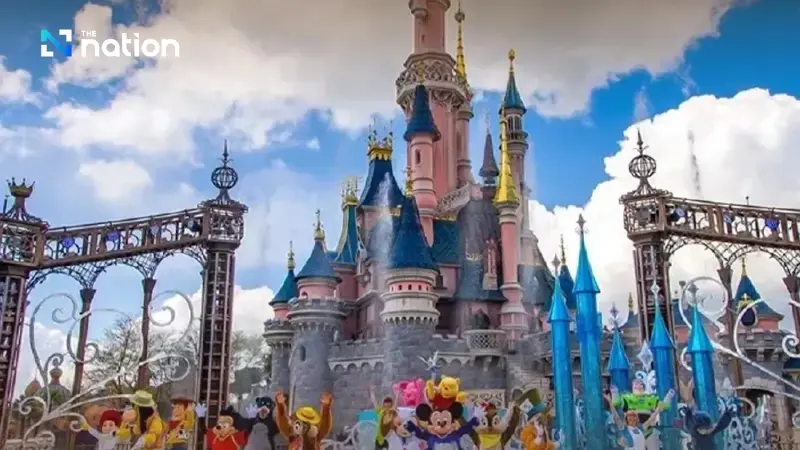


Plan would set aside about 800 hectares in Chonburi for a theme park, sports and entertainment complex, with private investors taking the risk under a PPP model, though Disney has yet to confirm any deal.
- The Thai government has revived the idea of a "Disneyland Thailand," proposing a THB300 billion mixed-use development in the Eastern Economic Corridor (EEC).
- The project would include a theme park, sports centre, and commercial space, funded by private investors through a public-private partnership (PPP) model rather than direct state investment.
- This concept is not new, having been repeatedly raised by at least five different governments over the past 26 years without ever resulting in a formal contract.
- Despite the government's renewed push, The Walt Disney Company has not issued any official confirmation or expressed concrete interest in the project.
The “Disneyland Thailand” buzz has resurfaced after Phiphat Ratchakitprakarn, Deputy Prime Minister and Minister of Transport, floated the idea of moving ahead with a world-class theme park project in Chonburi under the Eastern Economic Corridor (EEC) scheme.
The concept would take the form of a large mixed-use development, bringing together a theme park, sports centre, entertainment venues and commercial space in a single area.
The preliminary plan would use around 800 hectares, divided into roughly 480 hectares for the theme park, with an investment value of nearly THB200 billion, and another 320 hectares for a sports and entertainment centre valued at more than THB100 billion.
Total project value is estimated at around THB300 billion.
The state would not invest directly, but would instead invite private-sector investment via a public-private partnership (PPP) model.
However, looking back, the “Disneyland Thailand” dream is nothing new.
It is an idea that has been repeatedly revived for more than 26 years, under at least five governments, yet it has never reached the point of a formal contract signing with The Walt Disney Company.

Tracing 26 years across five governments: Disneyland as a “recurring hope”
The Thaksin Shinawatra administration (2001–2006)
Reports of efforts to bring Disneyland to Thailand gained traction amid the government’s mega-project era.
Possible locations were discussed, such as Pattaya, Phuket, or areas near Suvarnabhumi Airport. But it remained at the level of “rumour and buzz”, with no official announcement or signing.
The talk later faded, amid concerns over commercial terms and the tight brand-control requirements associated with Disney standards.
The Yingluck Shinawatra administration (2012)
The idea resurfaced again as a private-sector proposal when the Association of Thai Travel Agents urged the state to support a world-class theme park to enhance tourism competitiveness.
At the time, however, the government was dealing with the aftermath of the 2011 floods and political volatility, and the proposal was not advanced into a concrete project.
The Gen Prayut Chan-o-cha administration (EEC groundwork around 2016–2019)
During the period when the EEC was being laid out, the idea of attracting a global theme park, whether Disneyland or Universal Studios, was included in feasibility-study frameworks to boost tourism and support the high-speed rail project linking three airports.
In practice, investment materialised from other theme-park brands, while Disney did not make a move.
The Paetongtarn Shinawatra administration
Although the concept has continued to be mentioned from time to time as a “dream project” for the tourism sector and the EEC, there have still been no concrete signs from Disney’s parent company.
As a result, it has remained a policy-level idea rather than a deliverable project.
The Anutin Charnvirakul administration (2025–present)
From late 2024 into 2025, the concept was revived once again.
Phiphat Ratchakitprakarn provided information on plans to push for a Disneyland project in the EEC, arguing it would increase the value and returns of major infrastructure investment.
He said discussions were underway with the Office of the Eastern Economic Corridor Policy Committee on both project studies and licensing approaches, even though, to date, The Walt Disney Company has not issued any official confirmation.
A mega-project worth hundreds of billions, and the economic value question
If fully pursued, the project would be among Thailand’s most expensive tourism mega-projects, with total investment estimated at around THB300 billion.
The government sees it as a way to add weight to the EEC, expanding its image from an industrial base into a world-class entertainment destination, and serving as a magnet for foreign investors and visitors.
Phiphat said the government is ready to keep pushing the project forward and expects progress next on feasibility studies and licensing structures.
He reiterated that the public sector would not invest directly, but would leave the investment risk to the private sector through a PPP model.
Disney’s business model: it does not self-fund in every country
From a business perspective, Disney’s overseas theme-park expansion typically follows three main models:
- 100% self-investment, used mainly in the United States
- Licensing, such as Tokyo Disneyland, which is fully funded and operated by a Japanese private company
- Joint ventures, such as Hong Kong and Shanghai, where Disney holds equity alongside local governments or state-linked entities
Lessons from Japan show that licensing reduces risk, but can also mean Disney misses out on outsized profits, prompting the company in later years to lean more heavily towards joint-venture structures in multiple markets.
For Thailand, it is assessed that the most plausible model would be licensing, with a Thai private-sector player funding and operating the project while Disney oversees brand and standards, helping to avoid exposure to uncertainties around purchasing power and tourism-cycle volatility.
From “dream” to the “same old question”
Over the past 26 years, “Disneyland Thailand” has been raised across five governments as a symbol of efforts to upgrade the tourism industry and attract a global-scale mega-project.
Yet to this day, it remains more of a “concept” than a confirmed deal backed by Disney’s parent company.
The key question, therefore, remains unchanged: Is Thailand truly ready, on infrastructure, location, investment capacity and purchasing power, to turn a repeatedly discussed dream into a world-class theme park that actually appears on Thailand’s economic map?
