
Thailand backs South and East infrastructure investment drive


Thailand is set to prioritise major transport investment in the South and East under the Anutin II government, with both zones named flagship development areas.
- The Thai government is fast-tracking major infrastructure projects in the Southern and Eastern Economic Corridors to boost the national economy.
- A primary focus is the Southern "Land Bridge" project, a 990 billion baht initiative to connect the Gulf of Thailand and the Andaman Sea for cargo transport.
- Investment in the Eastern Economic Corridor (EEC) will be accelerated, including the high-speed rail project linking three major airports.
- Plans for the EEC also include developing a new smart city and entertainment hubs, with studies underway for a world-class theme park like Disneyland.
Phiphat Ratchakitprakarn, Minister of Transport, said that under his leadership, he and the ministry’s three deputy ministers would push ahead with “flagship” projects and speed up infrastructure investment to boost the economy.
He said two flagship projects in special economic zones would now be turned into concrete action, starting with transport infrastructure for the Southern Economic Corridor linking the Gulf of Thailand and the Andaman Sea, or the Land Bridge, with investment worth more than 990 billion baht. He said the project would continue under the current administration because it was a carry-over policy from the previous government.
Studies have found the project would clearly be worth the investment, he said, helping create hundreds of thousands of jobs and opening up new opportunities for the country. He added that the Land Bridge would also be worthwhile for cargo transport, as current statistics show that more than 90% of vessels at Singapore’s port are transhipment ships, meaning the project would help answer that need.

At the same time, he said the ministry would speed up investment in the Eastern Economic Corridor (EEC) and address issues surrounding the high-speed rail contract linking Don Mueang, Suvarnabhumi and U-Tapao airports. There will be no contract amendment, with the government instead focusing on boosting passenger numbers by encouraging more people to use the service and stepping up investment in the EEC, which would in turn increase high-speed rail ridership.
After the government delivers its policy statement and a chair is appointed for the Eastern Economic Corridor Policy Committee, meetings will be held to move forward with an integrated entertainment complex without a casino, while also seeking investors for a world-class theme park project such as Disneyland or other amusement parks.
The investment projects in the two special economic zones are divided as follows.

Land Bridge project
The Office of Transport and Traffic Policy and Planning (OTP) has studied the investment plan and scaled down the construction size to better match current conditions. Under Phase 1/1, the project will be designed to handle up to 4 million TEUs, down from the original plan of 6 million TEUs. However, the overall development plan still targets a maximum capacity of 20 million TEUs.
The downsized construction plan has led OTP to cut the estimated investment to 990 billion baht from the previous 1 trillion baht. Phase 1 will be studied and developed in three parts: Phase 1/1 in 2030-2031, worth 617 billion baht; Phase 1/2 in 2032-2034, worth 174 billion baht; and Phase 1/3 in 2035-2053, worth 205 billion baht. Phase 2, covering 2054-2079, has not yet been costed because Phase 1 must be completed first.
Under the investment model, the project will be opened to private participation under a PPP Net Cost structure with a 50-year concession. The bidding will follow the One Port Two Sides principle, with construction and management of the entire project carried out under a single contract. Investors must have experience in port management and shipping line operations in order to bring cargo to the ports, and they must also have the financial readiness to invest in the project.

Investment in the EEC
The Eastern Economic Corridor Office of Thailand (EECO) plans to develop the EEC business centre and smart, liveable new city, or EECiti, under the Smart & Sustainable “LIVE-WORK-PLAY” City concept, to lift the East into a global economic and tourism hub. Covering 15,000 rai, the project is intended to become a World-Class Entertainment & Leisure Hub.
The development will include major projects such as a world-leading theme park and a sports complex. The site is 10 kilometres from the high-speed rail station and 15 kilometres from U-Tapao International Airport. For the new city project, EECO is preparing to seek approval for tailored incentives and supporting infrastructure and will propose the creation of a modern model city to the EEC Policy Committee.
For the world-class Disneyland investment plan, EECO is preparing to hire experts with experience in managing Hong Kong Disneyland and Shanghai Disneyland to study the most suitable model. That will include whether the project should take the form of a joint venture or be fully financed by Thailand, as well as negotiations with Disneyland over terms that would deliver the greatest benefit. The study is expected to take two to three months.
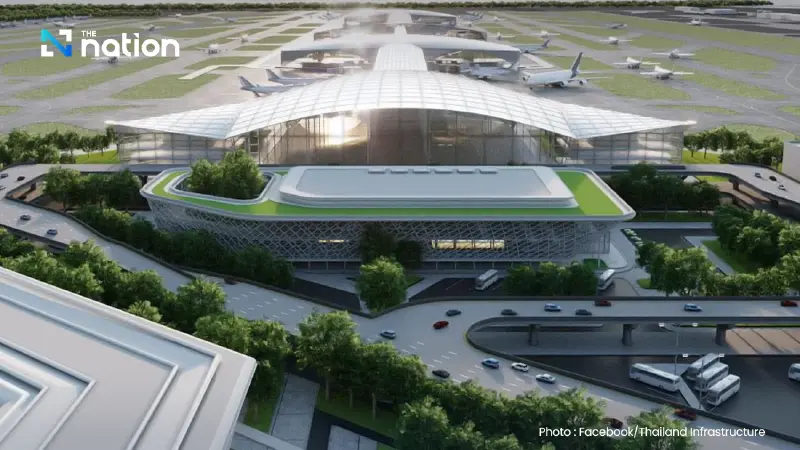
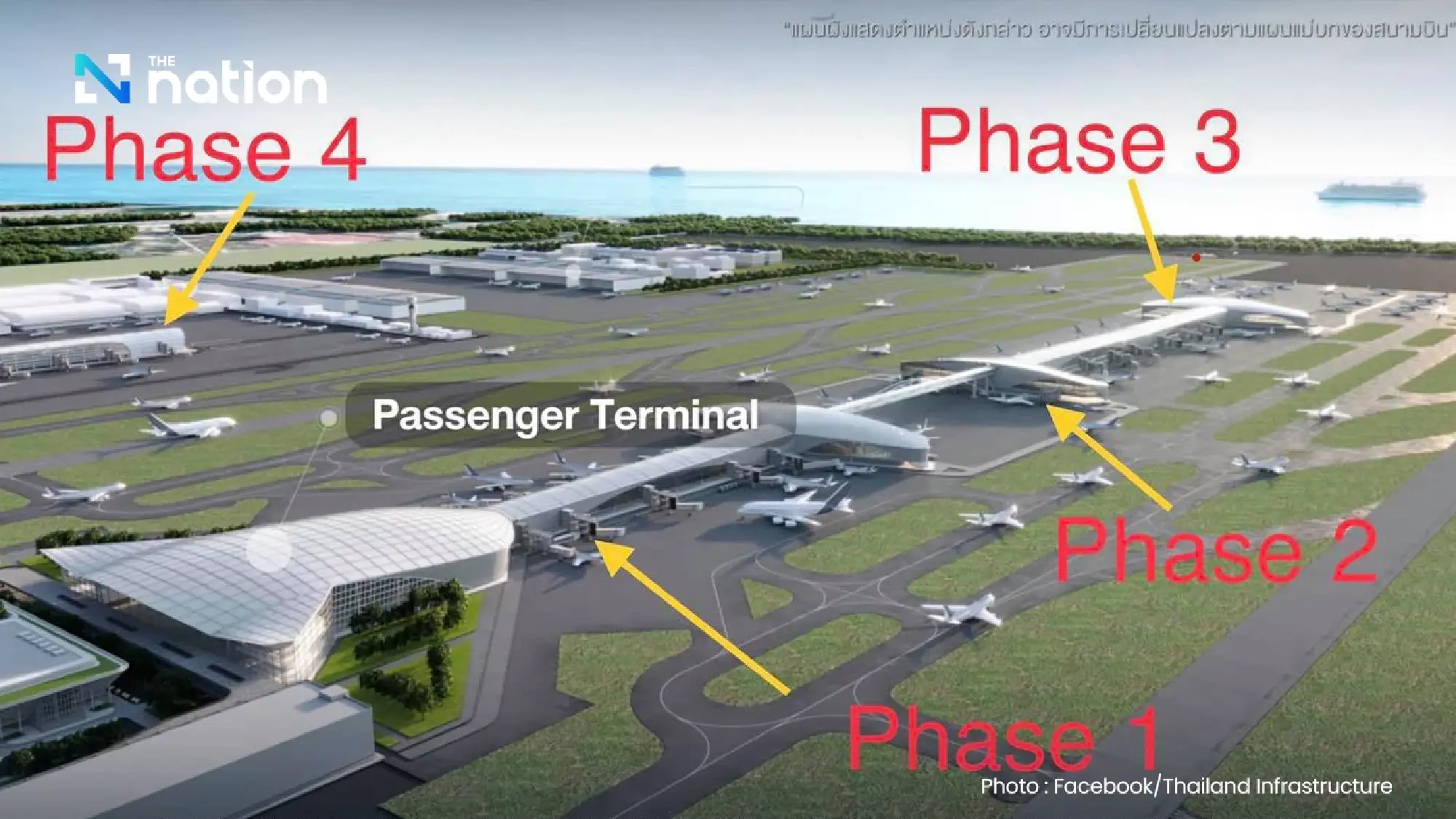
As for infrastructure investment, 2026 will mark the year projects finally “start from one” after being stuck in “year zero” for five to six years. One example is the U-Tapao Airport and Eastern Aviation City project. On April 3, 2026, a Notice to Proceed (NTP) was issued to U-Tapao International Aviation Company Limited (UTA), allowing construction work to begin.
The EEC Policy Committee is also expected to meet to conclude the operating approach for the high-speed rail project linking the three airports. The same applies to the MRO project. UTA is currently in talks with Thai Airways International Public Company Limited over land use for the MRO development, while EECO expects construction to begin in 2026.
