
U-Tapao Airport development stalled by political gridlock
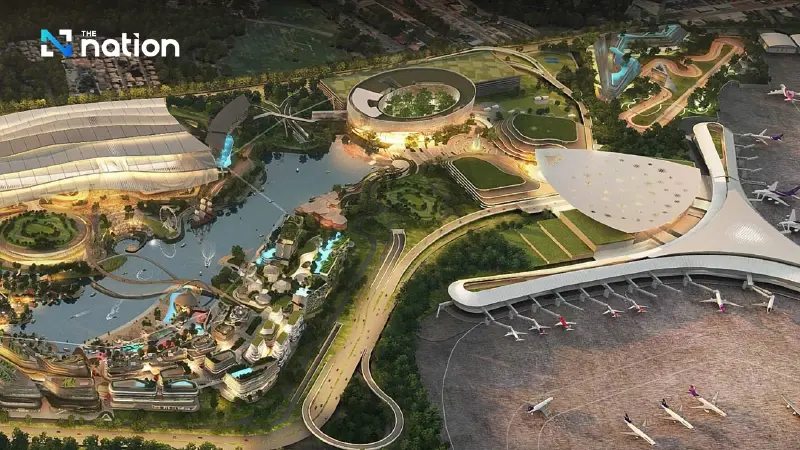


U-Tapao airport project stalls as political instability delays approval. UTA seeks a 1-month extension for EEC to revise plans. Warns of contract termination and claim for 4bn baht.
Puttipong Prasarttong-Osoth, President of Bangkok Airways and shareholder of U-Tapao International Aviation Co. Ltd (UTA), revealed on Monday (September 1) that UTA's management and shareholders held a meeting to discuss the development of the U-Tapao Airport and Eastern Aviation City project.
The meeting came at a time of political transition, which has delayed the proposal to the Cabinet for approval by the Eastern Economic Corridor (EEC) policy board. The timing for when the matter will be presented to the Cabinet remains uncertain.
Previously, UTA had requested to negotiate the development of the project in alignment with current passenger growth trends and future expansion plans.

Puttipong is suggesting that the EEC be given one month to allow the new Cabinet to be formed, which would allow the matter to be presented for the Cabinet’s consideration. If approved, the development plan for U-Tapao Airport should be able to proceed.
However, if the Cabinet does not approve the proposed adjustments, the company will cancel the contract, claiming the government has breached its terms. Puttipong also insists that the EEC reimburse the company for over 4 billion baht already invested in the project.
Despite previous requests from the EEC to extend the Notice to Proceed (NTP) three times, UTA has continued to accommodate the delays, recognising the importance of the project.
The development of U-Tapao Airport has been a point of ongoing discussion between UTA and EEC. UTA has proposed removing the condition linking the airport project to the high-speed rail connecting the three airports, arguing that the project should not be delayed by the rail development.

In addition, UTA has raised several issues concerning private sector incentives, including tax benefits, the issuance of licenses for restaurants and beverage outlets to sell alcohol, and streamlining work permit applications.
UTA has also requested adjustments to the airport’s passenger terminal capacity in the first phase, aligning it with the post-COVID-19 reality and the full expansion of Suvarnabhumi Airport by Airports of Thailand (AOT).
The company has proposed scaling down its initial terminal capacity from 12 million passengers to 3 million passengers.
As passenger numbers increase, UTA plans to expand the airport in phases. Ultimately, within the 50-year contract period, the terminal will be expanded to accommodate 60 million passengers.
Currently, U-Tapao Airport is serving around 400,000 passengers annually, with its existing terminal capacity at 2 million passengers. Building a terminal to accommodate 12 million passengers in the first phase would make the airport underutilised and not justify the investment, UTA explained.
The company has therefore proposed starting with a 3-million-passenger terminal, with subsequent expansions aligned with actual passenger demand.
“Post-COVID-19, the current terminal at U-Tapao is serving around 400,000 passengers, which is far below the proposed 12-million-passenger capacity,” UTA said. “Building such a large terminal right away would result in an inefficient investment. We propose adjusting the initial phase to accommodate 3 million passengers and expanding as demand grows.”

