
Chiang Rai’s Wiang Kaen pomelo registered as ninth GI product
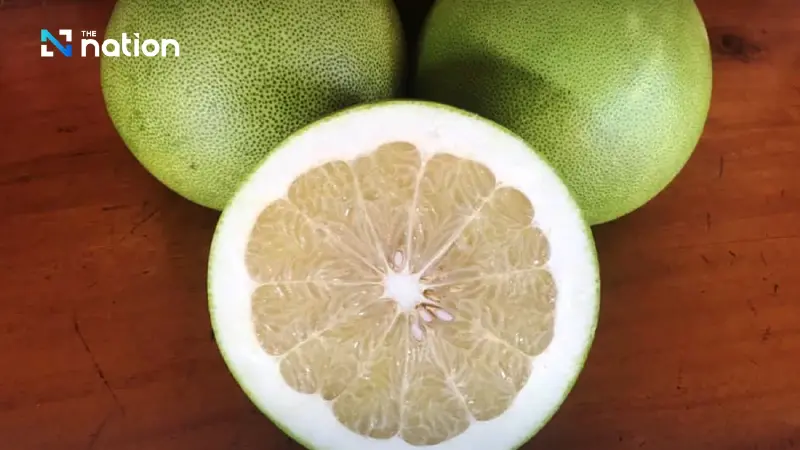


Department of Intellectual Property says registration will protect fruit’s name and standards while helping growers in Wiang Kaen district raise product value and expand market access.
- The Wiang Kaen pomelo has been officially registered as the ninth Geographical Indication (GI) product from Chiang Rai province.
- This registration makes Chiang Rai the province with the second-highest number of GI products in Thailand, after Nakhon Ratchasima.
- The GI status protects three specific varieties (Khao Yai, Thong Dee, and Seller), which are recognized for their unique quality and flavor derived from the fertile soil of the Ngao River basin.
- The product already generates over THB100 million in annual market value, and the GI designation is expected to increase its value, protect its quality, and boost income for local farmers.
Auramon Supthaweethum, Director-General of the Department of Intellectual Property under the Ministry of Commerce, said the department announced on Monday (January 19) the registration of “Wiang Kaen pomelo”, a signature fruit of the Ngao River basin, as Chiang Rai’s ninth geographical indication (GI) product.
It follows Doi Tung coffee, Doi Chang coffee, Nang Lae pineapple, Phu Lae Chiang Rai pineapple, Chiang Rai tea, Chiang Rai Khao Niao Khew Ngu sticky rice, Khao Kam Lanna (registered jointly with seven other northern provinces), and Wiang Ka Long ceramics.
The eight previously registered GI products have generated more than THB300 million a year in economic value for the province.
The GI registration of Wiang Kaen pomelo makes Chiang Rai the province with the second-highest number of GI products nationwide, after Nakhon Ratchasima, which has 11 GI products.
This reflects the area’s abundant natural resources, long-standing local wisdom, and the potential of local people in strengthening the community economy.

The area’s geography is a basin surrounded by mountains, with the Ngao River running through every tambon.
As a result, the soil is fertile river alluvium rich in organic matter, with good drainage and suitable pH levels.

Combined with favourable climate conditions, this produces Wiang Kaen pomelo with outstanding quality in flavour, texture and juiciness, recognised by consumers both in Thailand and abroad.
The “Wiang Kaen pomelo” registered as a GI includes three varieties:
- Khao Yai: oval-shaped fruit weighing an average of 1.2–2.5 kilogrammes per fruit, with greenish-yellow peel. The flesh is firm, crisp and juicy, pale yellowish-white in colour, with a sweet-and-sour taste, slight fizziness, and mild astringency and bitterness. Sweetness is not less than 9 degrees Brix.
- Thong Dee: flattened, round fruit weighing an average of 1–2 kilogrammes per fruit, with yellow peel. The flesh is soft and juicy, light pink in colour, with a sweet-and-sour taste, slight bitterness and fizziness. Sweetness is not less than 9 degrees Brix.
- Seller: round fruit weighing an average of 0.8–2.0 kilogrammes per fruit, with light green peel. The flesh is crisp, ruby red in colour, with a sweet-and-sour taste and slight fizziness. Sweetness is not less than 9 degrees Brix.

At present, there are 1,383 Wiang Kaen pomelo producer households in Chiang Rai, with an average output of about 25,130 tonnes a year.
Total market value exceeds THB100 million a year, including export value of around THB50 million a year, with China as a key export market.
This reflects the tangible competitiveness of Thailand’s distinctive agricultural products in international markets.
Auramon said the GI registration of “Wiang Kaen pomelo” not only protects the product name and quality linked to its geographical origin, but also helps raise the value of agricultural products, increase farmers’ income, and sustainably strengthen Chiang Rai’s grass-roots economy.
After registration, the department will continue driving GI work through to downstream stages, including establishing product quality control systems, traceability, and promoting marketing channels to increase income and build on community businesses, while ensuring the benefits of GI registration reach operators across all sectors.
In addition, the Department of Intellectual Property has expanded cooperation with leading e-commerce platforms such as TikTok Shop, Shopee and Lazada to support online sales channels for GI products and increase access through livestreaming, short-video content and promotional campaigns, alongside opening export markets abroad and strengthening cooperation to prevent intellectual property infringement on e-commerce platforms.
Such cooperation will help enhance the capabilities of Thai GI product operators to compete strongly on the international trade stage, while driving stable and sustainable growth in the grass-roots economy.
