
Ekniti says Asia must invest, reform and cooperate for sustainable growth
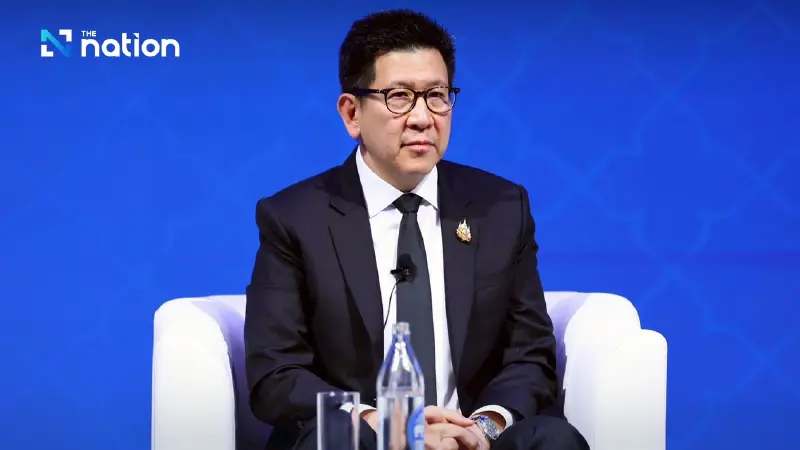


Ekniti joined the Asia in 2050 forum, saying Asia must accelerate investment in infrastructure, human capital and reform while deepening regional cooperation to achieve sustainable growth.
Ekniti Nitithanprapas, Deputy Prime Minister and Finance Minister, joined a discussion with global policy leaders on Friday (March 6) under the theme “Asia in 2050 High-Level Policy Roundtable: Policy Challenges for Asia Going Forward”.
Other panellists included Malaysia’s Finance Minister Amir Hamzah Azizan, Sri Lankan central bank governor Nandalal Weerasinghe, and International Monetary Fund (IMF) Managing Director Kristalina Georgieva. The session was moderated by Bloomberg’s Haslinda Amin.
The roundtable served as an important platform for exchanging views on the future direction of Asia’s economy amid mounting global challenges, including geopolitical tensions, changes in the global trading system, emerging technologies and risks stemming from climate change.

Ekniti said rising global economic tensions were significantly reshaping Asia’s economic landscape, but stressed that the most important foundation for sustainable growth remained macroeconomic stability.
He added that digital infrastructure was a key factor in deepening regional economic integration, while climate risks and disaster management in Asia required much stronger regional coordination and cooperation.
He also stressed that Asia must accelerate investment in three key areas: infrastructure, human capital and structural reform, in order to support long-term growth and strengthen the region’s competitiveness.
For Thailand, he said the government was continuing to advance human capital development through the Skill Bridge Programme, aimed at upgrading the skills of Thai workers in line with the needs of the modern economy.

At the same time, Kristalina said Asia had built a strong foundation in growth, innovation and creativity, enabling societies to come together and remain resilient in the face of shocks from past crises.
She also underscored the need to create jobs so that young people could fully play their role as a driving force in the economy.
Kristalina also said Asia was at the forefront of technological innovation, particularly in the field of artificial intelligence, which had the potential to significantly raise the region’s productivity.
She added that effective management of climate risks was vital to strengthening Asia’s long-term resilience, and that governments should recognise trust within society as a crucial asset for sustainable development.

On regional cooperation, Kristalina said ASEAN economic integration remained an important source of growth that had yet to be fully tapped. She noted that reducing non-tariff trade barriers could raise the region’s GDP by around 4%.
She also urged Asian countries to further deepen their capital markets in order to support growth, innovation and economic dynamism.
Thailand’s participation in the discussion reflected its role in helping shape the region’s economic direction and reaffirmed its commitment to promoting economic cooperation to deliver stable, sustainable and inclusive growth for Asia in the future.
On the occasion, Ekniti also reaffirmed Thailand’s readiness to host the 2026 IMF-World Bank Group Annual Meetings, scheduled for October 12–18 at the Queen Sirikit National Convention Centre in Bangkok, under the theme “Thailand’s New Horizon: Empowering People, Building Resilience”.
He reflected Thailand’s commitment to supporting multilateral cooperation, strengthening people’s capabilities and enhancing economic resilience to meet future challenges.
