
Thai exporters used FTA perks worth US$82.943 billion in Jan–Nov 2025
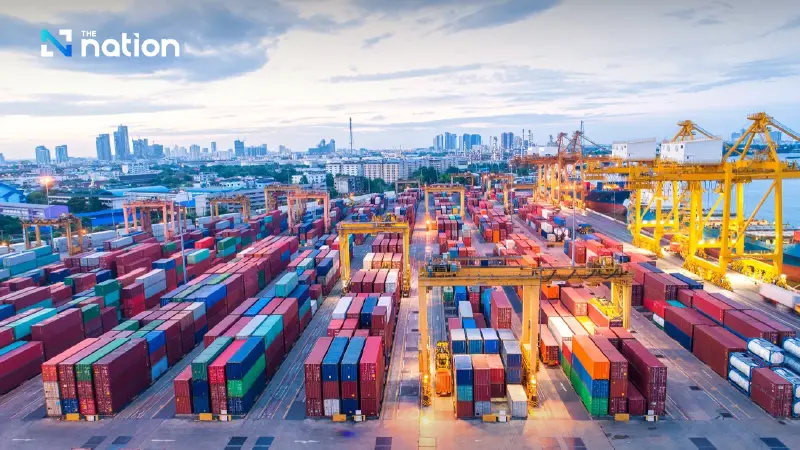


Thailand’s use of tariff preferences under FTAs kept expanding, with utilisation covering 81.62% of eligible exports and ASEAN deals accounting for the biggest shares.
- Thai exporters utilized US$82.943 billion in benefits under Free Trade Agreements (FTAs) from January to November 2025, an 8.74% increase year-on-year.
- The ASEAN Trade in Goods Agreement (ATIGA) and the ASEAN-China FTA (ACFTA) were the most utilized agreements, contributing US$30.135 billion and US$23.092 billion respectively.
- Industrial products, led by motor vehicles, accounted for the majority of the value at US$59.972 billion, while agricultural products like durian and chicken contributed US$22.971 billion.
- This usage represents an 81.62% utilization rate of the total export value eligible for FTA preferences during the period.

Arada Fueangthong, Director-General of the Department of Foreign Trade (DFT), said Thailand’s utilisation of trade preferences under free trade agreements (FTAs) continued to expand in January–November 2025.
Total FTA utilisation value reached US$82.943 billion (about THB2.5 trillion), up 8.74% year-on-year, representing 81.62% of the value of exports eligible for FTA preferences.

Top five FTAs by utilisation value
- ASEAN Trade in Goods Agreement (ATIGA): US$30.135 billion, utilisation rate 71.30%
- ASEAN–China FTA (ACFTA): US$23.092 billion, utilisation rate 95.46%
- ASEAN–India FTA (AIFTA): US$9.291 billion, utilisation rate 72.87%
- Japan–Thailand Economic Partnership Agreement (JTEPA): US$6.342 billion, utilisation rate 83.73%
- Thailand–Australia FTA (TAFTA): US$5.117 billion, utilisation rate 55.63%
Products with the highest FTA utilisation (overall)
- Motor vehicles for the transport of other goods
- Fresh durian
- Synthetic rubber mixed with natural rubber
- Unwrought platinum (ingots)
- Prepared chicken meat
Breakdown by sector
Agricultural and processed agricultural products (top five):
- Durian
- Prepared chicken meat
- Frozen cuts and other edible offal of poultry
- Cane sugar
- Fresh fruit (rambutan, longan, fresh pomegranate)
Total: US$22.971 billion, or 27.69% of total FTA utilisation value.
Industrial products (top five):
- Motor vehicles for the transport of other goods
- Synthetic rubber mixed with natural rubber
- Unwrought platinum (ingots)
- Automatic machinery
- Window- or wall-type air conditioners
Total: US$59.972 billion, or 72.31% of total FTA utilisation value.
Arada said the figures show industry remains the main driver of Thai exports, while agricultural and processed agricultural products, especially food, are playing a bigger role as global trade places greater emphasis on environmental sustainability and food security.
She said global economic volatility, geopolitical tensions and growing trade barriers, both tariff and non-tariff, are prompting many countries to prioritise cooperation with stable partners with similar standards.
As a result, environmental and sustainability requirements, such as cutting greenhouse gas emissions, clean energy use, raw-material traceability and transparent business practices, are becoming key conditions for market access.
She added that Europe in particular applies strict standards.
In this context, Thailand’s FTA negotiations with the European Union, targeted by the Commerce Ministry for completion in 2026, would bring new trade rules that Thai businesses must adapt to, including upgrading production standards, adjusting business processes and complying with partner-country regulations to fully utilise FTA benefits and avoid disadvantages amid fast-changing global trade rules.
She said Thai entrepreneurs, especially SMEs, should prepare from now to boost competitiveness and use FTAs as a tool to create opportunities and expand sustainably over the long term.
Arada said the DFT is continuing proactive work nationwide through seminars and practical workshops to strengthen businesses’ understanding of FTA utilisation, including rules of origin, certificates of origin, and progress on new FTAs.
For fiscal year 2026, the DFT has set a target to develop the capacity of at least 1,200 entrepreneurs, especially SMEs, through activities held in the Northeast, Central and Southern regions.
