
PM2.5 surges as PCD explains open-burning laws and penalties
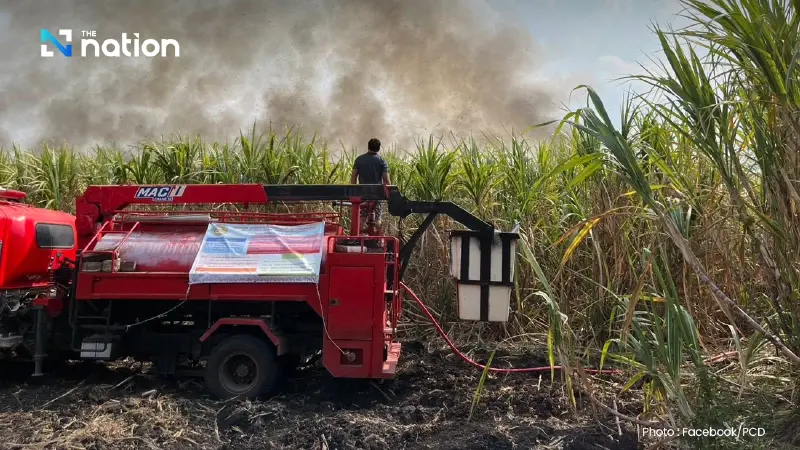


Thailand’s Pollution Control Department says most hotspots are in forests and farmland, as provinces step up enforcement and warn that illegal burning can lead to prosecution.
- The Pollution Control Department (PCD) has identified open burning in agricultural and forest areas as the main source of the recent surge in PM2.5 pollution.
- In response, the government is enforcing strict legal measures and penalties to control open burning and reduce its impact on public health.
- Penalties for illegal burning vary by location and severity, including fines up to THB 25,000 and/or three months in prison for causing a public nuisance.
- Burning in agricultural areas can lead to imprisonment for up to seven years and a fine of up to THB 140,000.
- The most severe penalties are for burning in national parks, with offenders facing 4 to 20 years in prison and fines up to THB 2,000,000.

Surin Worakijthamrong, Director-General of the Pollution Control Department (PCD), said that the government has issued measures to address wildfires, haze and particulate pollution by controlling sources and activities in each area, forest fires, agricultural burning, and urban dust from vehicles, traffic and construction, as well as transboundary haze, to reduce the impact of PM2.5 on the public.
Monitoring of the haze and dust situation has found that hotspots are mainly in agricultural and forest areas.
As a result, several provinces have issued announcements on legal measures to control open burning and designated provincial burning-control zones, and have instructed local authorities to enforce the law strictly.

Surin said burning in forest areas, agricultural areas, and open spaces carries penalties of fines and imprisonment, or both, under the following laws:
Burning on one’s own land or in general public areas until it causes a nuisance, such as burning municipal waste or burning items outdoors, local officials have the authority to order the nuisance to stop.
If an offender fails to comply with a local official’s order, they are guilty under the Public Health Act 1992 and are liable to imprisonment for up to three months, or a fine of up to THB25,000, or both.
Burning in roadside areas or roads within a distance of no more than 500 metres from the carriageway, causing smoke or anything else that may endanger traffic safety on the carriageway: this is an offence under the Land Traffic Act 1979 and is punishable by a fine of up to THB1,000.
Burning in agricultural areas, such as burning sugarcane fields, burning rice stubble, or burning in open spaces, where it is likely to endanger others or others’ property: this is an offence under Section 220 of the Criminal Code and is liable to imprisonment for up to seven years and a fine of up to THB140,000, or both.
Forest burning in national park areas or wildlife sanctuaries: offenders are liable to imprisonment from up to four years to 20 years, and a fine from THB400,000 to THB2,000,000, or both.

