
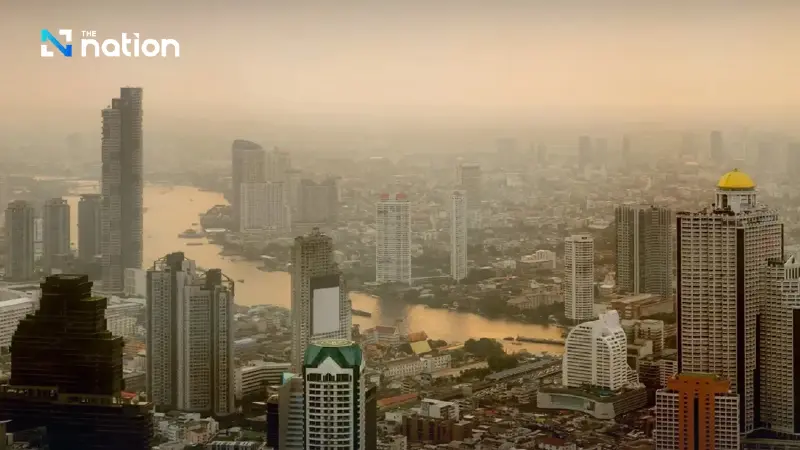
Bangkok faces poor air quality as PM2.5 levels rise above safe limits


Play
Due to potential health impacts, residents are advised to wear N95 masks, avoid strenuous outdoor activities, and take extra precautions for vulnerable groups like children and elderly.
- Bangkok's average PM2.5 level has reached 41.7 µg/m³, exceeding the standard safe limit of 37.5 µg/m³.
- Multiple districts are experiencing hazardous pollution, with Lat Krabang and Nong Chok recording the highest PM2.5 levels, both above 53 µg/m³.
- Health advisories recommend wearing N95 masks, avoiding strenuous outdoor activities, and taking extra precautions for vulnerable groups such as children and the elderly.
The Bangkok Air Quality Information Centre reported on Friday (January 30) at 7am hazardous levels of particulate matter (PM2.5) in Bangkok.
The city's average PM2.5 level is 41.7 micrograms per cubic meter (µg/m³), exceeding the standard safe level of 37.5 µg/m³.

Top 12 areas with the highest PM2.5 levels in Bangkok
- Lat Krabang: 54.3 µg/m³
- Nong Chok: 53.2 µg/m³
- Nong Khaem: 52.2 µg/m³
- Khlong Sam Wa: 51.3 µg/m³
- Bang Khae: 50.9 µg/m³
- Bang Rak: 50.1 µg/m³
- Thawi Watthana: 49.9 µg/m³
- Prawet: 48.3 µg/m³
- Bang Khun Thian: 46.5 µg/m³
- Min Buri: 46.2 µg/m³
- Samphanthawong: 46.1 µg/m³
- Taling Chan: 45.7 µg/m³
Air quality by region
- Northern Bangkok: 37.5 - 43.4 µg/m³ (starting to affect health)
- Eastern Bangkok: 34.8 - 54.3 µg/m³ (starting to affect health)
- Central Bangkok: 32.8 - 46.1 µg/m³ (starting to affect health)
- Southern Bangkok: 33.9 - 50.9 µg/m³ (starting to affect health)
- North Thonburi: 30 - 49.9 µg/m³ (starting to affect health)
- South Thonburi: 33.5 - 52.2 µg/m³ (starting to affect health)
As PM2.5 levels continue to rise, the overall air quality is entering the category of potential health impacts.
Health advisory:
- Given the increasing trend in particulate matter, people, especially those working outdoors or engaged in physical activities, are advised to take extra precautions.
The following are recommended:
- Wear an N95 mask: Ordinary face masks may not provide sufficient protection. N95 masks are more effective in blocking fine particulate matter.
- Avoid strenuous activities: Refrain from outdoor exercise in affected areas to prevent inhaling harmful dust particles deeply into the lungs.
- Be cautious with vulnerable groups: Children, the elderly, and pregnant women should avoid exposure. Anyone experiencing symptoms such as coughing, eye irritation, or chest tightness should seek medical attention immediately.
The areas of Lat Krabang and Nong Chok are experiencing particularly high levels of pollution, and the public is urged to check air quality updates via apps before heading outside for safety.

