
Weaving magic through dance
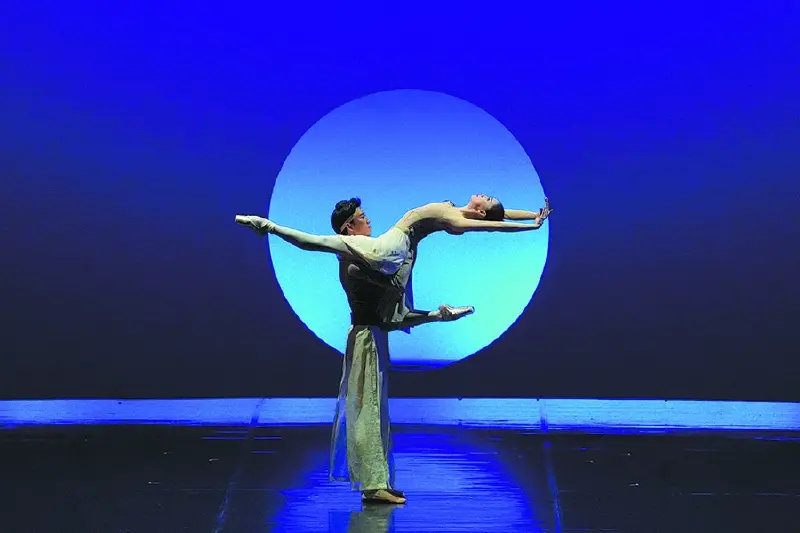


Chinese ballet drama based on a literary classic wows audiences as it makes its overseas debut, Yang Wanli reports from Bangkok.
Under the soft glow of stage lights, an ethereal ballerina glides across the polished floor, her fellow dancers' movements a symphony of grace and precision. Each leap and pirouette weaves a tapestry of emotion. The audience, enraptured by this dance of ephemeral beauty, holds its collective breath, savouring the fleeting magic of the performance.
It was the first time the National Ballet of China had presented its original ballet, A Dream of Red Mansions, overseas, and the fusion of a Chinese literary masterpiece with a Western dance performance drew thunderous applause on Sept 20 at the 27th Bangkok International Festival of Dance and Music — one of Asia's most influential events of its kind.
"Bangkok, which has many students of ballet, is the first stop of the show's overseas debut. This drama will present them with a fusion of Eastern and Western arts through our efforts to bring Chinese classical literature to the ballet stage. It also serves as a cultural bridge promoting exchanges between China and Thailand," says Zhu Yan, director of the National Ballet of China.

The ballet was adapted from A Dream of Red Mansions — considered one of the four great classic novels of Chinese literature — written by Cao Xueqin during the Qing Dynasty (1644-1911). Dancing on tiptoe in the attire of Chinese classical operas, more than 80 performers translated the classic Chinese novel into a visual spectacle of dance, set design and costumes.
The story centres on Jia Baoyu, a young man from an aristocratic Chinese family, and his tangled relationships with Lin Daiyu and Xue Baochai. It is an epic tale of the tragic romance between Jia and Lin, as well as the rise and fall of the Jia family, and by extension, Chinese society in the 18th century.
"I think expressing Chinese aesthetics and charm in the form of ballet is the most challenging part of this work. The power of a classic literary masterpiece and its influence on the Chinese, as well as the world, is immense. Instead of presenting the entire storyline, we need to express its spiritual essence beyond the text and let the art of dance play its role," says choreographer Tong Ruirui.
She says adapting A Dream of Red Mansions for the stage was the ultimate ambition of many directors, and she felt honoured and grateful to use this Western art form to revive a Chinese literary classic, which lent the entire production a melancholic and dreamlike atmosphere.

To interpret classical Chinese literature with ballet — the first attempt in her career — Tong stuck to the principle that each character should be rooted in traditional Chinese culture, but their personality traits would be illustrated through the language of ballet.
"We made some explorations and combinations in this work, and I believe that the language of both literature and ballet is universal. Through art and this work, everyone can understand traditional Chinese culture. They can see how we have expressed our own Chinese stories with Western techniques and let them shine on the international stage," she adds.
To convey the subtle emotions of the characters through dance, principal dancer Qiu Yunting, who performs the leading female role of Lin Daiyu, says she has read the classic literary work and reviewed the TV adaptations of the story many times.
Lin is one of the most eye-catching characters in the story, who is well known not only in China but also overseas. Her role carried high expectations, so I felt a responsibility to bring the image of Lin to audiences with a fresh look," says Qiu.
Unlike previous portrayals of the heroine Lin, which often had a melancholic feel, Qiu's interpretation in the performance was much bolder and filled with more energy.
"I want the audience to see a different Daiyu. There are some beautiful qualities in her. In the scene of Daiyu burying the flowers, she is no longer a very weak girl. There is some firmness in her heart, and she has some strength," Qiu adds.

For the dancers who have been practising classical ballet since childhood, the ballet technique emphasising a straight back, an open chest and an upward extension went against the traditional Chinese expression, which is more implicit, downward and deeply rooted in the land.
"We are striving to integrate and express two cultures in one work. When Lin Daiyu buries the flowers, she leaves all her tears in the earth. When she stands on her tiptoes, it is a spiritual elevation," Qiu says.
To stage the premiere outside of China, the National Ballet of China brought six 12-meter containers of costumes, sets, lights and props to Bangkok, which included 1.5 metric tons of stage background installations.
The stage design for this performance was also exceptionally ingenious. In the centre of the stage was a 12-meter-wide, 8.5-meter-high rotating backdrop, with one side being a red-and-gold mottled panel symbolising wealth and prosperity, while the other side was pure white, representing a vast and pristine land.
One side symbolised abundance, and the other emptiness. In the centre of the wall was a round opening reminiscent of the doors of Suzhou gardens in China. Through it, the audience could glimpse the fates of the characters in the play.
"The performance really showcased the highest level of ballet in China. It's a successful attempt to tell a Chinese story with a Western art style. The lighting and stage setting are very impressive, which enhanced the storytelling and brought a strong emotional impact," said Surichai, a 42-year-old Thai resident who came to see the drama on Sept 20 with her husband.
As a fan of Chinese culture, she knows about the romantic love between Lin Daiyu and Jia Baoyu. "Beyond love, the performance brought us traditional ideas and thoughts of people from the Qing Dynasty. With the subtitles, the drama is easier for us to understand," she added.

The drama also attracted many young people who love ballet. Among them, 17-year-old Sarintip Thipjumnun, from Dance Plus Academy in Bangkok, said she was excited about seeing this high-level ballet performance during the festival.
One day before the show, she was among dozens of young ballet students who joined a ballet class with Li Wentao, the dancer who plays the leading role of Jia Baoyu in the drama. The free one-hour master class is a regular feature of the National Ballet of China's overseas performances.
"It was a very precious chance to learn with such top-level dancers. During the class, we had face-to-face communication and received (Li's) professional guidance. His expertise, patience and kindness are so impressive. The impression was even stronger after I saw his performance onstage," Sarintip said.
Having studied ballet since the age of 4, Sarintip said the fantastic performance by Chinese dancers and the master class encouraged her to continue learning. "Art brings us delicate and wonderful experiences in life. I hope more such events with top artists from overseas can be organised in the future," she added.


Yang Wanli
China Daily
China News Network
