
Thai-Cambodian conflict and Trump’s ceasefire order
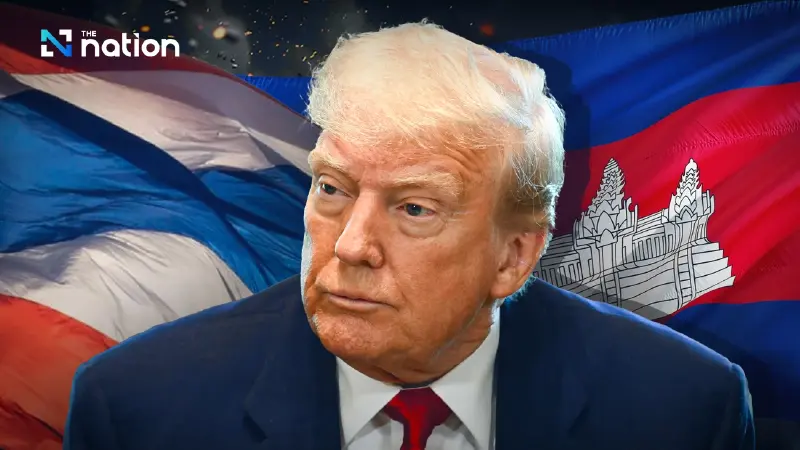


On the night of Saturday, July 26, a piece of news emerged from the White House and quickly made its way onto the international stage: the President of the United States called on Thailand and Cambodia to implement an immediate ceasefire following escalating clashes along their shared border.
President Donald Trump’s demand is particularly noteworthy and raises several key observations:
1. President Trump did not merely issue a verbal call for a ceasefire; he also employed coercive diplomacy — non-military pressure, often used by global powers — to push for de-escalation.
2. This coercion came in the form of economic pressure, with the US announcing it would halt ongoing trade and tariff negotiations with both countries until fighting ceases.
3. This US pressure for a ceasefire strikes directly at what both warring states desire most: negotiations to ease economic fallout at home. Every country seeks access to the American market for its exports.
4. While both governments are likely to publicly accept Washington’s demand, the key questions remain: When will a ceasefire actually begin, and how will it be implemented?
5. Will the peace process take place through bilateral channels, or will the US step in as a formal mediator?
6. Some speculate that China, given its close ties with both Thailand and Cambodia, could emerge as a neutral facilitator for peace negotiations.
7. If China does take on this role, it would represent a significant expansion of Beijing’s regional influence — similar to Japan’s involvement in ending the Indochina War in 1941.
8. From a global perspective, no one wants to see the Thai-Cambodian conflict spiral into a full-blown, uncontrollable war that could destabilise the region. The world is already grappling with unresolved wars in Ukraine and Gaza.
9. On the world stage, few care how a war begins. What matters are the civilian casualties and the scale of destruction. The international community prioritises conflict resolution, and should the war continue to escalate, more coercive pressure may follow.
10. The US has already demonstrated its willingness to use such pressure. Just last month, Washington mediated an end to deadly clashes between the Democratic Republic of Congo and Rwanda, which had resulted in significant loss of life and mass displacement.
11. One can’t help but wonder — if Trump succeeds in ending this war through economic means, could he become a contender for the Nobel Peace Prize? Just a playful thought.
12.. Thailand’s hardline conservative factions are unlikely to embrace the ceasefire push. Some of them may even welcome a broader conflict that inflicts heavy damage on Cambodian targets. But they must remember: Thailand is not Israel — it cannot wage war with the same impunity as in Gaza.
What lies ahead?
Though the White House’s call for a ceasefire came late on Saturday night, by Sunday morning, July 27, hostilities continued unabated — as if both leaders had chosen to turn a deaf ear to Trump’s plea, despite his claims of having spoken directly with them.
The critical question now is: how will both governments climb down from the current border conflict?
Professor Emeritus Dr Surachart Bamrungsuk
