
‘CAFTA 3.0’: China–ASEAN trade pact reshaped under Trump’s Asia shadow
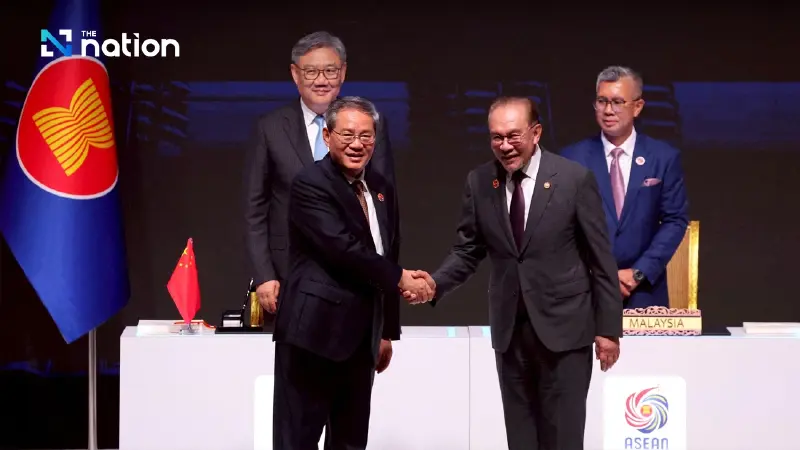


China-ASEAN Free Trade Area updated. Focuses on the green economy and supply chains, boosting China's EV/solar exports and helping ASEAN balance ties with both China and the US.
- China has expanded its free trade agreement with ASEAN (dubbed CAFTA 3.0), focusing on new areas like the green economy and supply chain connectivity.
- The deal helps China find new markets for its industrial products, such as solar panels and electric vehicles (EVs), and aims to mitigate the impact of US tariffs.
- For ASEAN, the agreement is a key part of balancing its economic relationships, as it was signed immediately after the US also secured trade deals in the region.
China has expanded its free trade agreement with the Association of Southeast Asian Nations (ASEAN), strengthening economic ties with a region that President Donald Trump has also been courting.
Chinese Premier Li Qiang and Malaysian Prime Minister Anwar Ibrahim witnessed the signing of the expanded China-ASEAN Free Trade Area (CAFTA) agreement in Kuala Lumpur on October 28.
The deal covers reduced trade barriers and promotes the green economy, which could help China boost exports and mitigate the impact of US tariffs.
The signing takes place just one day after Trump concluded his visit to ASEAN. During his trip, the US reached agreements to gain greater access to rare earth minerals and granted tariff exemptions for certain goods.
These deals are significant for ASEAN, which currently exports more goods to the US than to China.
In his speech, Li Qiang sought to position China as a champion of free trade and called for unity with ASEAN. Without directly mentioning the US, he implied that Washington was a source of regional instability.
“Interference from external powers in our region is increasing, with many countries facing unfairly high tariffs,” Li stated, adding, “Confrontation or division will bring no benefits, but only lead to conflict and domination by external powers.”
Li's remarks reflect China’s effort to solidify its relationship with its largest trading partner. For ASEAN, maintaining good relations with both superpowers is crucial to ensuring a steady supply of raw materials and access to high-spending customers.
The revised agreement, dubbed CAFTA 3.0, covers new areas such as the green economy and supply chain connectivity.
This represents a strategic win for China, which is seeking new markets for its massive industrial capacity in solar panels, batteries, and electric vehicles (EVs).

China's Ministry of Commerce stated that the deal will facilitate trade in environmental goods and includes an agreement that neither side will use environmental standards as a tool for trade protectionism.
Additionally, "China and ASEAN" will jointly develop regulatory standards for new energy vehicles, which could simplify market entry and help China's vast EV industry find new buyers, easing the impact of US tariffs.
A Bloomberg analysis suggests that for ASEAN, the deal is a key part of its efforts to balance relations with both the US and China. Malaysia, one of the four ASEAN countries that signed deals with Trump this week, stated that the agreement provides tariff exemptions for palm oil, cocoa, and pharmaceutical products.
